


Ciprofloxacin decreases survival in HT-29 cells via the induction of TGF-beta1 secretion and enhances the anti-proliferative effect of 5-fluorouracil
- PMID: 19371339
- PMCID: PMC2707983
- DOI: 10.1111/j.1476-5381.2009.00161.x
Ciprofloxacin decreases survival in HT-29 cells via the induction of TGF-beta1 secretion and enhances the anti-proliferative effect of 5-fluorouracil
Abstract
Background and purpose: Fluoroquinolones are potent anti-microbial agents with multiple effects on host cells and tissues. Previous studies have highlighted their pro-apoptotic effect on human cancer cells and an immunoregulatory role in animal models of inflammatory bowel disease. We examined the effect of ciprofloxacin on proliferation, cell cycle and apoptosis of HT-29 cells, a human colonic epithelial cell line sensitive to transforming growth factor (TGF)-beta1-mediated growth inhibition and its role in TGF-beta1 production. We also examined the effect of ciprofloxacin on proliferation of HT-29 cells in combination with 5-fluorouracil (5-FU), a well-established pro-apoptotic agent.
Experimental approach: Using subconfluent cultures of HT-29 and Caco-2 cells, we studied the effect of ciprofloxacin, TGF-beta1 and 5-FU on proliferation, apoptosis, necrosis and cell cycle. The effect of ciprofloxacin on TGF-beta1 mRNA expression and production was studied in RNA extracts and cell culture supernatants respectively, using confluent cultures.
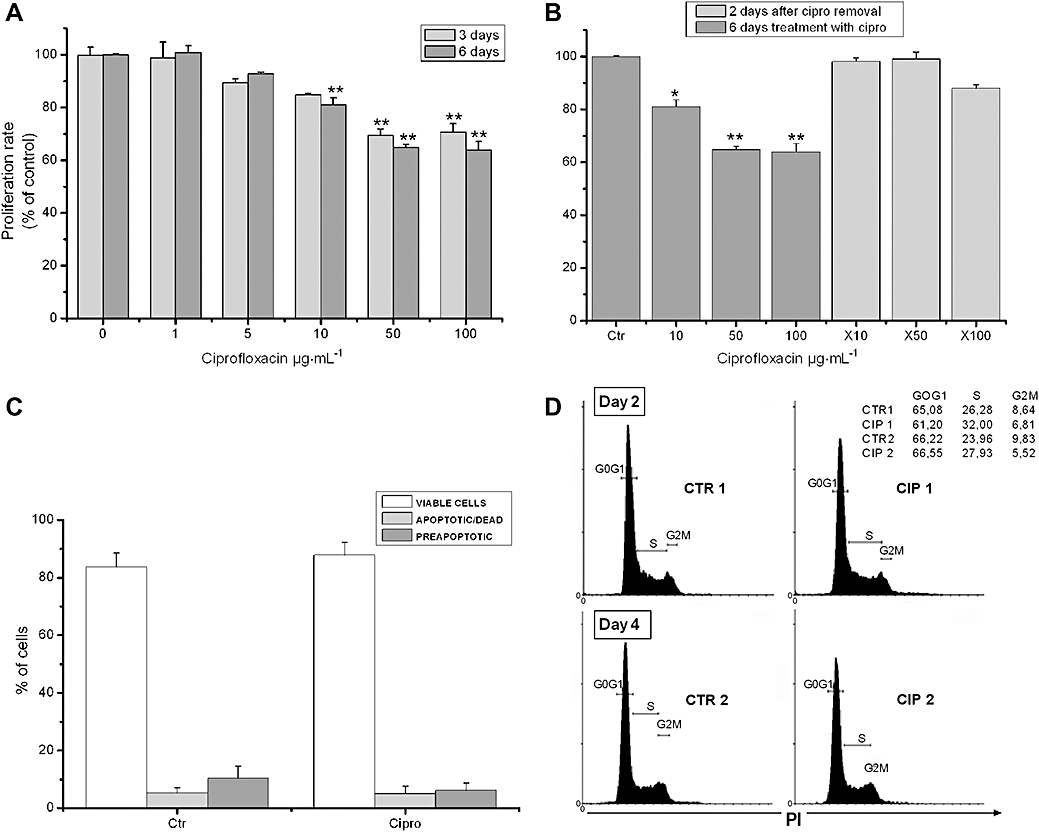
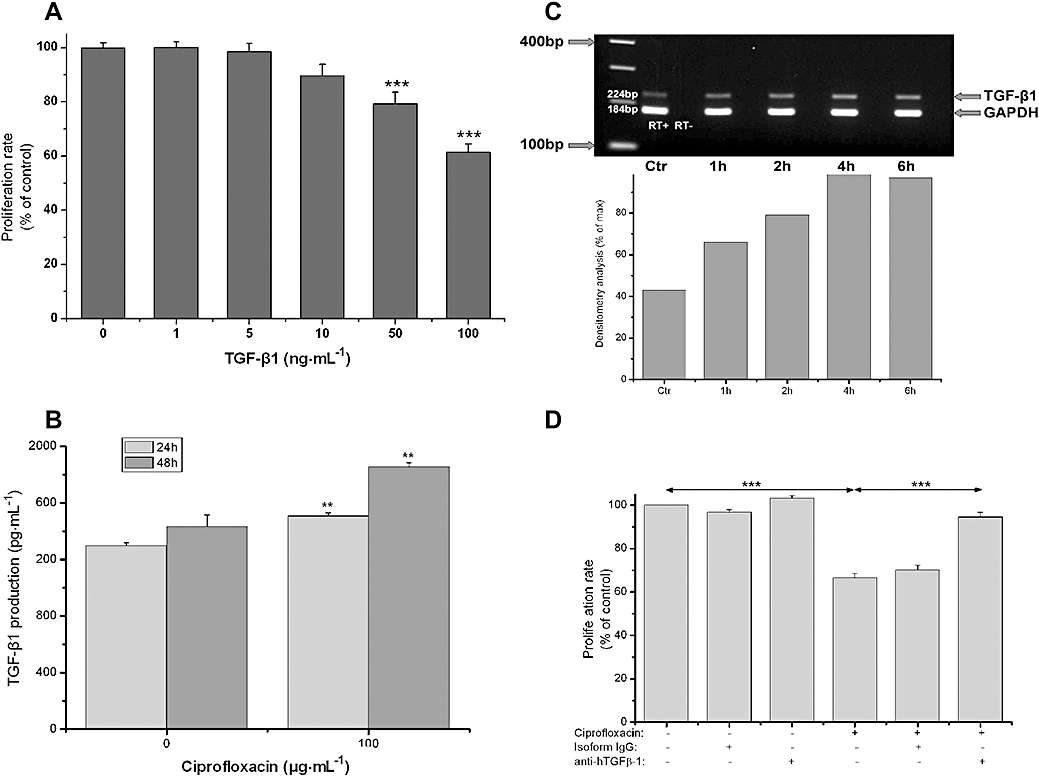
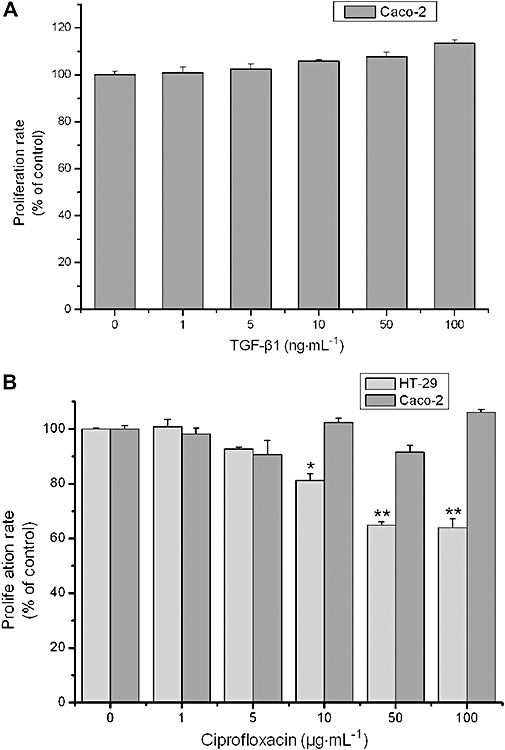
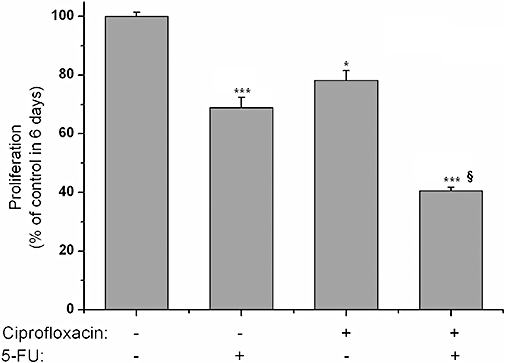
Key results: Ciprofloxacin decreased proliferation of HT-29 cells in a concentration- and time-dependent manner. This was mediated by accumulation of HT-29 cells into the S-phase but without any effect on apoptosis or necrosis. Additionally, ciprofloxacin enhanced the antiproliferative effect of 5-FU. Interestingly, ciprofloxacin was found to up-regulate TGF-beta1 production by HT-29 cells and its anti-proliferative effect was abolished when TGF-beta1 was blocked. Confirming this mechanism further, ciprofloxacin had no effect on Caco-2, a human colonic epithelial cell line that lacks functional TGF-beta1 receptors.
Conclusions and implications: We demonstrate a novel anti-proliferative and immunoregulatory effect of ciprofloxacin on human intestinal epithelial cells mediated via TGF-beta1.
Figures
References
-
- Aranha O, Wood DP, Jr, Sarkar FH. Ciprofloxacin mediated cell growth inhibition, S/G2-M cell cycle arrest, and apoptosis in a human transitional cell carcinoma of the bladder cell line. Clin Cancer Res. 2000;6:891–900. - PubMed
-
- Aranha O, Zhu L, Alhasan S, Wood DP, Jr, Kuo TH, Sarkar FH. Role of mitochondria in ciprofloxacin induced apoptosis in bladder cancer cells. J Urol. 2002;167:1288–1294. - PubMed
-
- Becker C, Fantini MC, Neurath MF. TGF-beta as a T cell regulator in colitis and colon cancer. Cytokine Growth Factor Rev. 2006;17:97–106. - PubMed
-
- Bergeron MG. The pharmacokinetics and tissue penetration of the fluoroquinolones. Clin Invest Med. 1989;12:20–27. - PubMed
Publication types
MeSH terms
Substances
LinkOut - more resources
Full Text Sources
Other Literature Sources
