Zoledronic acid induces formation of a pro-apoptotic ATP analogue and isopentenyl pyrophosphate in osteoclasts in vivo and in MCF-7 cells in vitro
- PMID: 19371349
- PMCID: PMC2707989
- DOI: 10.1111/j.1476-5381.2009.00160.x
Zoledronic acid induces formation of a pro-apoptotic ATP analogue and isopentenyl pyrophosphate in osteoclasts in vivo and in MCF-7 cells in vitro
Abstract
Background and purpose: Bisphosphonates (BPs) are highly effective inhibitors of bone resorption. Nitrogen-containing bisphosphonates (N-BPs), such as zoledronic acid, induce the formation of a novel ATP analogue (1-adenosin-5'-yl ester 3-(3-methylbut-3-enyl) ester triphosphoric acid; ApppI), as a consequence of the inhibition of farnesyl pyrophosphate synthase and the accumulation of isopentenyl pyrophosphate (IPP). ApppI induces apoptosis, as do comparable metabolites of non-nitrogen-containing bisphosphonates (non-N-BPs). In order to further evaluate a pharmacological role for ApppI, we obtained more detailed data on IPP/ApppI formation in vivo and in vitro. Additionally, zoledronic acid-induced ApppI formation from IPP was compared with the metabolism of clodronate (a non-N-BP) to adenosine 5'(beta,gamma-dichloromethylene) triphosphate (AppCCl2p).
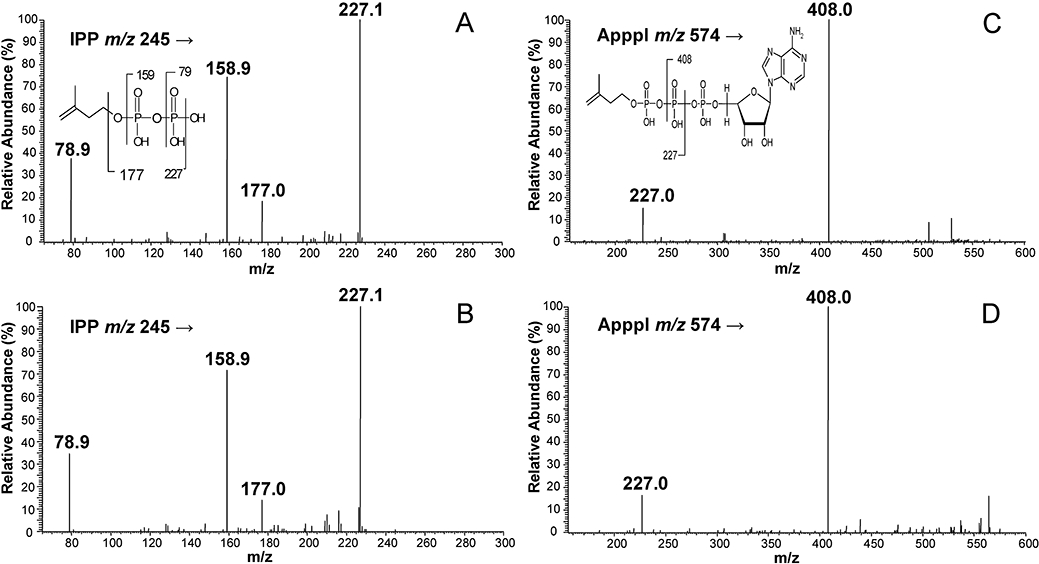
Experimental approach: After giving zoledronic acid in vivo to rabbits, IPP/ApppI formation and accumulation was assessed in isolated osteoclasts. The formation of ApppI from IPP was compared with the metabolism of clodronate in MCF-7 cells in vitro. IPP/ApppI and AppCCl2p levels in cell extracts were analysed by mass spectrometry.
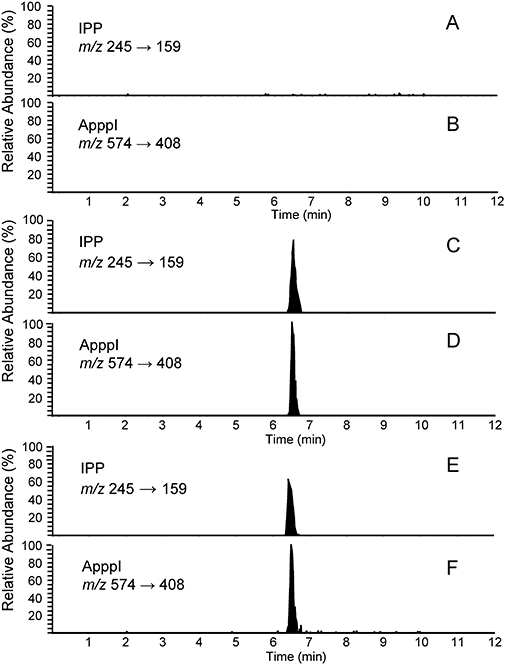
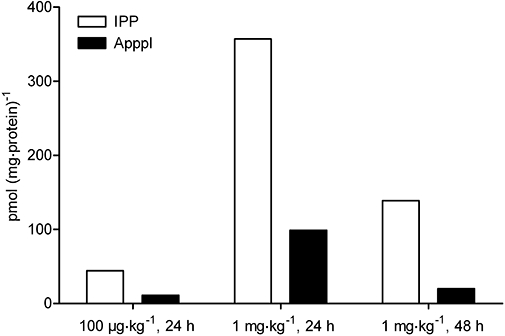
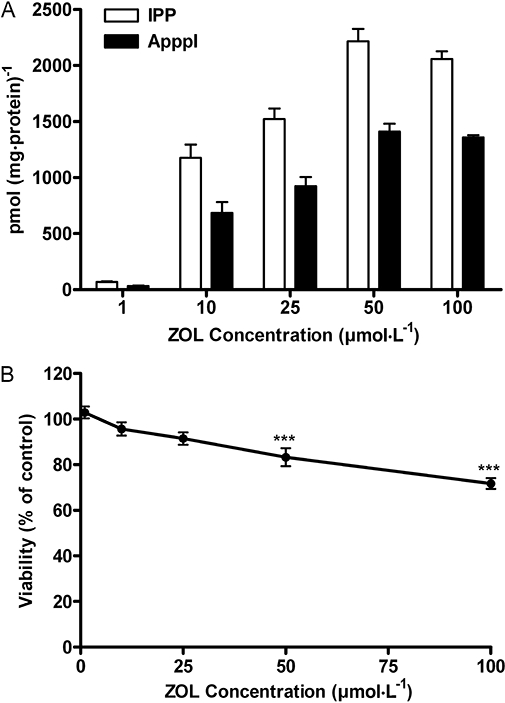
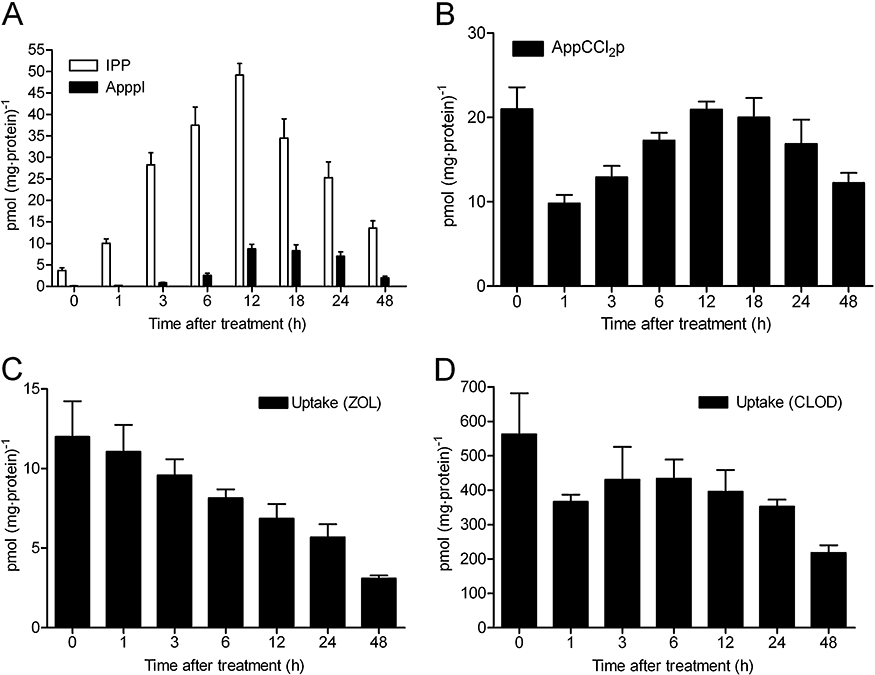
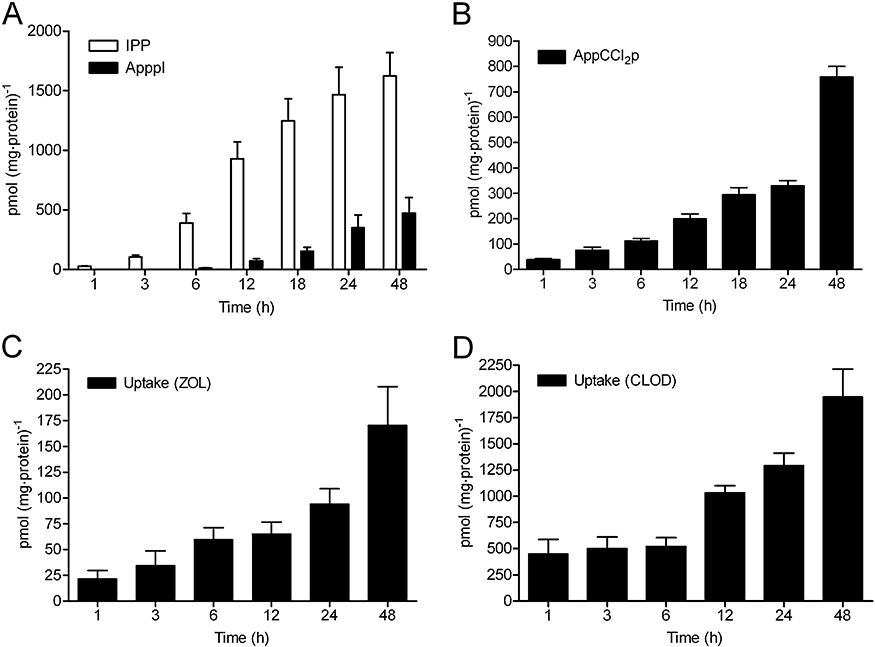
Key results: Isopentenyl pyrophosphate/ApppI were formed in osteoclasts in vivo, after a single, clinically relevant dose of zoledronic acid. Furthermore, exposure of MCF-7 cells in vitro to zoledronic acid at varying times and concentrations induced time- and dose-dependent accumulation of IPP/ApppI. One hour pulse treatment was sufficient to cause IPP accumulation and subsequent ApppI formation, or the metabolism of clodronate into AppCCl2p.
Conclusions and implications: This study provided the first conclusive evidence that pro-apoptotic ApppI is a biologically significant molecule, and demonstrated that IPP/ApppI analysis is a sensitive tool for investigating pathways involved in BP action.
Figures
References
-
- Amin D, Cornell SA, Gustafson SK, Needle SJ, Ullrich JW, Bilder GE, et al. Bisphosphonates used for the treatment of bone disorders inhibit squalene synthase and cholesterol biosynthesis. J Lipid Res. 1992;33:1657–1663. - PubMed
-
- Auriola S, Frith J, Rogers MJ, Koivuniemi A, Mönkkönen J. Identification of adenine nucleotide-containing metabolites of bisphosphonate drugs using ion-pair liquid chromatography-electrospray mass spectrometry. J Chromatogr B Biomed Sci Appl. 1997;704:187–195. - PubMed
-
- Benford HL, Frith JC, Auriola S, Mönkkönen J, Rogers MJ. Farnesol and geranylgeraniol prevent activation of caspases by aminobisphosphonates: biochemical evidence for two distinct pharmacological classes of bisphosphonate drugs. Mol Pharmacol. 1999;56:131–140. - PubMed
-
- Brown MS, Goldstein JL. Multivalent feedback regulation of HMG CoA reductase, a control mechanism coordinating isoprenoid synthesis and cell growth. J Lipid Res. 1980;21:505–517. - PubMed
-
- Coleman RE. The role of bisphosphonates in breast cancer. Breast. 2004;13(Suppl.)(1):S19–S28. - PubMed
Publication types
MeSH terms
Substances
LinkOut - more resources
Full Text Sources