


Weight gain in pregnancy and risk of maternal hyperglycemia
- PMID: 19371858
- PMCID: PMC4050656
- DOI: 10.1016/j.ajog.2009.01.039
Weight gain in pregnancy and risk of maternal hyperglycemia
Abstract
Objective: The purpose of this study was to examine associations of weight gain from prepregnancy to glycemic screening with glucose tolerance status.
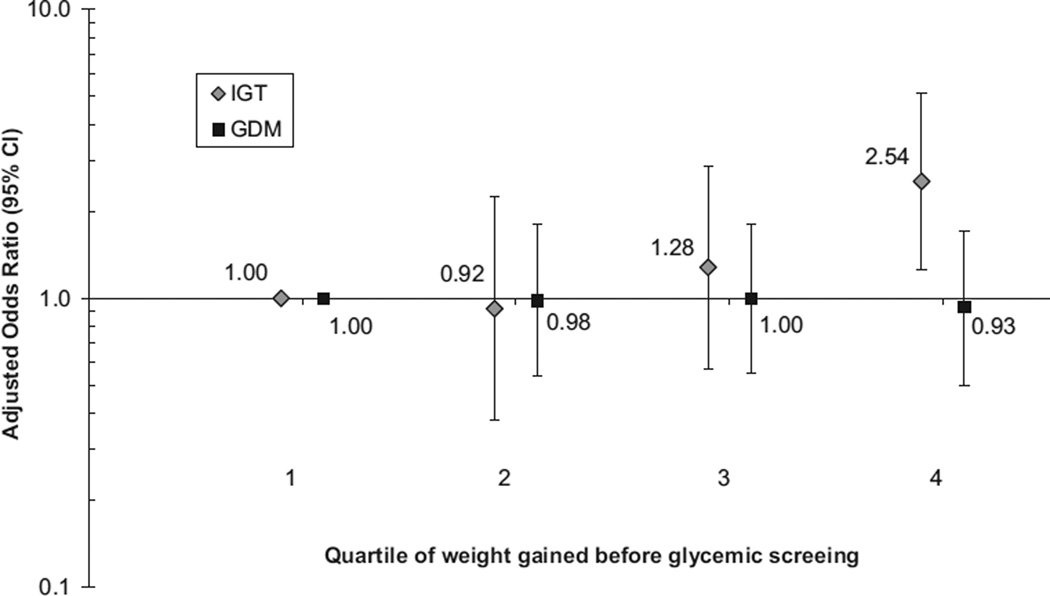
Study design: Main outcomes were failed glycemic screening (1-hour glucose result >or= 140 mg/dL) with either 1 high value on 3-hour oral glucose tolerance testing (impaired glucose tolerance in pregnancy) or >or= 2 high values on 3-hour oral glucose tolerance testing (gestational diabetes mellitus). We performed multinomial logistic regression to determine the odds of these glucose intolerance outcomes by quartile of gestational weight gain among 1960 women in Project Viva.
Results: Mean gestational weight gain was 10.2 +/- 4.3 (SD) kg. Compared with the lowest quartile of weight gain, participants in the highest quartile had an increased odds of impaired glucose tolerance in pregnancy (adjusted odds ratio, 2.54; 95% confidence interval, 1.25-5.15), but not gestational diabetes mellitus (odds ratio, 0.93; 95% confidence interval, 0.50-1.70).
Conclusion: Higher weight gain predicted impaired glucose tolerance in pregnancy, but not gestational diabetes mellitus.
Figures
References
-
- American Diabetes Association. Standards of medical care in diabetes – 2008. Diabetes Care. 2008;31(suppl):S13–S54. - PubMed
-
- American College of Obstetricians and Gynecologists. Gestational diabetes: ACOG Practice Bulletin No.: 30. Obstet Gynecol. 2001;98:525–538. - PubMed
-
- Oken E, Gillman MW. Fetal origins of obesity. Obes Res. 2003;11:496–506. - PubMed
-
- Ogata ES. Perinatal morbidity in offspring of diabetic mothers. Diabetes Rev. 1995;3:652–657.
-
- Sermer M, Naylor CD, Farine D, et al. The Toronto Tri-Hospital Gestational Diabetes project: a preliminary review. Diabetes Care. 1998;21:B33–B42. - PubMed
Publication types
MeSH terms
Grants and funding
LinkOut - more resources
Full Text Sources
Medical
