


Integrin-mediated regulation of neurovascular development, physiology and disease
- PMID: 19372738
- PMCID: PMC2679889
- DOI: 10.4161/cam.3.2.7767
Integrin-mediated regulation of neurovascular development, physiology and disease
Abstract
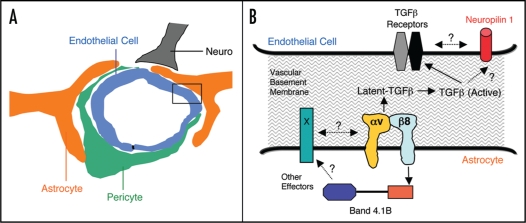
The mammalian central nervous system (CNS) is comprised of billions of neurons and glia that are intertwined with an elaborate network of blood vessels. These various neural and vascular cell types actively converse with one another to form integrated, multifunctional complexes, termed neurovascular units. Cell-cell communication within neurovascular units promotes normal CNS development and homeostasis, and abnormal regulation of these events leads to a variety of debilitating CNS diseases. This review will summarize (1) cellular and molecular mechanisms that regulate physiological assembly and maintenance of neurovascular units; and (2) signaling events that induce pathological alterations in neurovascular unit formation and function. An emphasis will be placed on neural-vascular cell adhesion events mediated by integrins and their extracellular matrix (ECM) ligands. I will highlight the role of a specific adhesion and signaling axis involving alphavbeta8 integrin, latent transforming growth factor beta's (TGFbeta's), and canonical TGFbeta receptors. Possible functional links between components of this axis and other signal transduction cascades implicated in neurovascular development and disease will be discussed. Comprehensively understanding the pathways that regulate bidirectional neural-vascular cell contact and communication will provide new insights into the mechanisms of neurovascular unit development, physiology and disease.
Figures
Comment in
-
Letter from the guest editor. Angiogenesis in the central nervous system.Cell Adh Migr. 2009 Apr-Jun;3(2):198. doi: 10.4161/cam.3.2.8513. Epub 2009 Apr 23. Cell Adh Migr. 2009. PMID: 19398894 Free PMC article. No abstract available.
References
-
- Lok J, Gupta P, Guo S, Kim WJ, Whalen MJ, van Leyen K, et al. Cell-cell signaling in the neurovascular unit. Neurochem Res. 2007;32:2032–2045. - PubMed
-
- McCarty JH. Cell biology of the neurovascular unit: implications for drug delivery across the blood-brain barrier. Assay Drug Dev Technol. 2005;3:89–95. - PubMed
-
- Pardridge WM. Drug and gene delivery to the brain: the vascular route. Neuron. 2002;36:555–558. - PubMed
-
- Marin-Padilla M. Early vascularization of the embryonic cerebral cortex: Golgi and electron microscopic studies. J Comp Neurol. 1985;241:237–249. - PubMed
-
- Virgintino D, Maiorano E, Errede M, Vimercati A, Greco P, Selvaggi L, et al. Astrogliamicrovessel relationship in the developing human telencephalon. Int J Dev Biol. 1998;42:1165–1168. - PubMed
Publication types
MeSH terms
Substances
Grants and funding
LinkOut - more resources
Full Text Sources
