Clinical features, surgical treatment, and long-term outcome in adult patients with moyamoya disease. Clinical article
- PMID: 19374496
- PMCID: PMC2783413
- DOI: 10.3171/2009.3.JNS08837
Clinical features, surgical treatment, and long-term outcome in adult patients with moyamoya disease. Clinical article
Abstract
Object: The object of this study was to report the clinical features, surgical treatment, and long-term outcomes in adults with moyamoya phenomenon treated at a single institution in the US.
Methods: Forty-three adult patients with moyamoya disease (mean age 40 +/- 11 years [SD], range 18-69 years) were treated with encephaloduroarteriosynangiosis (EDAS). Neurologists examined patients pre- and postoperatively. Follow-up was obtained in person or by structured telephone interview (median 41 months, range 4-126 months). The following outcomes were collected: transient ischemic attack (TIA), infarction, graft collateralization, change in cerebral perfusion, and functional level according to the modified Rankin scale (mRS). Kaplan-Meier estimates of infarction risk were calculated for comparison of surgically treated and contralateral hemispheres.
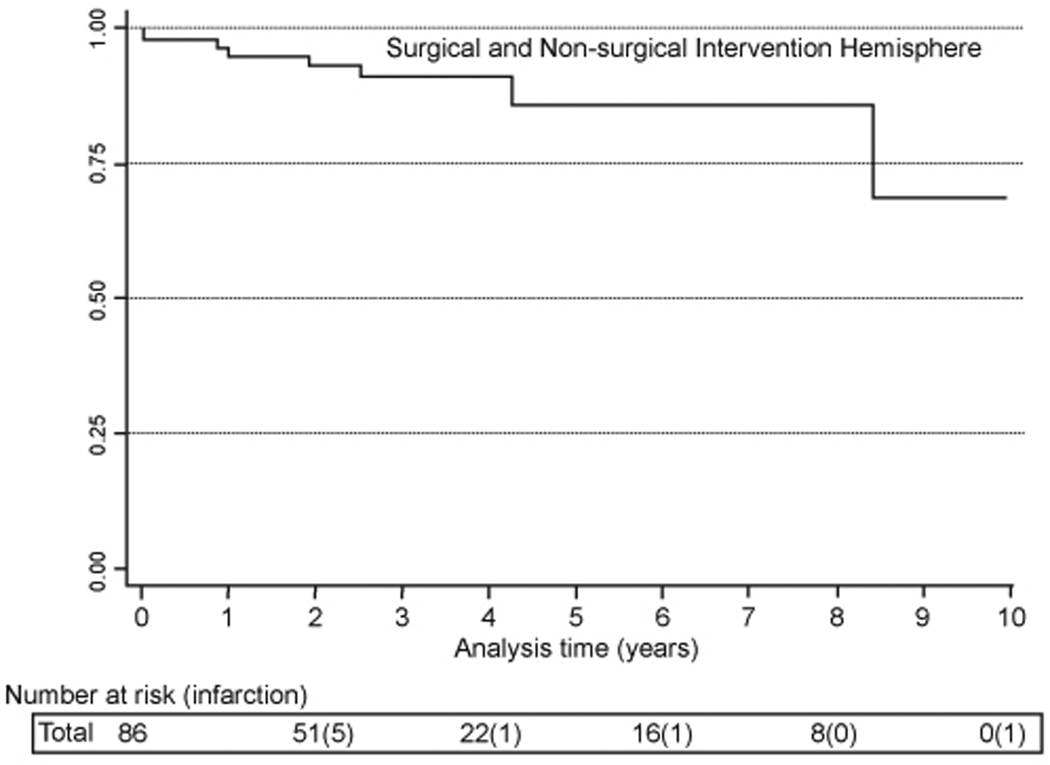
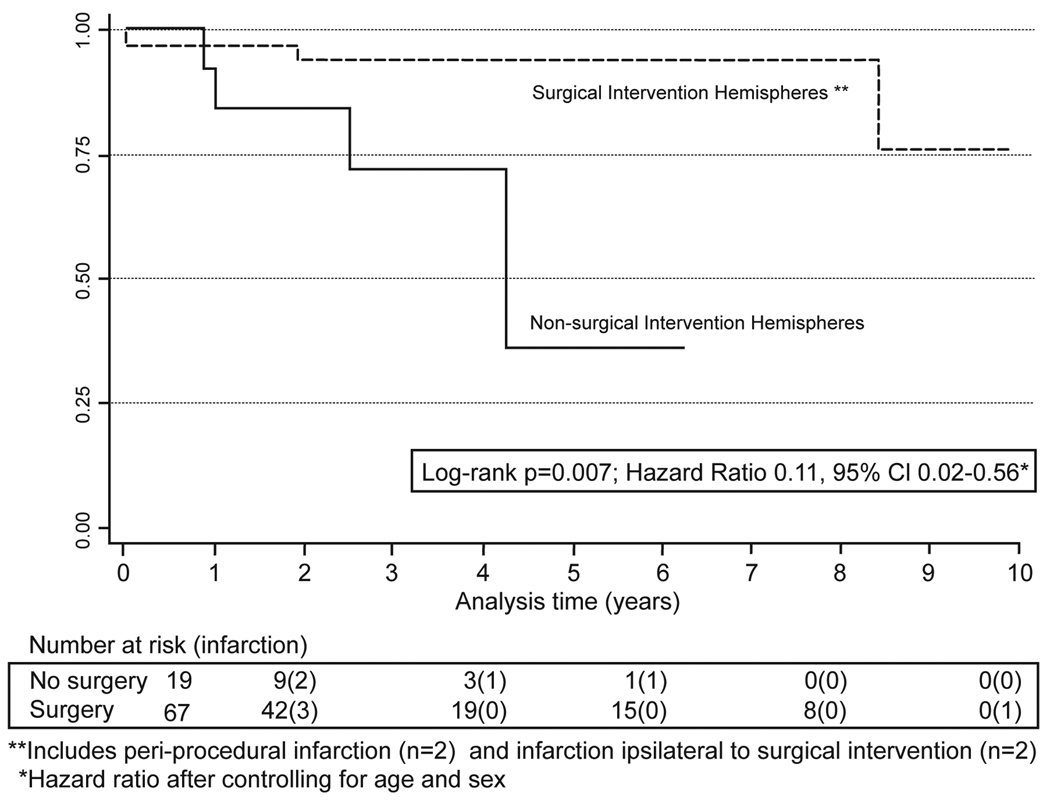
Results: The majority of patients were women (65%), were Caucasian (65%), presented with ischemic symptoms (98%), and had bilateral disease (86%). Nineteen patients underwent unilateral and 24 patients bilateral EDAS (67 treated hemispheres). Collateral vessels developed in 50 (98%) of 52 hemispheres for which imaging was available and there was evidence of increased perfusion on SPECT scans in 41 (82%) of the 50 hemispheres evaluated. Periprocedural infarction (< 48 hours) occurred in 3% of the hemispheres treated. In the follow-up period patients experienced 10 TIAs, 6 infarctions, and 1 intracranial hemorrhage. Although the hemisphere selected for surgery was based upon patients' symptoms and severity of pathology, the 5-year infarction-free survival rate was 94% in the surgically treated hemispheres versus < 36% in the untreated hemispheres (p = 0.007). After controlling for age and sex, infarction was 89% less likely to occur in the surgically treated hemispheres than in the contralateral hemispheres (hazard ratio 0.11, 95% CI 0.02-0.56). Thirty-eight (88%) of 43 patients had preserved or improved mRS scores, relative to baseline status.
Conclusions: In this mixed-race population of North American patients, indirect bypass promoted adequate pial collateral development and increased perfusion in the majority of adult patients with moyamoya disease. Patients had low rates of postoperative TIAs, infarction, and hemorrhage, and the majority of patients had preserved or improved functional status.
Conflict of interest statement
Figures
References
-
- Asahara T, Murohara T, Sullivan A, Silver M, van der Zee R, Li T, et al. Isolation of putative progenitor endothelial cells for angiogenesis. Science. 1997;275:964–967. - PubMed
-
- Chiu D, Shedden P, Bratina P, Grotta JC. Clinical features of moyamoya disease in the United States. Stroke. 1998;29:1347–1351. - PubMed
-
- Endo M, Kawano N, Miyaska Y, Yada K. Cranial burr hole for revascularization in moyamoya disease. J Neurosurg. 1989;71:180–185. - PubMed
-
- Hallemeier CL, Rich KM, Grubb RL, Chicoine MR, Moran CJ, Cross DT, et al. Clinical features and outcome in North American adults with moyamoya phenomenon. Stroke. 2006;37:1490–1496. - PubMed
-
- Han DH, Nam DH, Oh CW. Moyamoya disease in adults: characteristics of clinical presentation and outcome after encephalo-duro-arterio-synangiosis. Clin Neurol Neurosurg. 1997;99(Suppl 2):S151–S155. - PubMed
Publication types
MeSH terms
Grants and funding
LinkOut - more resources
Full Text Sources