


RXRA gene variations influence Alzheimer's disease risk and cholesterol metabolism
- PMID: 19374686
- PMCID: PMC3822518
- DOI: 10.1111/j.1582-4934.2009.00383.x
RXRA gene variations influence Alzheimer's disease risk and cholesterol metabolism
Abstract
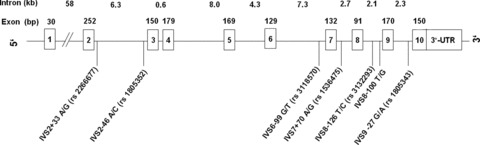
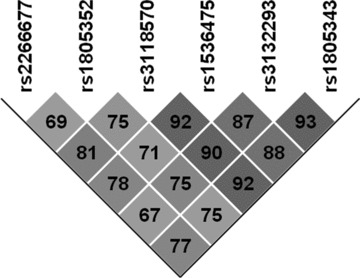
Cholesterol metabolism is altered in Alzheimer's disease (AD). The nuclear hormone receptor Retinoic X Receptor a (RXRa) is a member of the nuclear ligand-activated transcription factor family. RXRs are key regulators of cholesterol synthesis and thus cholesterol metabolism. We performed a systematic screen for gene variants in the RXRA gene. The effect of these gene variants on the risk of AD was investigated in 405 AD patients (mean age: 74.27 +/- 9.37 years; female 78.6%) and 347 controls (mean age: 73.26 +/- 8.37 years; female 57.2%). Furthermore, the influence of RXRA gene variants on CSF and plasma levels of cholesterol, lathosterol and 24S-hydroxycholesterol were evaluated. One of the identified seven SNPs in RXRA influenced AD risk in our single marker analysis (rs3132293: P= 0.006). Haplotype analysis identified a three-marker haplotype (TGC) consisting of rs3118570, rs1536475 and rs3132293, which decreased the risk of AD (P= 0.009). The single marker rs3132293 (P= 0.026) and the TGC haplotype (P= 0.026) influenced CSF lathosterol levels in non-demented controls, and cholesterol levels in the combined sample comprising AD patients and controls (Rs3132293: P= 0.050; TGC haplotype: P= 0.035). 24S-Hydroxycholesterol CSF and plasma levels were also influenced by rs3132293 (CSF: P= 0.004; plasma: P= 0.001) and the TGC haplotype (CSF: P= 0.004; plasma: P= 0.002); this effect was most pronounced in AD patients (rs3132293: CSF: P= 0.009, plasma: P= 0.002; TGC haplotype: CSF: P= 0.019, plasma: P= 0.005). Our results suggest that RXRA gene variants might act as risk factor for AD via an influence on cerebral cholesterol metabolism.
Figures
References
-
- Szolnoki Z. Pathomechanism of leukoaraiosis: a molecular bridge between the genetic, biochemical, and clinical processes (a mitochondrial hypothesis) Neuromolecular Med. 2007;9:21–34. - PubMed
-
- Strittmatter WJ, Weisgraber KH, Huang DY, Dong L-M, Salvesen GS, Pericak-Vance M, Schmechel D, Saunders AM, Goldgraber D, Roses AD. Binding of human apolipoprotein E to synthetic amyloid (i peptide: isoform-specific effects and implications for late-onset Alzheimer disease. Proc Natl Acad Sci USA. 1993;90:8098–102. - PMC - PubMed
-
- Kölsch H, Heun R, Kerksiek A, Bergmann KV, Maier W, Lütjohann D. Altered levels of plasma 24S- and 27-hydroxycholesterol in demented patients. Neurosci Lett. 2004;368:303–8. - PubMed
-
- Fassbender K, Simons M, Bergmann C, Stroick M, Lütjohann D, Keller P, Runz H, Kuhl S, Bertsch T, Von Bergmann K, Hennerici M, Beyreuther K, Hartmann T. Simvastatin strongly reduces levels of Alzheimer's disease beta – amyloid pep-tides Abeta 42 and Abeta 40 in vitro and in vivo. Proc Natl Acad Sci USA. 2001;98:5856–61. - PMC - PubMed
Publication types
MeSH terms
Substances
LinkOut - more resources
Full Text Sources
Medical
Molecular Biology Databases
