


Balance of Th1 and Th17 effector and peripheral regulatory T cells
- PMID: 19376259
- PMCID: PMC2720614
- DOI: 10.1016/j.micinf.2009.04.012
Balance of Th1 and Th17 effector and peripheral regulatory T cells
Abstract
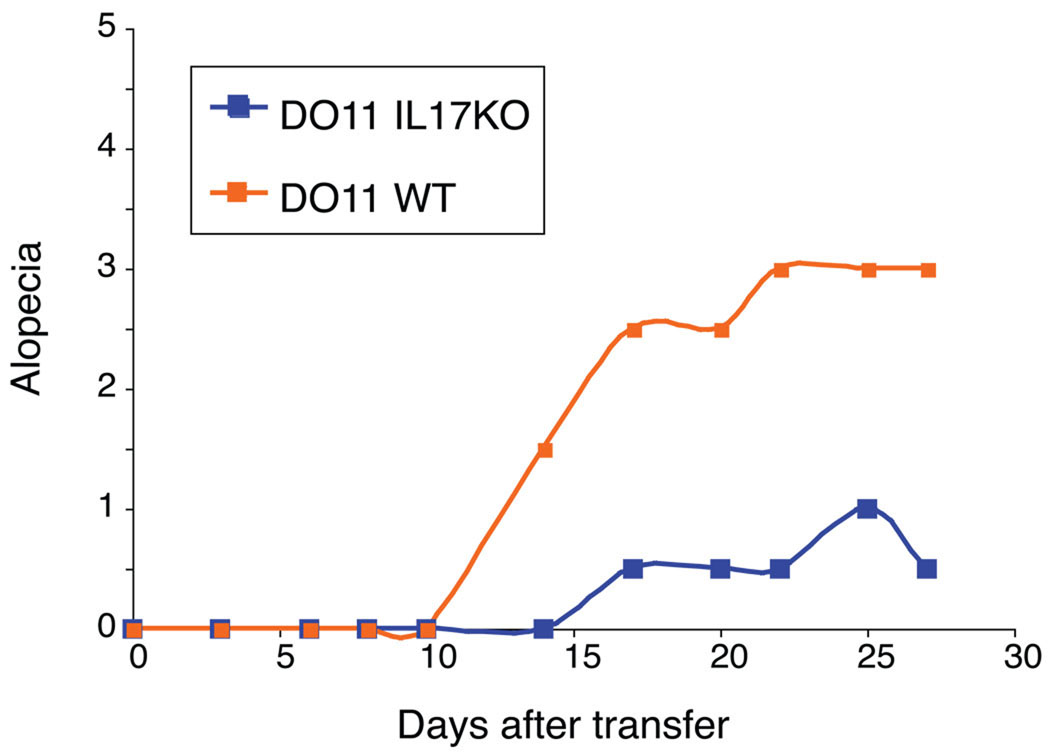
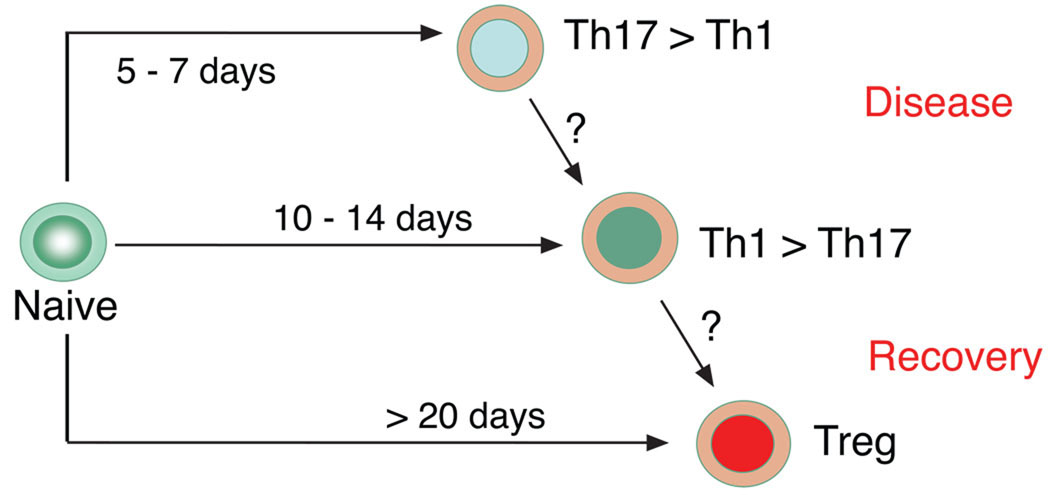
Transfer of antigen-specific T cells into antigen-expressing lymphopenic recipients leads to the sequential generation of Th1 and Th17 effector and protective CD25(+)FoxP3(+) regulatory cells in the periphery with surprisingly different kinetics. Such an experimental model is potentially valuable for defining the stimuli that regulate lineage decision and plasticity of various T cell effectors and peripheral regulatory T cells. Our studies have shown that IL-17 production occurs rapidly and declines within the first week with the appearance of IFN-gamma producing T cells. Regulatory T cells appear during the recovery phase of the disease. The factors that mediate this complex differentiation originating from a starting naïve T cell population remain to be defined.
Figures
References
-
- Cua DJ, Sherlock J, Chen Y, Murphy CA, Joyce B, Seymour B, Lucian L, To W, Kwan S, Churakova T, Zurawski S, Wiekowski M, Lira SA, Gorman D, Kastelein RA, Sedgwick JD. Interleukin-23 rather than interleukin-12 is the critical cytokine for autoimmune inflammation of the brain. Nature. 2003;421:744–748. - PubMed
-
- Harrington LE, Hatton RD, Mangan PR, Turner H, Murphy TL, Murphy KM, Weaver CT. Interleukin 17-producing CD4+ effector T cells develop via a lineage distinct from the T helper type 1 and 2 lineages. Nat Immunol. 2005;6:1123–1132. - PubMed
-
- Veldhoen M, Hocking RJ, Atkins CJ, Locksley RM, Stockinger B. TGFbeta in the context of an inflammatory cytokine milieu supports de novo differentiation of IL-17-producing T cells. Immunity. 2006;24:179–189. - PubMed
Publication types
MeSH terms
Substances
Grants and funding
LinkOut - more resources
Full Text Sources
