


Resveratrol inhibits dioxin-induced expression of human CYP1A1 and CYP1B1 by inhibiting recruitment of the aryl hydrocarbon receptor complex and RNA polymerase II to the regulatory regions of the corresponding genes
- PMID: 19376845
- PMCID: PMC2696325
- DOI: 10.1093/toxsci/kfp079
Resveratrol inhibits dioxin-induced expression of human CYP1A1 and CYP1B1 by inhibiting recruitment of the aryl hydrocarbon receptor complex and RNA polymerase II to the regulatory regions of the corresponding genes
Erratum in
- Toxicol Sci. 2010 Aug;116(2):693
Abstract
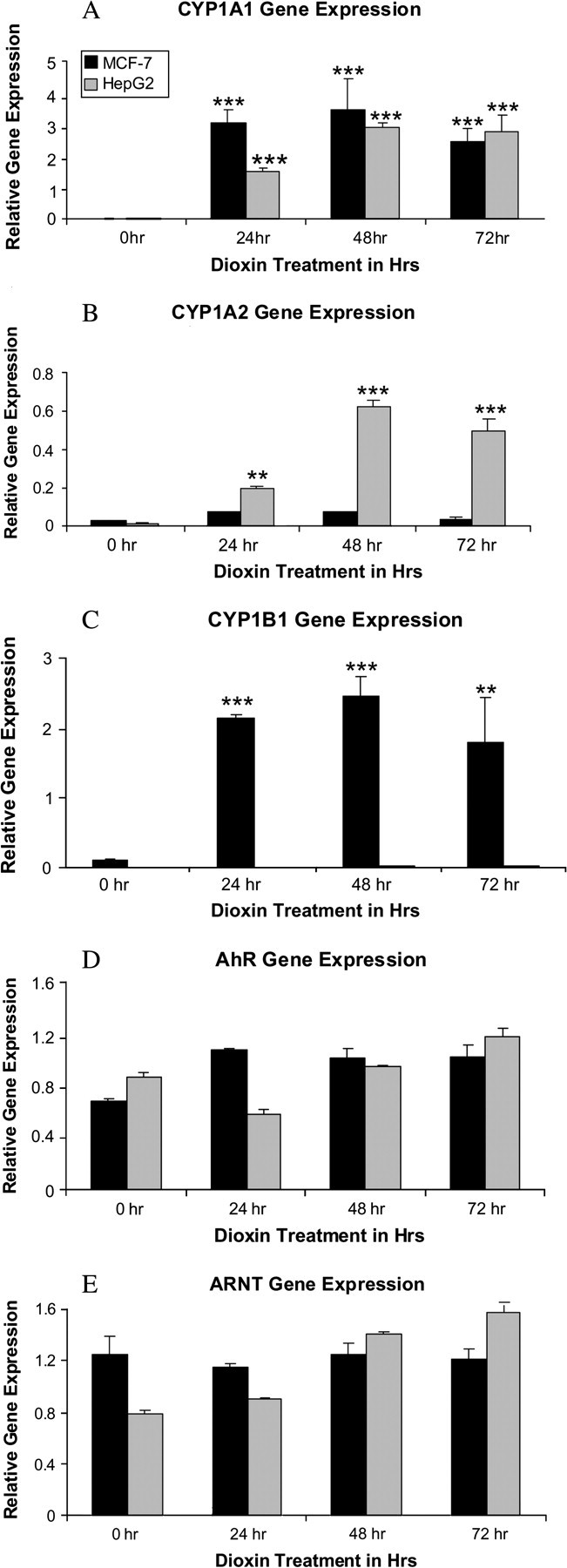
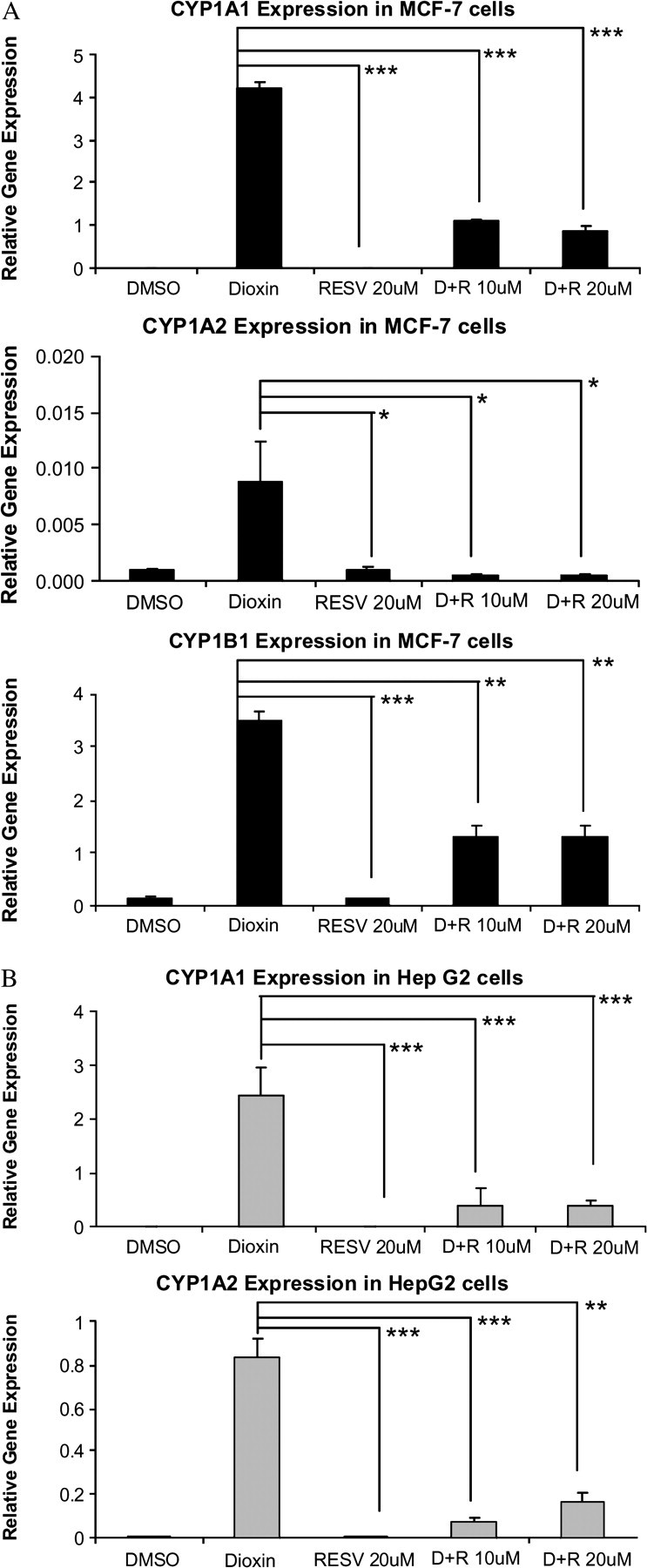
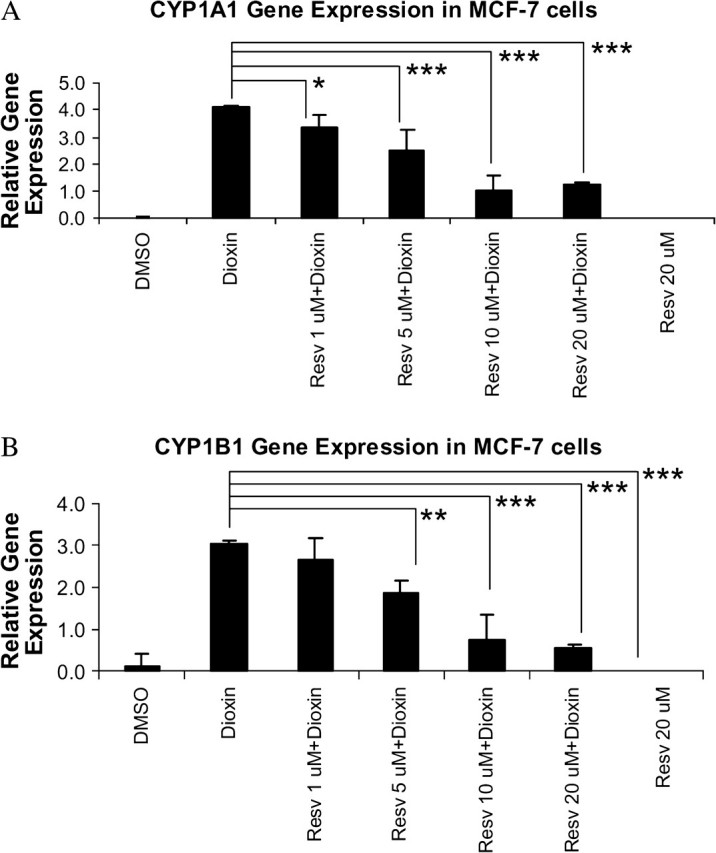
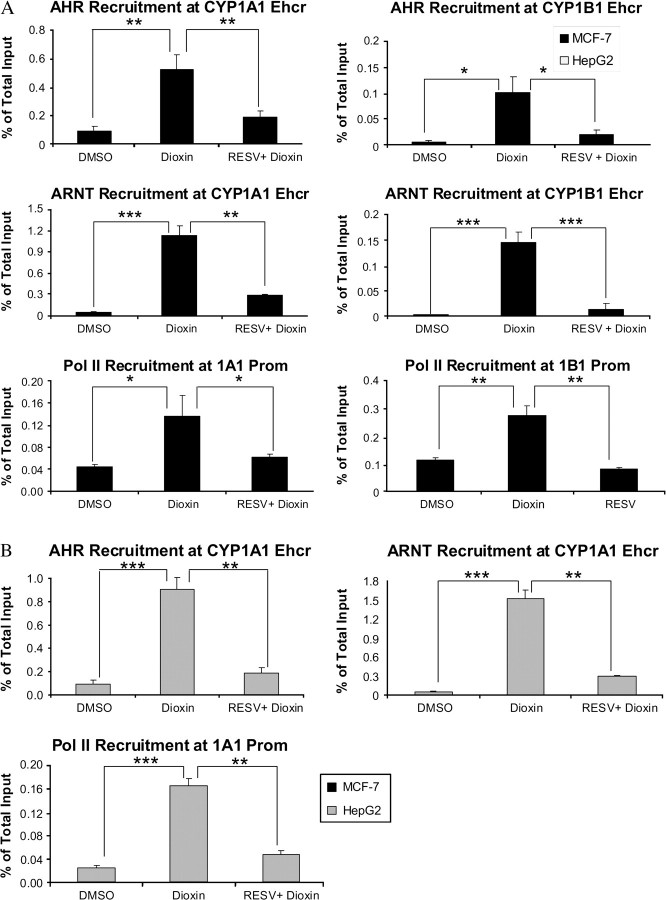
The CYP1A family of cytochrome P450s (CYPs), comprising CYP1A1, CYP1A2, and CYP1B1, plays a role in bioactivation of several procarcinogens to carcinogenic derivatives, and also in detoxification of several xenobiotic compounds. Resveratrol (3,4,5-trihydroxystelbine) is a naturally occurring compound that has been shown in a number of studies to inhibit the induction of CYP1A1 and CYP1B1 by dioxin (2,3,7,8-tetrachloro-dibenzo-p-dioxin), but the mechanism(s) of resveratrol inhibition is controversial. In the current study, 100nM dioxin treatment for 24, 48, and 72 h induced CYP1A1, CYP1A2, and CYP1B1 mRNA levels in the human breast cancer cell line MCF-7, and CYP1A1 and CYP1A2 mRNA levels in the human hepatocellular carcinoma cell line, HepG2. Simultaneous treatment with 10 microM resveratrol significantly inhibited dioxin-induced mRNA expression levels of these genes in both cell lines. Our studies are novel in that we used the chromatin immunoprecipitation assay to assay dioxin-induced recruitment of the aryl hydrocarbon receptor (AHR), and aryl hydrocarbon nuclear translocator (ARNT) to the enhancer regions and recruitment of RNA polymerase II to the promoter regions, of the CYP1A1 and CYP1B1 genes in their natural chromosomal settings. These recruitments were significantly inhibited in cells cotreated with resveratrol. Our studies thus indicate that resveratrol inhibits dioxin induction of the CYP1 family members either by directly or indirectly inhibiting the recruitment of the transcription factors AHR and ARNT to the xenobiotic response elements of the corresponding genes. The reduced transcriptional factor binding at their enhancers then results in reduced pol II recruitment at the promoters of these genes.
Figures
References
-
- Aluru N, Vijayan MM. Resveratrol affects CYP1A expression in rainbow trout hepatocytes. Aquat. Toxicol. 2006;77:291–297. - PubMed
-
- Aziz MH, Kumar R, Ahmad N. Cancer chemoprevention by resveratrol: In vitro and in vivo studies and the underlying mechanisms (review) Int. J. Oncol. 2003;23:17–28. - PubMed
-
- Casper RF, Quesne M, Rogers IM, Shirota T, Jolivet A, Milgrom E, Savouret JF. Resveratrol has antagonist activity on the aryl hydrocarbon receptor: Implications for prevention of dioxin toxicity. Mol. Pharmacol. 1999;56:784–790. - PubMed
-
- Chang TK, Chen J, Lee WB. Differential inhibition and inactivation of human CYP1 enzymes by trans-resveratrol: Evidence for mechanism-based inactivation of CYP1A2. J. Pharmacol. Exp. Ther. 2001;299:874–882. - PubMed
-
- Chang TK, Lee WB, Ko HH. Trans-resveratrol modulates the catalytic activity and mRNA expression of the procarcinogen-activating human cytochrome P450 1B1. Can. J. Physiol. Pharmacol. 2000;78:874–881. - PubMed
