


Novel critical role of Toll-like receptor 4 in lung ischemia-reperfusion injury and edema
- PMID: 19376887
- PMCID: PMC2711808
- DOI: 10.1152/ajplung.90406.2008
Novel critical role of Toll-like receptor 4 in lung ischemia-reperfusion injury and edema
Abstract
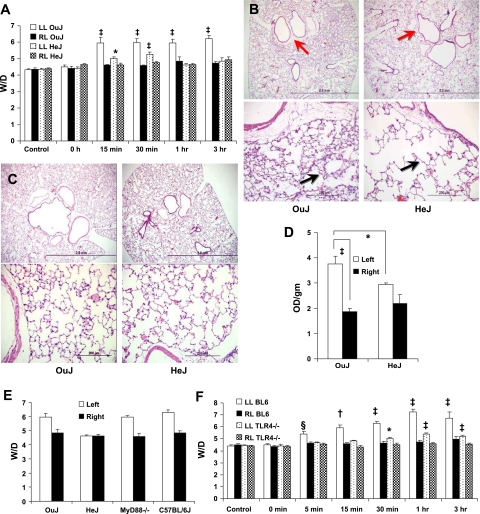
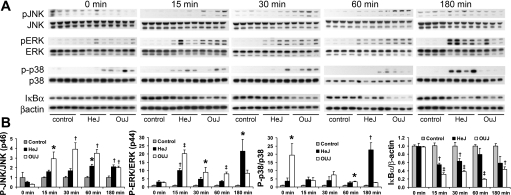
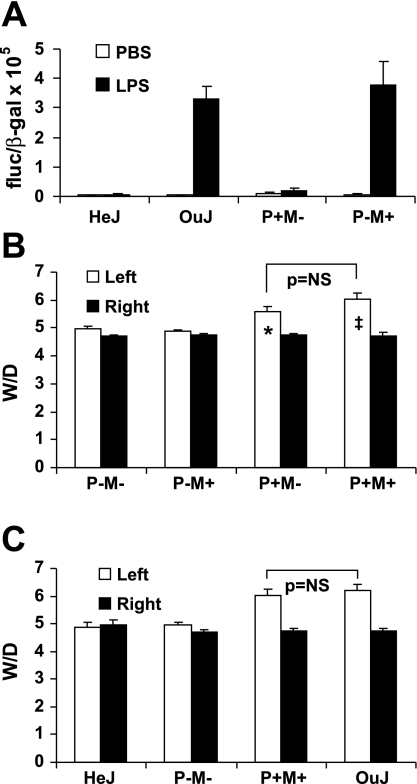
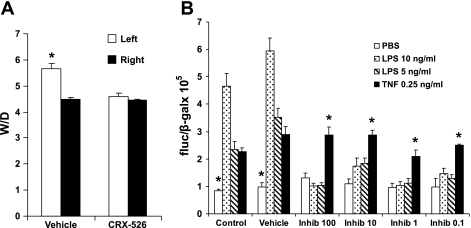
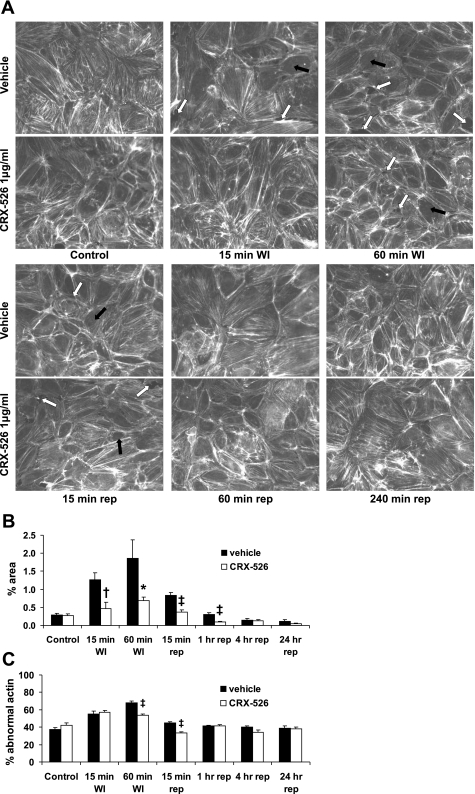
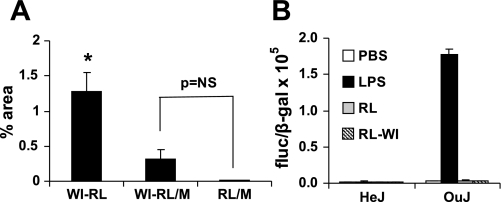
Toll-like receptors (TLRs) of the innate immune system contribute to noninfectious inflammatory processes. We employed a murine model of hilar clamping (1 h) with reperfusion times between 15 min and 3 h in TLR4-sufficient (C3H/OuJ) and TLR4-deficient (C3H/HeJ) anesthetized mice with additional studies in chimeric and myeloid differentiation factor 88 (MyD88)- and TLR4-deficient mice to determine the role of TLR4 in lung ischemia-reperfusion injury. Human pulmonary microvascular endothelial monolayers were subjected to simulated warm ischemia and reperfusion with and without CRX-526, a competitive TLR4 inhibitor. Functional TLR4 solely on pulmonary parenchymal cells, not bone marrow-derived cells, mediates early lung edema following ischemia-reperfusion independent of MyD88. Activation of MAPKs and NF-kappaB was significantly blunted and/or delayed in lungs of TLR4-deficient mice as a consequence of ischemia-reperfusion injury, but edema development appeared to be independent of activation of these signaling pathways. Pretreatment with a competitive TLR4 inhibitor prevented edema in vivo and reduced actin cytoskeletal rearrangement and gap formation in pulmonary microvascular endothelial monolayers subjected to simulated warm ischemia and reperfusion. In addition to its well-accepted role to alter gene transcription, functioning TLR4 on pulmonary parenchymal cells plays a key role in very early and profound pulmonary edema in murine lung ischemia-reperfusion injury. This may be due to a novel mechanism: regulation of endothelial cell cytoskeleton affecting microvascular endothelial cell permeability.
Figures
References
-
- Casiraghi M, Abano J, Burridge K, Randell S, Egan T. Toll-like receptor-4 (TLR4) inhibition reduces actin cytoskeletal re-arrangement and gap formation in cultured human pulmonary microvascular endothelial cells (HMVECs) subjected to simulated warm ischemia-reperfusion injury (IRI) (Abstract). J Heart Lung Transplant 27: S214–S215, 2008.
-
- Cho HY, Kleeberger SR. Genetic mechanisms of susceptibility to oxidative lung injury in mice. Free Radic Biol Med 42: 433–445, 2007. - PubMed
-
- Chow JC, Young DW, Golenbock DT, Christ WJ, Gusovsky F. Toll-like receptor-4 mediates lipopolysaccharide-induced signal transduction. J Biol Chem 274: 10689–10692, 1999. - PubMed
-
- de Groot H, Rauen U. Ischemia-reperfusion injury: processes in pathogenetic networks: a review. Transplant Proc 39: 481–484, 2007. - PubMed
-
- de Perrot M, Liu M, Waddell TK, Keshavjee S. Ischemia-reperfusion-induced lung injury. Am J Respir Crit Care Med 167: 490–511, 2003. - PubMed
Publication types
MeSH terms
Substances
Grants and funding
LinkOut - more resources
Full Text Sources
Other Literature Sources
Molecular Biology Databases
Miscellaneous
