


Prospective analysis of hip arthroscopy with 10-year followup
- PMID: 19381742
- PMCID: PMC2816779
- DOI: 10.1007/s11999-009-0841-7
Prospective analysis of hip arthroscopy with 10-year followup
Abstract
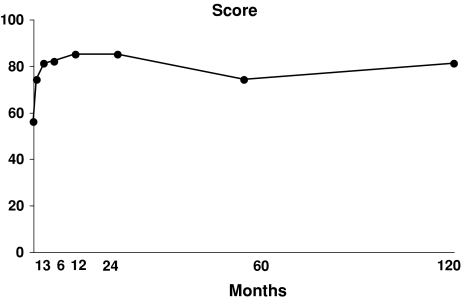
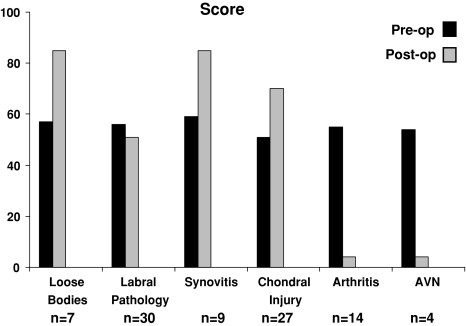
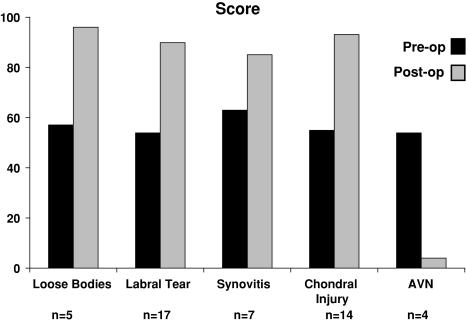
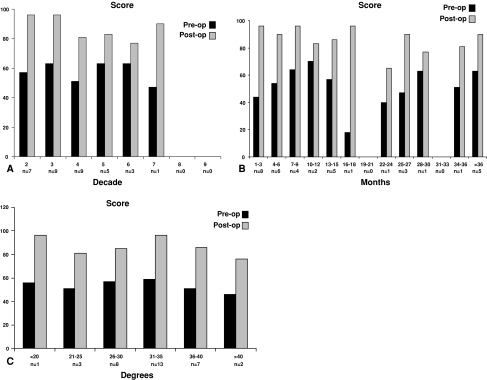
Arthroscopic surgery of the hip is a well-established technique with numerous recognized indications. Despite the well-accepted nature of this procedure, there have been no outcomes studies with extended followup. We investigated the response to hip arthroscopy in a consecutive series of patients with 10 years followup. Since 1993, all patients undergoing hip arthroscopy have been assessed prospectively with a modified Harris hip score preoperatively and then postoperatively at 3, 12, 24, 60, and 120 months. A cohort of 50 patients (52 hips) was identified who had achieved 10-year followup and represent the substance of this study. There was 100% followup. The average age of the patients was 38 years (range, 14-84 years), with 27 males and 23 females. The median improvement was 25 points (preoperative, 56 points; postoperative, 81 points). Fourteen patients were converted to THA and two died. Four patients underwent repeat arthroscopy. There were two complications in one patient. The presence of arthritis at the time of the index procedure was an indicator of poor prognosis. This study substantiates the long-term effectiveness of arthroscopy in the hip as treatment for various disorders, including labral pathology, chondral damage, synovitis, and loose bodies. Arthritis is an indicator of poor long-term outcomes with these reported methods.
Level of evidence: Level IV, therapeutic study. See Guidelines for Authors for a complete description of levels of evidence.
Figures
References
-
- Bynum CK, Tasto J. Arthroscopic treatment of synovial disorders in the shoulder, elbow, and ankle. J Knee Surg. 2002;15:57–59. - PubMed
-
- Byrd JW. Hip arthroscopy utilizing the supine position. Arthroscopy. 1994;10:275–280. - PubMed
-
- Byrd JW. Hip arthroscopy for post-traumatic loose fragments in the young active adult: three case reports. Clin J Sport Med. 1996;6:129–133; discussion 133–134. - PubMed
-
- Byrd JW. Hip arthroscopy: patient assessment and indications. Instr Course Lect. 2003;52:701–709. - PubMed
-
- Byrd JW. Hip arthroscopy. J Am Acad Orthop Surg. 2006;14:433–444. - PubMed
Publication types
MeSH terms
LinkOut - more resources
Full Text Sources
Medical
Research Materials
