


MYCN-non-amplified metastatic neuroblastoma with good prognosis and spontaneous regression: a molecular portrait of stage 4S
- PMID: 19383347
- PMCID: PMC5527812
- DOI: 10.1016/j.molonc.2008.07.002
MYCN-non-amplified metastatic neuroblastoma with good prognosis and spontaneous regression: a molecular portrait of stage 4S
Abstract
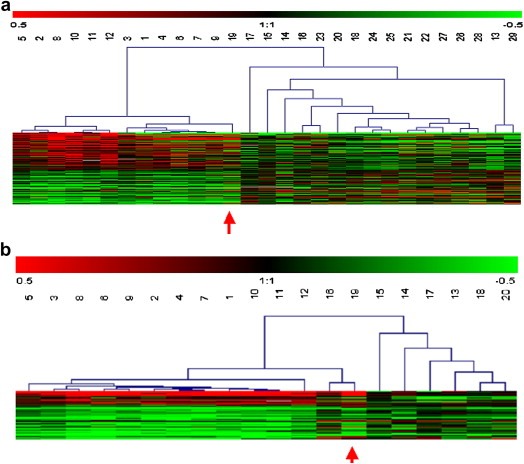
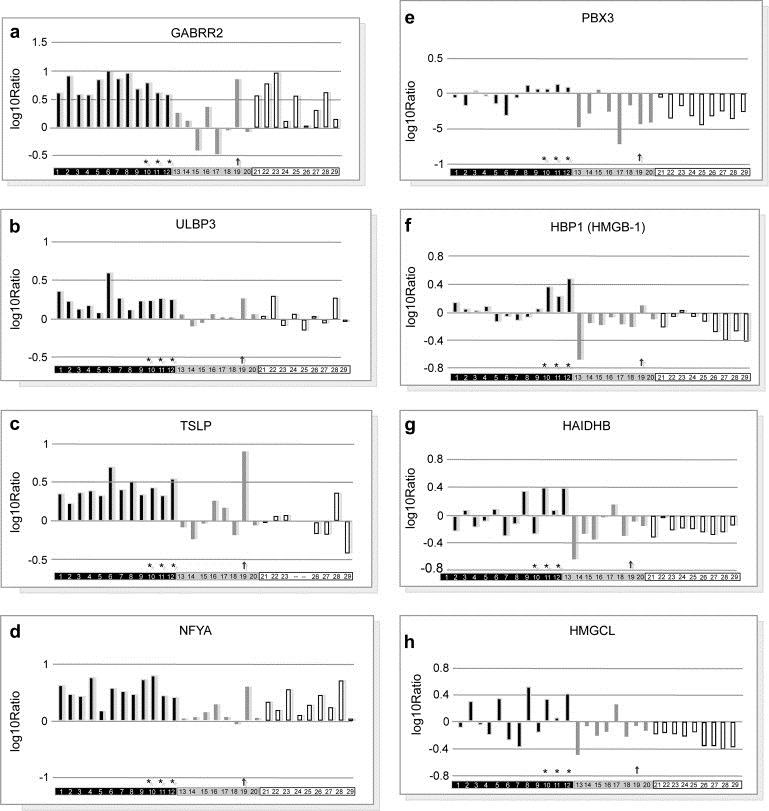
Stage 4 neuroblastoma (NB) are heterogeneous regarding their clinical presentations and behavior. Indeed infants (stage 4S and non-stage 4S of age <365days at diagnosis) show regression contrasting with progression in children (>365days). Our study aimed at: (i) identifying age-based genomic and gene expression profiles of stage 4 NB supporting this clinical stratification; and (ii) finding a stage 4S NB signature. Differential genome and transcriptome analyses of a learning set of MYCN-non amplified stage 4 NB tumors at diagnosis (n=29 tumors including 12 stage 4S) were performed using 1Mb BAC microarrays and Agilent 22K probes oligo-microarrays. mRNA chips data following filtering yielded informative genes before supervised hierarchical clustering to identify relationship among tumor samples. After confirmation by quantitative RT-PCR, a stage 4S NB's gene cluster was obtained and submitted to a validation set (n=22 tumors). Genomic abnormalities of infant's tumors (whole chromosomes gains or loss) differ radically from that of children (intra-chromosomal rearrangements) but could not discriminate infants with 4S from those without this presentation. In contrast, differential gene expression by looking at both individual genes and whole biological pathways leads to a molecular stage 4S NB portrait which provides new biological clues about this fascinating entity.
Figures
References
-
- Ambros, I.M. , Bénard, J. , Boavida, M. , Bown, N. , Caron, H. , Combaret, V. , Couturier, J. , Darnfors, C. , Delattre, O. , Freeman-Edward, J. , 2003. Quality assessment of genetic markers used for therapy stratification. J. Clin. Oncol. 21, 2077–2084. - PubMed
-
- Asgharzadeh, S. , Pique-Regi, R. , Sposto, R. , Wang, H. , Yang, Y. , Shimada, H. , Matthay, K. , Buckley, J. , Ortega, A. , Seeger, R.C. , 2006. Prognostic significance of gene expression profiles of metastatic neuroblastoma lacking MYCN amplification. J. Natl. Cancer Inst. 98, 1193–1201. - PubMed
-
- Attiyeh, E.F. , London, W.B. , Mosse, Y.P. , Wang, Q. , Winter, C. , Khazi, D. , Mc Grady, P. , Seeger, R.C. , Look, A.T. , Shimada, H. , 2005. Chromosome 1p and 11q deletions and outcome in neuroblastoma. N. Engl. J. Med. 353, 2243–2253. - PubMed
Publication types
MeSH terms
Substances
LinkOut - more resources
Full Text Sources
Medical
Molecular Biology Databases
Research Materials
Miscellaneous
