


Review
doi: 10.1016/j.molonc.2008.12.002.
Epub 2008 Dec 11.
Biomarkers in oncology drug development
Affiliations
- PMID: 19383364
- PMCID: PMC5527864
- DOI: 10.1016/j.molonc.2008.12.002
Item in Clipboard
Review
Biomarkers in oncology drug development
Mol Oncol.
2009 Feb.
Abstract
Biomarker measurements have become an essential component of oncology drug development, particularly so in this era of targeted therapies. Such measurements ensure that clinical studies are testing our biological hypotheses and can help make the difficult decisions required to choose which drugs to stop developing or de-prioritise. For those drugs taken forward, biomarker measurements may also help choose the appropriate dose, schedule and patient population. In this review we discuss the intrinsic properties of biological sample based efficacy measurements and how these relate to their implementation in oncology drug development by way of points to consider and examples.
Figures
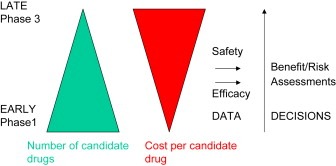
Schematic representing the role of measurements made during drug development. For ultimate drug approval risk/benefit is assessed by regulatory authorities. Prior to that, and providing a drug is judged safe, efficacy estimates are made to in an attempt to guide internal decisions and prioritise finite resources to the most promising candidates.
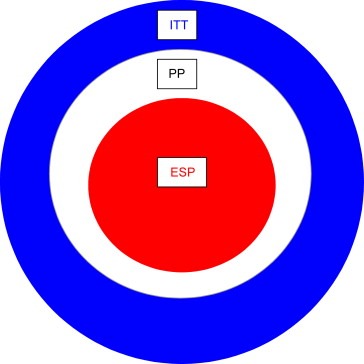
Diminishing returns. The evaluable sample population (ESP) is the population available for linking the effect of drug to a biomarker measurement. The ESP is a sub‐set of the per protocol population, which is itself a sub‐set of the intent to treat (ITT) population. An estimate of the ESP is vital to size a study correctly and must take into account attrition in obtaining samples and in obtaining definitive data from the samples. Even if a study can be correctly powered, significant attrition in obtaining either sample or result suggests an approach that would have difficulty in being translated into clinical practice.
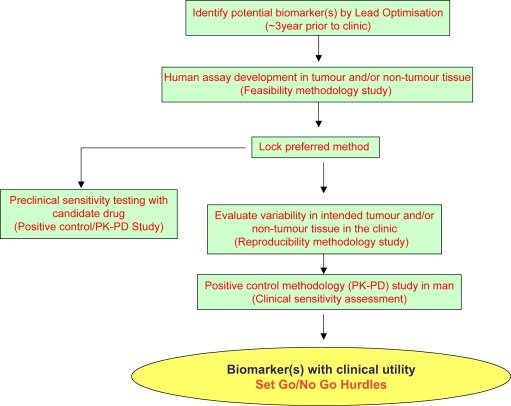
Roadmap for qualification of a biomarker in oncology drug development.
References
-
- Adjei, A.A. , Cohen, R.B. , Franklin, W. , Morris, C. , Wilson, D. , Molina, J.R. , Hanson, L.J. , Gore, L. , Chow, L. , Leong, S. , Maloney, L. , Gordon, G. , Simmons, H. , Marlow, A. , Litwiler, K. , Brown, S. , Poch, G. , Kane, K. , Haney, J. , Eckhardt, S.G. , 2008 May 1. Phase I pharmacokinetic and pharmacodynamic study of the oral, small-molecule mitogen-activated protein kinase 1/2 inhibitor AZD6244 (ARRY-142886) in patients with advanced cancers. J. Clin. Oncol.. 26, (13) 2139–2146. - PMC - PubMed
-
- Allard, W.J. , Matera, J. , Miller, M.C. , Repollet, M. , Connelly, M.C. , Rao, C. , Tibbe, A.G. , Uhr, J.W. , Terstappen, L.W. , 2004 Oct 15. Tumor cells circulate in the peripheral blood of all major carcinomas but not in healthy subjects or patients with nonmalignant diseases. Clin. Cancer. Res.. 10, (20) 6897–6904. - PubMed
-
- Altar, C.A. , Amakye, D. , Bounos, D. , Bloom, J. , Clack, G. , Dean, R. , Devanarayan, V. , Fu, D. , Furlong, S. , Hinman, L. , Girman, C. , Lathia, C. , Lesko, L. , Madani, S. , Mayne, J. , Meyer, J. , Raunig, D. , Sager, P. , Williams, S.A. , Wong, P. , Zerba, K. , 2008. Feb. A prototypical process for creating evidentiary standards for biomarkers and diagnostics. Clin. Pharmacol. Ther. 83, (2) 368–371. - PubMed
-
- Badve, S.S. , Baehner, F.L. , Gray, R.P. , Childs, B.H. , Maddala, T. , Liu, M.L. , Rowley, S.C. , Shak, S. , Perez, E.A. , Shulman, L.J. , 2008 May 20. Estrogen- and progesterone-receptor status in ECOG 2197: comparison of immunohistochemistry by local and central laboratories and quantitative reverse transcription polymerase chain reaction by central laboratory. J. Clin. Oncol.. 26, (15) 2473–2481. Erratum in: J. Clin. Oncol. Jul 10;26(20):3472. Perez, Edith D [corrected to Perez, Edith A] - PubMed
-
- Baker, S.G. , 2006 April 19. Surrogate endpoints: wishful thinking or reality?. J. Natl. Cancer Inst.. 98, (8) - PubMed
Publication types
MeSH terms
Substances
LinkOut - more resources
Full Text Sources
