


Late corneal edema due to retained foldable lens fragment
- PMID: 19384021
- PMCID: PMC2683446
- DOI: 10.4103/0301-4738.49401
Late corneal edema due to retained foldable lens fragment
Abstract
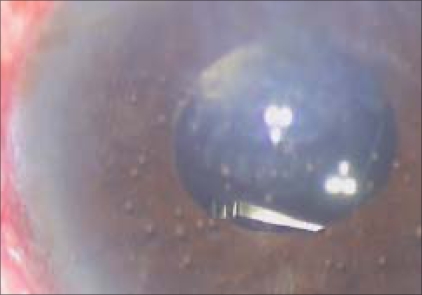
Late onset of corneal edema after cataract surgery is an unusual complication. We report a case of corneal edema presenting one month after cataract surgery. During implantation of the foldable lens, one haptic of the intraocular lens fractured at the optic haptic junction. This caused lens decentration, necessitating an intraocular lens exchange ten days later. The patient was recovering well but presented again two weeks later with a drop in vision due to corneal edema. A retained haptic of the intraocular lens was seen in the inferior anterior chamber angle. After surgical removal of the retained haptic the corneal edema fully resolved. Retained intraocular lens fragments can cause corneal endothelial damage, which may be reversible with an early diagnosis and intervention.
Figures



References
-
- Hui JI, Fishler J, Karp CL, Shuler MF, Gedde SJ. Retained nuclear fragments in the anterior chamber after phacoemulsification with an intact posterior capsule. Ophthalmology. 2006;113:1949–53. - PubMed
-
- Hoffman RS, Fine IH, Packer M. Retained IOL fragment and corneal decompensation after pseudophakic IOL exchange. J Cataract Refract Surg. 2004;30:1362–5. - PubMed
-
- Olsen TW, Hardten DR, Meiusi RS, Holland EJ. Linear endotheliitis. Am J Ophthalmol. 1994;117:468–74. - PubMed
-
- Gashau AG. Hydrophilic acrylic intraocular lens exchange: Five-year experience. J Cataract Refract Surg. 2006;32:1340–4. - PubMed
-
- Geggel HS. Simplified technique for acrylic intraocular lens explantation. Ophthalmic Surg Lasers. 2000;31:506–7. - PubMed
Publication types
MeSH terms
LinkOut - more resources
Full Text Sources
