


Glutaraldehyde-polymerized bovine hemoglobin and phosphodiesterase-5 inhibition
- PMID: 19384199
- PMCID: PMC3816936
- DOI: 10.1097/CCM.0b013e3181a00597
Glutaraldehyde-polymerized bovine hemoglobin and phosphodiesterase-5 inhibition
Abstract
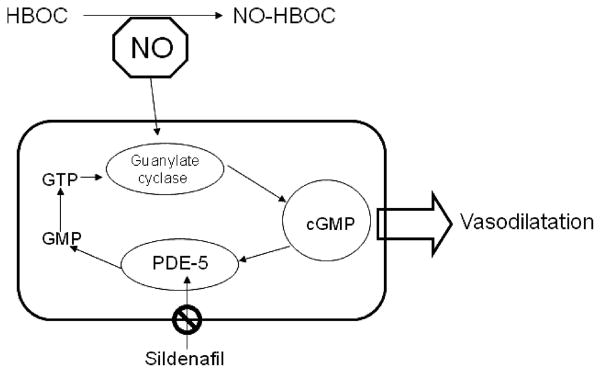
Objective: Hemoglobin-based oxygen carriers (HBOC) of several types scavenge nitric oxide from the vasculature resulting in vasoconstriction and hypertension, both systemic and pulmonary. Phosphodiesterase-5 (PDE5) inhibitors promote nitric oxide activity and enhance vasodilation. The purpose of this study was to determine whether combined therapy of glutaraldehyde-polymerized bovine hemoglobin (HBOC) with a PDE5 inhibitor would counter the negative hemodynamic consequences of HBOC therapy alone, resulting in improved hemodynamics and oxygen delivery.
Design: A controlled, experimental study.
Setting: A research laboratory at a university.
Subjects: Conscious male Sprague-Dawley rats.
Interventions: Glutaraldehyde-polymerized bovine hemoglobin (HBOC), sildenafil (PDE5 inhibitor), and lactated Ringer's solution (control).
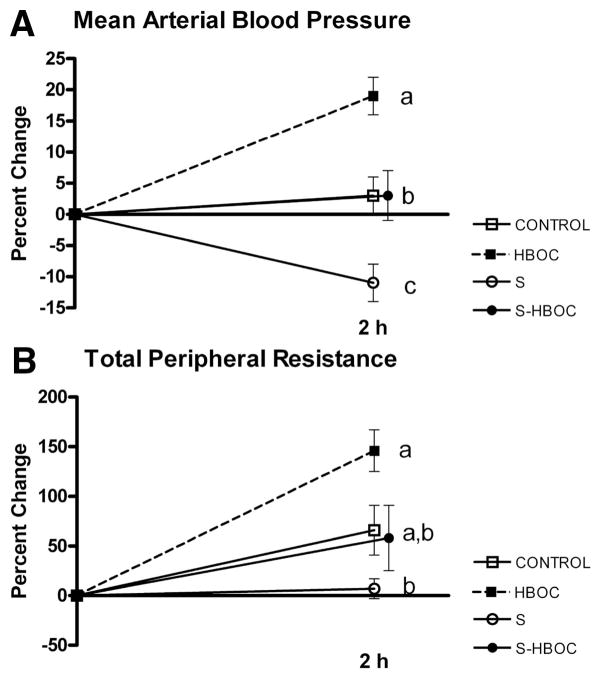
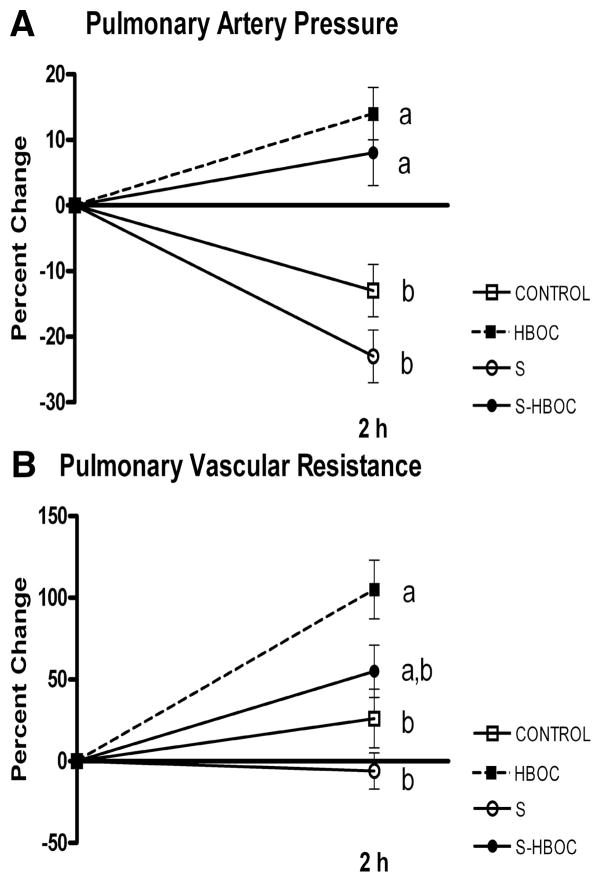
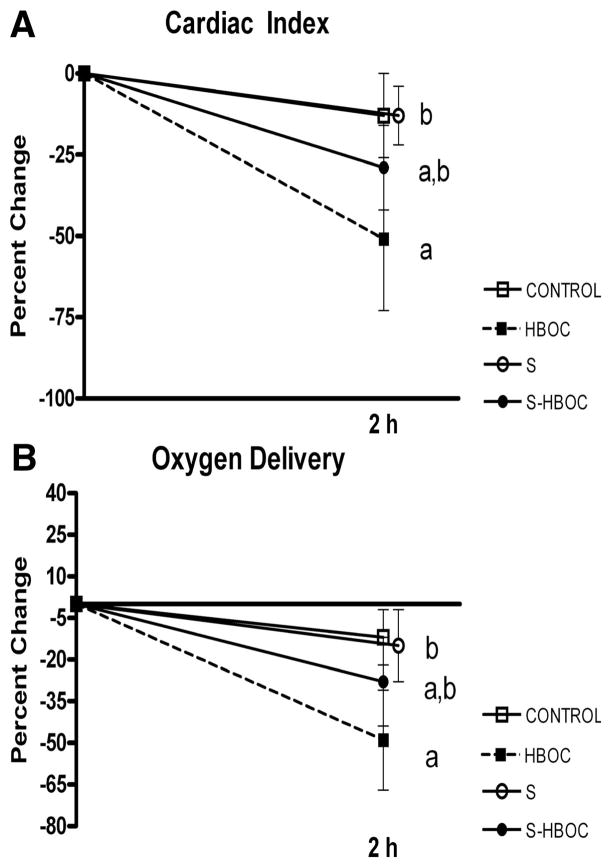
Measurements and main results: Infusion of the HBOC resulted in significant (p < 0.05) systemic and pulmonary vasoconstriction, with reduced cardiac output and reduced oxygen delivery to the periphery. Infusion of lactated Ringer's demonstrated no changes in the measured variables. Infusion of sildenafil alone reduced systemic and pulmonary artery blood pressure, while maintaining cardiac output and oxygen delivery. Combined HBOC and sildenafil infusion resulted in stable systemic blood pressure, cardiac output, and oxygen delivery. However, the addition of sildenafil to HBOC did not fully ameliorate the pulmonary vasoconstriction caused by HBOC.
Conclusion: The HBOC used in this study resulted in pulmonary and systemic hypertension, reduced cardiac output, and oxygen delivery. These negative consequences of HBOC treatment can be largely overcome by combing HBOC treatment with a PDE5 inhibitor (sildenafil). Thus, these data support the continued investigation of combined HBOC and PDE5 inhibitor treatment in circumstances in which HBOC therapy is being considered.
Conflict of interest statement
The authors have not disclosed any potential conflicts of interest.
Figures
Comment in
-
Will fixing the vasoactivity caused by hemoglobin-based oxygen carriers be enough?Crit Care Med. 2009 Jun;37(6):2125-6. doi: 10.1097/CCM.0b013e3181a5e521. Crit Care Med. 2009. PMID: 19448469 No abstract available.
References
-
- Moore EE, Johnson JL, Cheng AM, et al. Insights from studies of blood substitutes in trauma. Shock. 2005;24:197–205. - PubMed
-
- Spahn DR, Kocian R. Artificial O2 carriers: Status in 2005. Curr Pharm Des. 2005;11:4099–4114. - PubMed
-
- Winslow RM. Current status of oxygen carriers (‘blood substitutes’): 2006. Vox Sang. 2006;91:102–110. - PubMed
-
- Robinson MF, Dupuis NP, Kusumoto T, et al. Increased tumor oxygenation and radiation sensitivity in two rat tumors by a hemoglobin-based, oxygen-carrying preparation. Artif Cells Blood Substit Immobil Biotechnol. 1995;23:431–438. - PubMed
Publication types
MeSH terms
Substances
Grants and funding
LinkOut - more resources
Full Text Sources
Other Literature Sources
