


Nanoscale elongating control of the self-assembled protein filament with the cysteine-introduced building blocks
- PMID: 19384998
- PMCID: PMC2771298
- DOI: 10.1002/pro.106
Nanoscale elongating control of the self-assembled protein filament with the cysteine-introduced building blocks
Erratum in
- Protein Sci. 2009 Jul;18(7):1571
Abstract
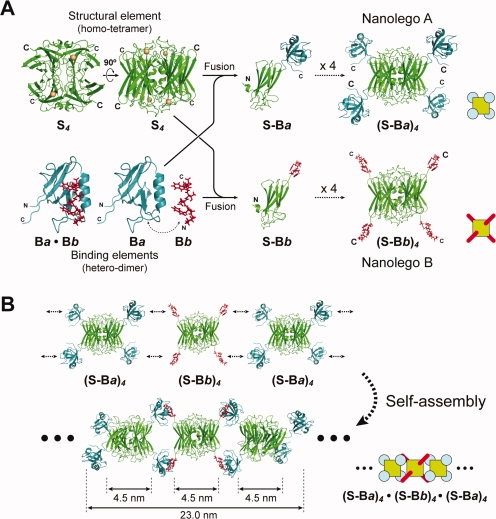
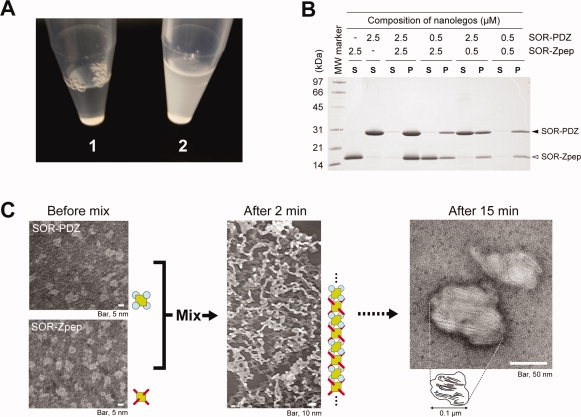
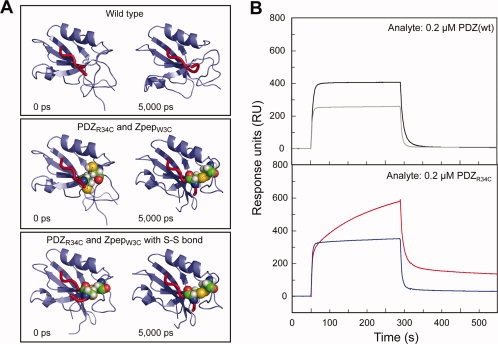
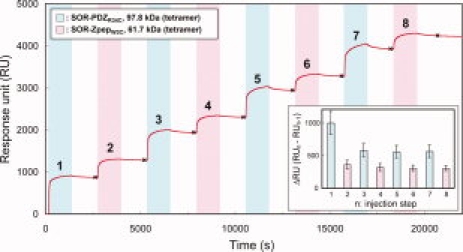
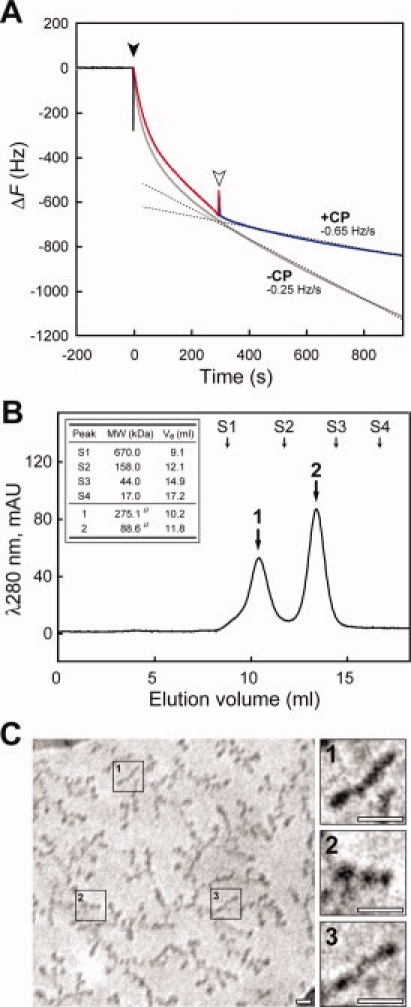
Self-assembly of artificially designed proteins is extremely desirable for nanomaterials. Here we show a novel strategy for the creation of self-assembling proteins, named "Nanolego." Nanolego consists of "structural elements" of a structurally stable symmetrical homo-oligomeric protein and "binding elements," which are multiple heterointeraction proteins with relatively weak affinity. We have established two key technologies for Nanolego, a stabilization method and a method for terminating the self-assembly process. The stabilization method is mediated by disulfide bonds between Cysteine-residues incorporated into the binding elements, and the termination method uses "capping Nanolegos," in which some of the binding elements in the Nanolego are absent for the self-assembled ends. With these technologies, we successfully constructed timing-controlled and size-regulated filament-shape complexes via Nanolego self-assembly. The Nanolego concept and these technologies should pave the way for regulated nanoarchitecture using designed proteins.
Figures
References
-
- Zhang S. Fabrication of novel biomaterials through molecular self-assembly. Nat Biotechnol. 2003;21:1171–1178. - PubMed
-
- Yeates TO, Padilla JE. Designing supramolecular protein assemblies. Curr Opin Struct Biol. 2002;12:464–470. - PubMed
-
- Ringler P, Schulz GE. Self-assembly of proteins into designed networks. Science. 2003;302:106–109. - PubMed
Publication types
MeSH terms
Substances
LinkOut - more resources
Full Text Sources
Other Literature Sources
