


Introgression of apomixis into sexual species is inhibited by mentor effects and ploidy barriers in the Ranunculus auricomus complex
- PMID: 19386790
- PMCID: PMC2706732
- DOI: 10.1093/aob/mcp093
Introgression of apomixis into sexual species is inhibited by mentor effects and ploidy barriers in the Ranunculus auricomus complex
Abstract
Background and aims: Apomictic plants maintain functional pollen, and via pollination the genetic factors controlling apomixis can be potentially transferred to congeneric sexual populations. In contrast, the sexual individuals do not fertilize apomictic plants which produce seeds without fertilization of the egg cells. This unidirectional introgressive hybridization is expected finally to replace sexuality by apomixis and is thought to be a causal factor for the wide geographical distribution of apomictic complexes. Nevertheless, this process may be inhibited by induced selfing (mentor effects) of otherwise self-incompatible sexual individuals. Here whether mentor effects or actual cross-fertilization takes place between diploid sexual and polyploid apomictic cytotypes in the Ranunculus auricomus complex was tested via experimental crosses.
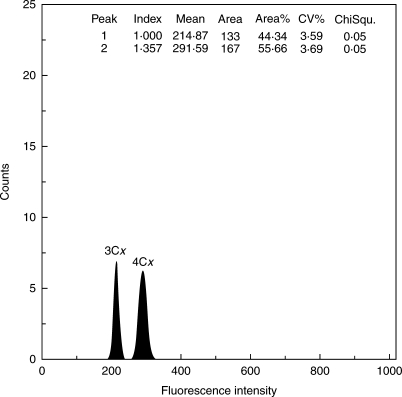
Methods: Diploid sexual mother plants were pollinated with tetra- and hexaploid apomictic pollen donators by hand, and the amount of well-developed seed compared with aborted seed was evaluated. The reproductive pathways were assessed in the well-developed seed via flow cytometric seed screen (FCSS).
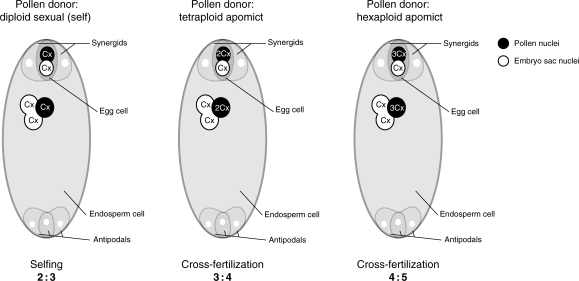
Key results: The majority of seed was aborted; the well-developed seeds have resulted from both mentor effects and cross-fertilization at very low frequencies (1.3 and 1.6 % of achenes, respectively). Pollination by 4x apomictic pollen plants results more frequently in cross-fertilization, whereas pollen from 6x plants more frequently induced mentor effects.
Conclusions: It is concluded that introgression of apomixis into sexual populations is limited by ploidy barriers in the R. auricomus complex, and to a minor extent by mentor effects. In mixed populations, sexuality cannot be replaced by apomixis because the higher fertility of sexual populations still compensates the low frequencies of potential introgression of apomixis.
Figures
References
-
- Asker SE, Jerling L. Apomixis in plants. Boca Raton, FL: CRC Press; 1992.
-
- Bell G. The masterpiece of nature: the evolution and genetics of sexuality. Berkeley: California Press; 1982.
-
- Baker HG. Support for Baker's law – as a rule. Evolution. 1967;21:853–856. - PubMed
-
- Baker HG, Stebbins GL. The genetics of colonizing species. New York: Academic Press; 1965.
-
- Barcaccia G, Arzenton F, Sharbel TF, Varotto S, Parrini P, Lucchin M. Genetic diversity and reproductive biology in ecotypes of the facultative apomict Hypericum perforatum L. Heredity. 2006;96:322–334. - PubMed
