


Leptin: a novel therapeutic strategy for Alzheimer's disease
- PMID: 19387109
- PMCID: PMC2908903
- DOI: 10.3233/JAD-2009-1021
Leptin: a novel therapeutic strategy for Alzheimer's disease
Abstract
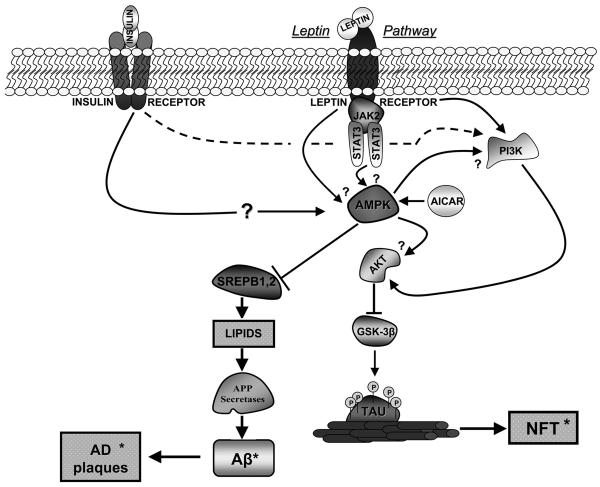
Adipocyte-derived leptin appears to regulate a number of features defining Alzheimer's disease (AD) at the molecular and physiological level. Leptin has been shown to reduce the amount of extracellular amyloid beta, both in cell culture and animal models, as well as to reduce tau phosphorylation in neuronal cells. Importantly, chronic administration of leptin resulted in a significant improvement in the cognitive performance of transgenic animal models. In AD, weight loss often precedes the onset of dementia and the level of circulating leptin is inversely proportional to the severity of cognitive decline. It is speculated that a deficiency in leptin levels or function may contribute to systemic and CNS abnormalities leading to disease progression. Furthermore, a leptin deficiency may aggravate insulin-controlled pathways, known to be aberrant in AD. These observations suggest that a leptin replacement therapy may be beneficial for these patients.
Figures
References
-
- Zhang Y, Proenca R, Maffei M, Barone M, Leopold L, Friedman JM. Positional cloning of the mouse obese gene and its human homologue. Nature. 1994;372:425–432. - PubMed
-
- Leibel RL, Chung WK, Chua SC., Jr. The molecular genetics of rodent single gene obesities. J Biol Chem. 1997;272:31937–31940. - PubMed
-
- Schwartz MW, Woods SC, Porte D, Jr., Seeley RJ, Baskin DG. Central nervous system control of food intake. Nature. 2000;404:661–671. - PubMed
-
- Shimomura I, Hammer RE, Ikemoto S, Brown MS, Goldstein JL. Leptin reverses insulin resistance and diabetes mellitus in mice with congenital lipodystrophy. Nature. 1999;401:73–76. - PubMed
Publication types
MeSH terms
Substances
Grants and funding
LinkOut - more resources
Full Text Sources
Other Literature Sources
Medical
