


Oxidative stress and mitochondrial dysfunction as determinants of ischemic neuronal death and survival
- PMID: 19393019
- PMCID: PMC2679225
- DOI: 10.1111/j.1471-4159.2009.05897.x
Oxidative stress and mitochondrial dysfunction as determinants of ischemic neuronal death and survival
Abstract
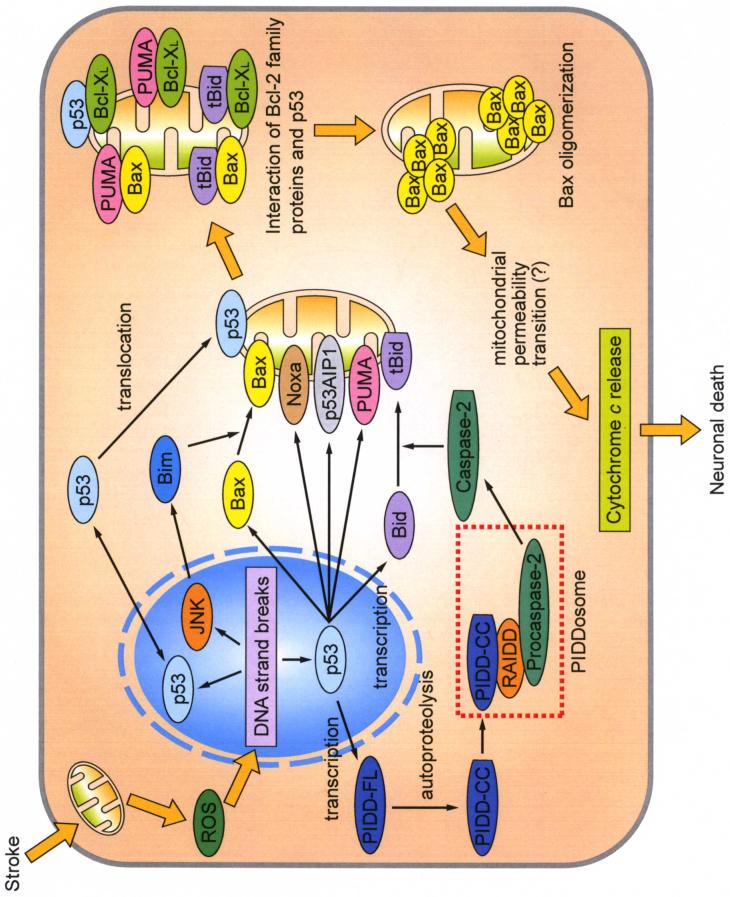
Mitochondria are the powerhouse of the cell. Their primary physiological function is to generate adenosine triphosphate through oxidative phosphorylation via the electron transport chain. Reactive oxygen species generated from mitochondria have been implicated in acute brain injuries such as stroke and neurodegeneration. Recent studies have shown that mitochondrially-formed oxidants are mediators of molecular signaling, which is implicated in the mitochondria-dependent apoptotic pathway that involves pro- and antiapoptotic protein binding, the release of cytochrome c, and transcription-independent p53 signaling, leading to neuronal death. Oxidative stress and the redox state of ischemic neurons are also implicated in the signaling pathway that involves phosphatidylinositol 3-kinase/Akt and downstream signaling, which lead to neuronal survival. Genetically modified mice or rats that over-express or are deficient in superoxide dismutase have provided strong evidence in support of the role of mitochondrial dysfunction and oxidative stress as determinants of neuronal death/survival after stroke and neurodegeneration.
Figures
References
-
- Bennett M, Macdonald K, Chan S-W, Luzio JP, Simari R, Weissberg P. Cell surface trafficking of Fas: a rapid mechanism of p53-mediated apoptosis. Science. 1998;282:290–293. - PubMed
-
- Caelles C, Helmberg A, Karin M. p53-Dependent apoptosis in the absence of transcriptional activation of p53-target genes [Letter] Nature. 1994;370:220–223. - PubMed
-
- Chan PH. Role of oxidants in ischemic brain damage. Stroke. 1996;27:1124–1129. - PubMed
Publication types
MeSH terms
Substances
Grants and funding
LinkOut - more resources
Full Text Sources
Research Materials
Miscellaneous
