


Phylogenetic reconstruction and the identification of ancient polymorphism in the Bovini tribe (Bovidae, Bovinae)
- PMID: 19393045
- PMCID: PMC2694835
- DOI: 10.1186/1471-2164-10-177
Phylogenetic reconstruction and the identification of ancient polymorphism in the Bovini tribe (Bovidae, Bovinae)
Abstract
Background: The Bovinae subfamily incorporates an array of antelope, buffalo and cattle species. All of the members of this subfamily have diverged recently. Not surprisingly, a number of phylogenetic studies from molecular and morphological data have resulted in ambiguous trees and relationships amongst species, especially for Yak and Bison species. A partial phylogenetic reconstruction of 13 extant members of the Bovini tribe (Bovidae, Bovinae) from 15 complete or partially sequenced autosomal genes is presented.
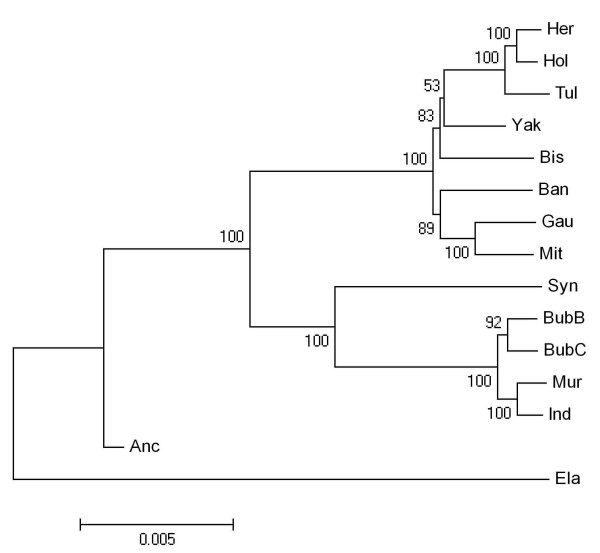
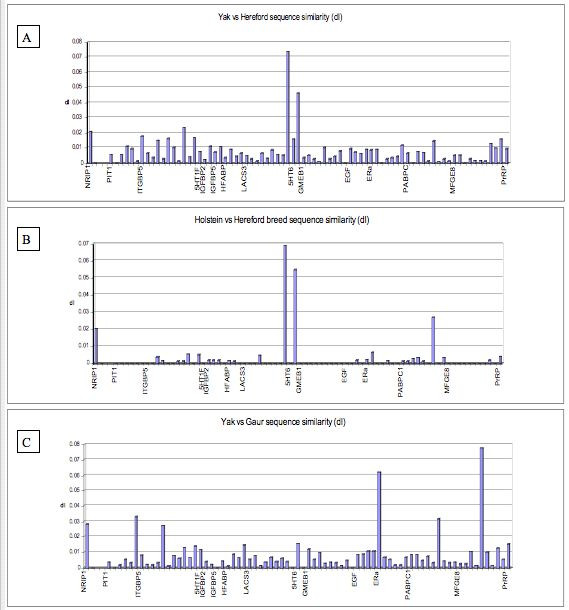
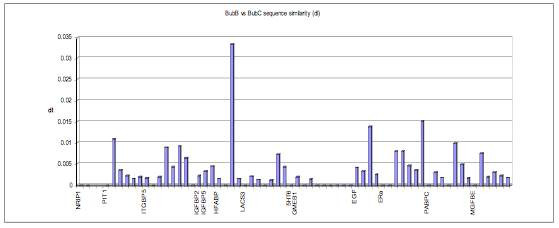
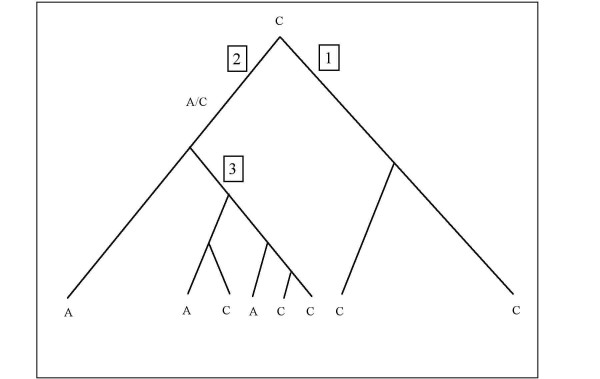
Results: We identified 3 distinct lineages after the Bovini split from the Boselaphini and Tragelaphini tribes, which has lead to the (1) Buffalo clade (Bubalus and Syncerus species) and a more recent divergence leading to the (2) Banteng, Gaur and Mithan and (3) Domestic cattle clades. A fourth lineage may also exist that leads to Bison and Yak. However, there was some ambiguity as to whether this was a divergence from the Banteng/Gaur/Mithan or the Domestic cattle clade. From an analysis of approximately 30,000 sites that were amplified in all species 133 sites were identified with ambiguous inheritance, in that all trees implied more than one mutation at the same site. Closer examination of these sites has identified that they are the result of ancient polymorphisms that have subsequently undergone lineage sorting in the Bovini tribe, of which 53 have remained polymorphic since Bos and Bison species last shared a common ancestor with Bubalus between 5-8 million years ago (MYA).
Conclusion: Uncertainty arises in our phylogenetic reconstructions because many species in the Bovini diverged over a short period of time. It appears that a number of sites with ambiguous inheritance have been maintained in subsequent populations by chance (lineage sorting) and that they have contributed to an association between Yak and Domestic cattle and an unreliable phylogenetic reconstruction for the Bison/Yak clade. Interestingly, a number of these aberrant sites are in coding sections of the genome and their identification may have important implications for studying the neutral rate of mutation at nonsynonymous sites. The presence of these sites could help account for the apparent contradiction between levels of polymorphism and effective population size in domesticated cattle.
Figures
References
-
- Lenstra JA, Bradley DG. Systematics and Phylogeny of Cattle. In: Fries R, Ruvinsky A, editor. The Genetics of Cattle. Wallingford: CAB International; 1999. pp. 1–14.
-
- Crawford AM, Dodds KG, Ede AJ, Pierson CA, Montgomery GW, Garmonsway HG, Beattie AE, Davies K, Maddox JF, Kappes SW, Stone RT, Nguyen TC, Penty JM, Lord EA, Broom JE, Buitkamp J, Schwaiger W, Epplen JT, Matthew P, Matthews ME, Hulme DJ, Beh KJ, McGraw RA, Beattie CW. An autosomal genetic linkage map of the sheep genome. Genetics. 1995;140:703–24. - PMC - PubMed
-
- Schaller GB, Wulin L. Distribution, status, and conservation of wild yak Bos grunniens. Bio Cons. 76:1–8. doi: 10.1016/0006-3207(96)85972-6. - DOI
-
- Ward TJ, Bielawski JP, Davis SK, Templeton JW, Derr JN. Identification of domestic cattle hybrids in wild cattle and bison species: a general approach using mtDNA markers and the parametric boostrap. Anim Cons. 1999;2:51–57. doi: 10.1111/j.1469-1795.1999.tb00048.x. - DOI
MeSH terms
LinkOut - more resources
Full Text Sources
