


Circular analysis in systems neuroscience: the dangers of double dipping
- PMID: 19396166
- PMCID: PMC2841687
- DOI: 10.1038/nn.2303
Circular analysis in systems neuroscience: the dangers of double dipping
Abstract
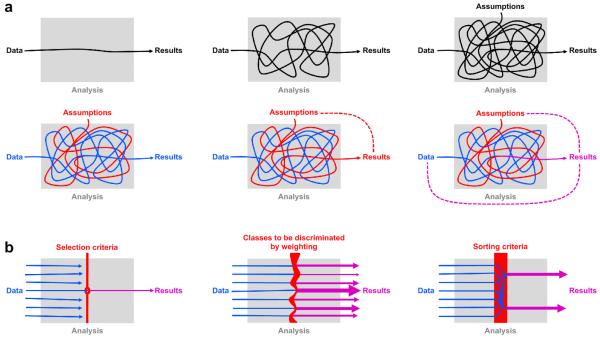
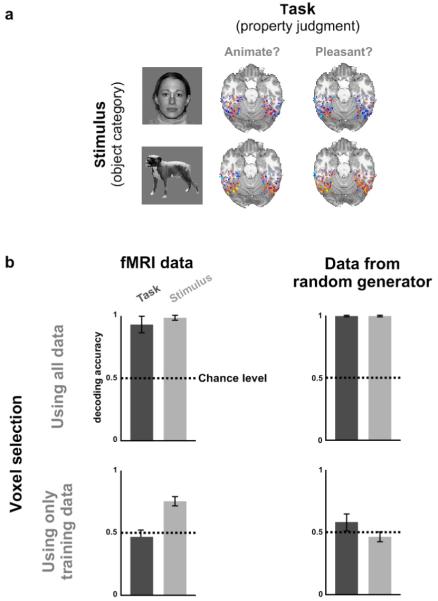
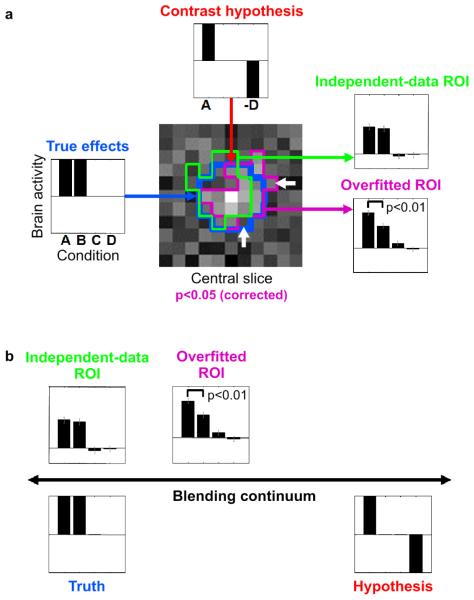
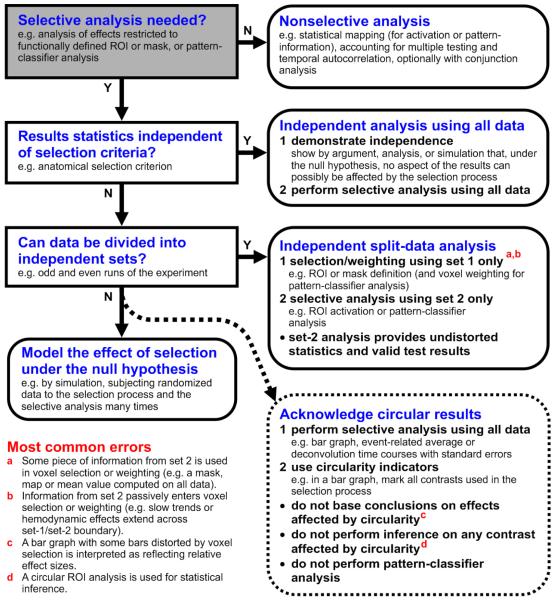
A neuroscientific experiment typically generates a large amount of data, of which only a small fraction is analyzed in detail and presented in a publication. However, selection among noisy measurements can render circular an otherwise appropriate analysis and invalidate results. Here we argue that systems neuroscience needs to adjust some widespread practices to avoid the circularity that can arise from selection. In particular, 'double dipping', the use of the same dataset for selection and selective analysis, will give distorted descriptive statistics and invalid statistical inference whenever the results statistics are not inherently independent of the selection criteria under the null hypothesis. To demonstrate the problem, we apply widely used analyses to noise data known to not contain the experimental effects in question. Spurious effects can appear in the context of both univariate activation analysis and multivariate pattern-information analysis. We suggest a policy for avoiding circularity.
Figures
Comment in
-
Double-dipping revisited.Nat Neurosci. 2019 May;22(5):688-690. doi: 10.1038/s41593-019-0398-z. Nat Neurosci. 2019. PMID: 31011228 No abstract available.
References
-
- Baker CI, Hutchison TL, Kanwisher N. Does the fusiform face area contain subregions highly selective for nonfaces? Nat Neurosci. 2007;10(1):3–4. - PubMed
-
- Simmons WK, Matlis S, Bellgowan PS, Bodurka J, Barsalou LW, Martin A. Imaging the context-sensitivity of ventral temporal category representations using high-resolution fMRI. Society for Neuroscience Abstracts. 2006
-
- Vul E, Kanwisher N. Begging the question: The non-independence error in fMRI data analysis. In: Hanson S, Bunzl M, editors. Foundations and Philosophy for Neuroimaging. in press. To appear in.
-
- Vul E, Harris C, Winkielman P, Pashler H. Perspectives on Psychological Science. Puzzlingly High Correlations in fMRI Studies of Emotion, Personality, and Social Cognition. in press. - PubMed
Publication types
MeSH terms
Grants and funding
LinkOut - more resources
Full Text Sources
Other Literature Sources
Medical
