


Decreased immune responses to influenza vaccination in patients with heart failure
- PMID: 19398087
- PMCID: PMC2696231
- DOI: 10.1016/j.cardfail.2008.11.009
Decreased immune responses to influenza vaccination in patients with heart failure
Abstract
Background: Heart failure (HF) patients are at risk for influenza despite widespread vaccination. Both humoral (antibody) and cytotoxic T-lymphocyte (CTL) responses are important for protection. We explored antibody- and CTL-mediated responses to the influenza vaccine in HF patients compared with healthy controls.
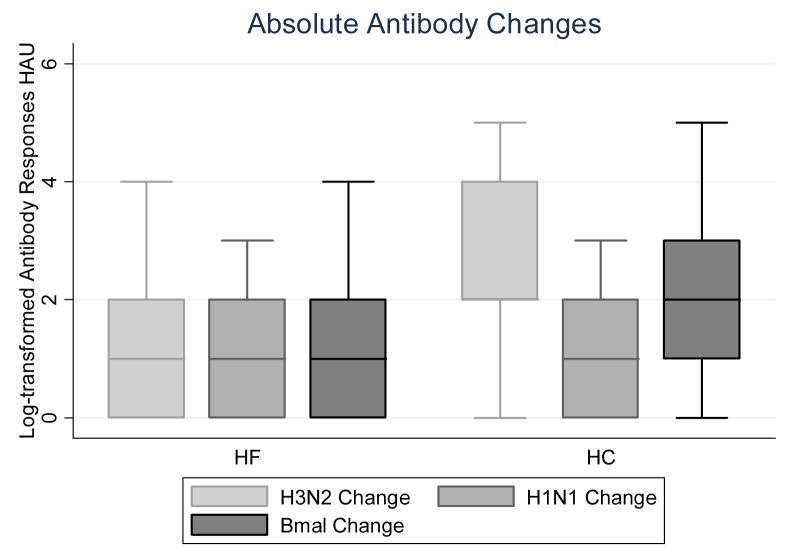
Methods and results: We studied 29 HF patients (9 ischemic, 20 nonischemic) stable on HF therapies and 17 healthy controls. Participants had phlebotomy before and after influenza vaccination. Antibody production was measured in serum by hemagglutination inhibition assay and CTL responses (via interferon [IFN]-gamma and interleukin [IL]-10 production) were measured in isolated peripheral blood mononuclear cells with enzyme-linked immunosorbent assay. CTL responses demonstrated increased IL-10 production in HF patients after vaccination (P = .002), but similar IFN-gamma responses to healthy controls. All participants demonstrated antibody seroprotection; groups had similar rates of seroconversion (P = NS). Antibody-mediated response to the newest vaccine antigen, H3N2, was reduced in HF (P = .009).
Conclusions: Patients with HF had higher vaccine induced IL-10 concentrations, suggesting a different CTL phenotype for vaccine responses. HF patients did not mount as vigorous of an antibody immune response to the newest vaccine viral strain compared with healthy individuals. These data suggest that immunologic memory may be important for vaccine protection in HF patients.
Figures


Comment in
-
Decreased immune responses to influenza vaccination in patients with heart failure.J Card Fail. 2009 Aug;15(6):549; author reply 549-51. doi: 10.1016/j.cardfail.2009.05.007. Epub 2009 Jun 21. J Card Fail. 2009. PMID: 19643367 Free PMC article. No abstract available.
References
-
- Fleming DM, Elliot AJ. The impact of influenza on the health and health care utilisation of elderly people. Vaccine. 2005 Jul 8;23( Suppl 1):S1–9. - PubMed
-
- Nichol KL, Nordin J, Mullooly J, Lask R, Fillbrandt K, Iwane M. Influenza vaccination and reduction in hospitalizations for cardiac disease and stroke among the elderly. The New England journal of medicine. 2003 Apr 3;348(14):1322–32. - PubMed
-
- Ohmit SE, Monto AS. Influenza vaccine effectiveness in preventing hospitalization among the elderly during influenza type A and type B seasons. International journal of epidemiology. 1995 Dec;24(6):1240–8. - PubMed
-
- Hak E, Buskens E, van Essen GA, de Bakker DH, Grobbee DE, Tacken MA, et al. Clinical effectiveness of influenza vaccination in persons younger than 65 years with high-risk medical conditions: the PRISMA study. Archives of internal medicine. 2005 Feb 14;165(3):274–80. - PubMed
Publication types
MeSH terms
Substances
Grants and funding
LinkOut - more resources
Full Text Sources
Medical
Research Materials
Miscellaneous
