. 2009 Winter;2(1):28-37.

Bacterial vaginosis: an overview for 2009

Affiliations

Bacterial vaginosis: an overview for 2009

Charles H Livengood. Rev Obstet Gynecol. 2009 Winter.

Abstract

Bacterial vaginosis has been appreciated as a unique clinical entity for well over 50 years. Its essential manifestations are well established: a loss of the normal bacterial population of the vagina and their replacement by other species. Investigations into this condition have led to a better understanding of its prevalence and epidemiology. Microbiologic and biochemical studies have exposed the remarkably complex pathophysiologic events that occur with bacterial vaginosis. Several major morbidities accompany this condition. Advances have been made in treatment, including the recent availability of a new therapeutic agent, tinidazole. However, the root cause of the condition is elusive, and as a result managing bacterial vaginosis and its complications is unsatisfactory; moreover, data suggest that therapy now is less successful than in the past. This article brings together the current fund of knowledge about bacterial vaginosis in a way that offers clinicians a realistic view of our capabilities and concerns.

Keywords: Bacterial vaginosis; Gardnerella vaginalis; Haemophilus vaginalis; Metronidazole; Tinidazole.


Figures
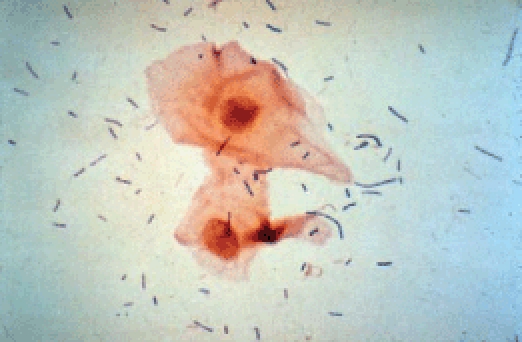
Figure 1
Figure 1
Gram stain of normal vaginal contents (original magnification, ×400). Note predominance of Lactobacillus species that produce hydrogen peroxide, organic acids, and bacteriocins that suppress growth of other species.
Figure 2
Figure 2
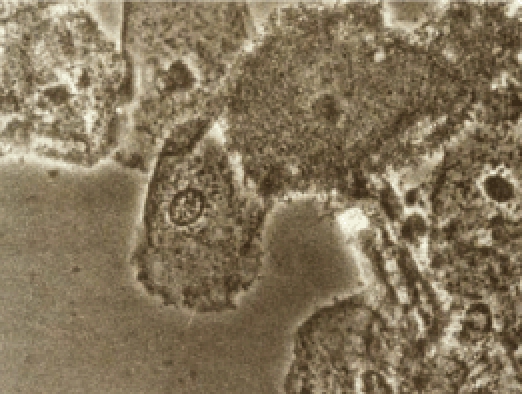
Clue cells in saline (original magnification, ×400). Note the rough, cloudy, irregular borders that define the clue cell in the third and fourth cells from left. The second cell from left has stippling over the cytoplasm, but edges are sharp and linear; this is not a clue cell.

References

    1. Gardner HL, Dukes CD. Haemophilus vaginalis vaginitis: a newly defined specific infection previously classified “nonspecific” vaginitis. Am J Obstet Gynecol. 1955;69:962. - PubMed
    1. Criswell BS, Ludwig CL, Gardner HL, et al. Vaginitis by inoculation from culture. Obstet Gynecol. 1969;33:195. - PubMed
    1. Eschenbach DA, Davick PR, Williams BL, et al. Prevalence of hydrogen peroxide-producing Lactobacillus species in normal women and women with bacterial vaginosis. J Clin Microbiol. 1989;27:251–256. - PMC - PubMed
    1. Valore EV, Wiley DJ, Ganz T. Reversible deficiency of antimicrobial polypeptides in bacterial vaginosis. Infect Immun. 2006;74:5693–5702. - PMC - PubMed
    1. Ferris MJ, Norori J, Zozaya-Hinchliffe M, Martin DH. Cultivation-independent analysis of changes in bacterial vaginosis flora following metronidazole treatment. J Clin Microbiol. 2007;45:1016–1018. - PMC - PubMed

LinkOut - more resources