


Physical inactivity and obesity underlie the insulin resistance of aging
- PMID: 19401446
- PMCID: PMC2713647
- DOI: 10.2337/dc09-0267
Physical inactivity and obesity underlie the insulin resistance of aging
Abstract
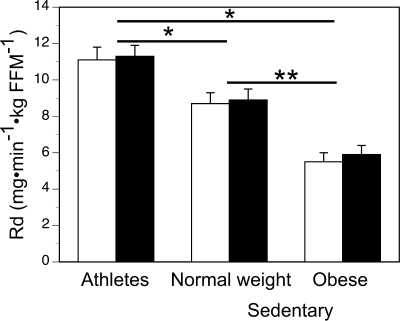
OBJECTIVE Age-associated insulin resistance may underlie the higher prevalence of type 2 diabetes in older adults. We examined a corollary hypothesis that obesity and level of chronic physical inactivity are the true causes for this ostensible effect of aging on insulin resistance. RESEARCH DESIGN AND METHODS We compared insulin sensitivity in 7 younger endurance-trained athletes, 12 older athletes, 11 younger normal-weight subjects, 10 older normal-weight subjects, 15 younger obese subjects, and 15 older obese subjects using a glucose clamp. The nonathletes were sedentary. RESULTS Insulin sensitivity was not different in younger endurance-trained athletes versus older athletes, in younger normal-weight subjects versus older normal-weight subjects, or in younger obese subjects versus older obese subjects. Regardless of age, athletes were more insulin sensitive than normal-weight sedentary subjects, who in turn were more insulin sensitive than obese subjects. CONCLUSIONS Insulin resistance may not be characteristic of aging but rather associated with obesity and physical inactivity.
Figures
References
-
- Defronzo RA: Glucose intolerance and aging: evidence for tissue insensitivity to insulin. Diabetes 1979; 28: 1095– 1101 - PubMed
-
- Reaven GM: Banting lecture 1988: Role of insulin resistance in human disease. Diabetes 1988; 37: 1595– 1607 - PubMed
-
- Harris MI, Flegal KM, Cowie CC, Eberhardt MS, Goldstein DE, Little RR, Wiedmeyer HM, Byrd-Holt DD: Prevalence of diabetes, impaired fasting glucose, and impaired glucose tolerance in U.S. adults: the Third National Health and Nutrition Examination Survey, 1988–1994. Diabetes Care 1998; 21: 518– 524 - PubMed
