


Genetic determinants of facial clefting: analysis of 357 candidate genes using two national cleft studies from Scandinavia
- PMID: 19401770
- PMCID: PMC2671138
- DOI: 10.1371/journal.pone.0005385
Genetic determinants of facial clefting: analysis of 357 candidate genes using two national cleft studies from Scandinavia
Abstract
Background: Facial clefts are common birth defects with a strong genetic component. To identify fetal genetic risk factors for clefting, 1536 SNPs in 357 candidate genes were genotyped in two population-based samples from Scandinavia (Norway: 562 case-parent and 592 control-parent triads; Denmark: 235 case-parent triads).
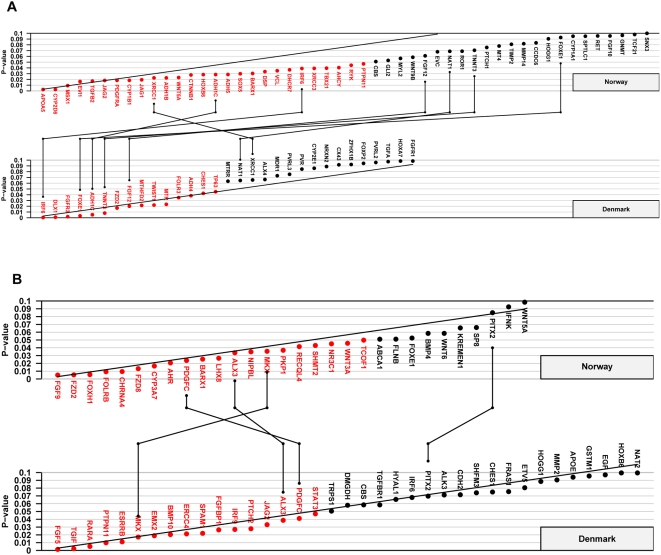
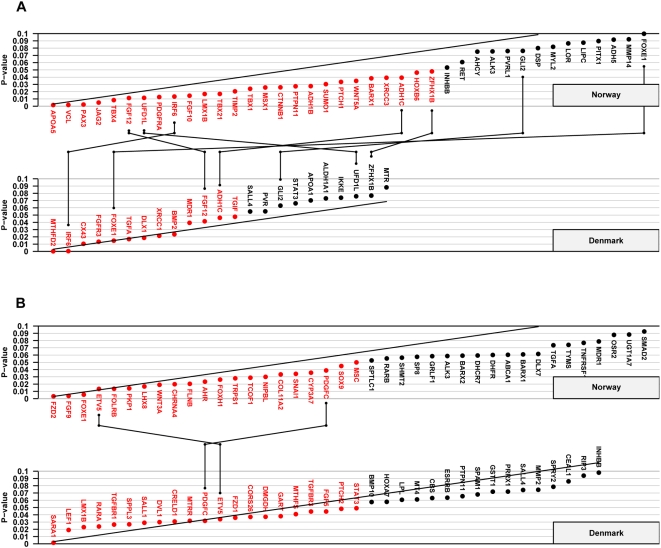
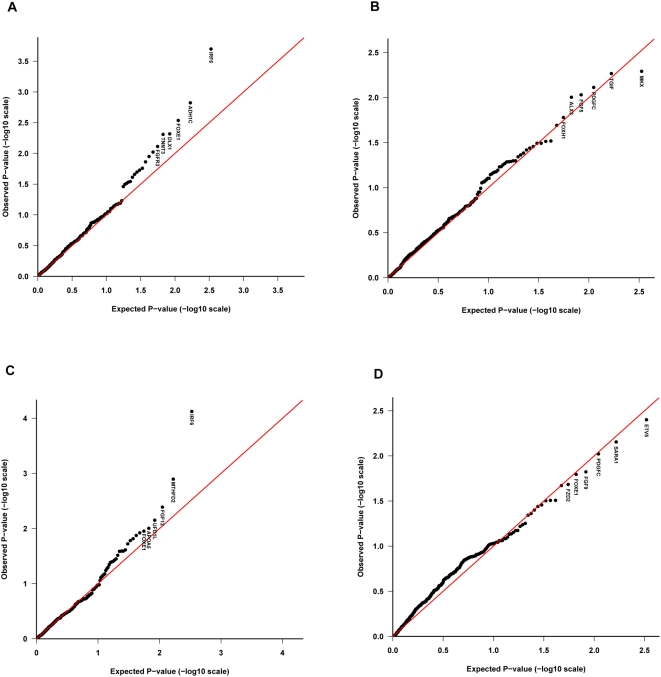
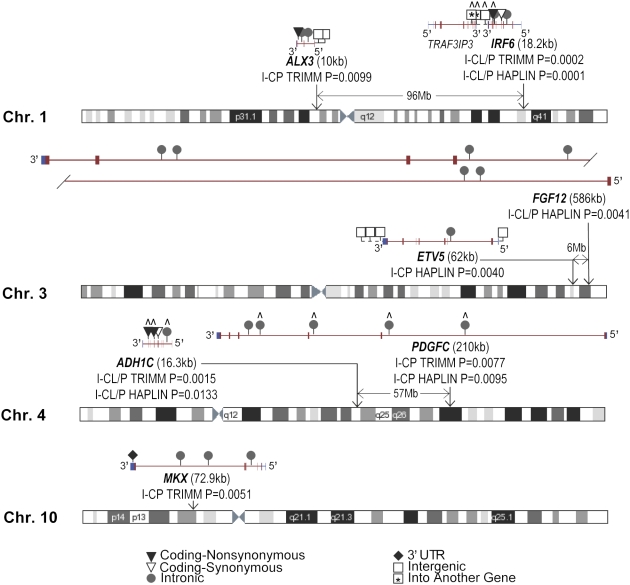
Methodology/principal findings: We used two complementary statistical methods, TRIMM and HAPLIN, to look for associations across these two national samples. TRIMM tests for association in each gene by using multi-SNP genotypes from case-parent triads directly without the need to infer haplotypes. HAPLIN on the other hand estimates the full haplotype distribution over a set of SNPs and estimates relative risks associated with each haplotype. For isolated cleft lip with or without cleft palate (I-CL/P), TRIMM and HAPLIN both identified significant associations with IRF6 and ADH1C in both populations, but only HAPLIN found an association with FGF12. For isolated cleft palate (I-CP), TRIMM found associations with ALX3, MKX, and PDGFC in both populations, but only the association with PDGFC was identified by HAPLIN. In addition, HAPLIN identified an association with ETV5 that was not detected by TRIMM.
Conclusion/significance: Strong associations with seven genes were replicated in the Scandinavian samples and our approach effectively replicated the strongest previously known association in clefting--with IRF6. Based on two national cleft cohorts of similar ancestry, two robust statistical methods and a large panel of SNPs in the most promising cleft candidate genes to date, this study identified a previously unknown association with clefting for ADH1C and provides additional candidates and analytic approaches to advance the field.
Conflict of interest statement
Figures
References
-
- Mossey PA, Little J. Epidemiology of oral clefts: an international perspective. In: Wyszynski DFE, editor. Cleft lip and palate: from origin to treatment. New York: Oxford University Press; 2002.
-
- Lie RT, Wilcox AJ, Skjaerven R. A population-based study of the risk of recurrence of birth defects. N Engl J Med. 1994;331:1–4. - PubMed
Publication types
MeSH terms
Substances
Grants and funding
- R37 DE008559/DE/NIDCR NIH HHS/United States
- R01 DE014667/DE/NIDCR NIH HHS/United States
- N01 HG065403/HG/NHGRI NIH HHS/United States
- P30 ES005605/ES/NIEHS NIH HHS/United States
- R01 DE011948/DE/NIDCR NIH HHS/United States
- ImNIH/Intramural NIH HHS/United States
- P30 ES05605/ES/NIEHS NIH HHS/United States
- R01 DE008559/DE/NIDCR NIH HHS/United States
- K02 DE015291/DE/NIDCR NIH HHS/United States
- P60 DE013076/DE/NIDCR NIH HHS/United States
- P60 DE13076/DE/NIDCR NIH HHS/United States
- R01 DE-11948-04/DE/NIDCR NIH HHS/United States
- DE08559/DE/NIDCR NIH HHS/United States
LinkOut - more resources
Full Text Sources
Medical
Miscellaneous
