


Pain catastrophizing: a critical review
- PMID: 19402782
- PMCID: PMC2696024
- DOI: 10.1586/ern.09.34
Pain catastrophizing: a critical review
Abstract
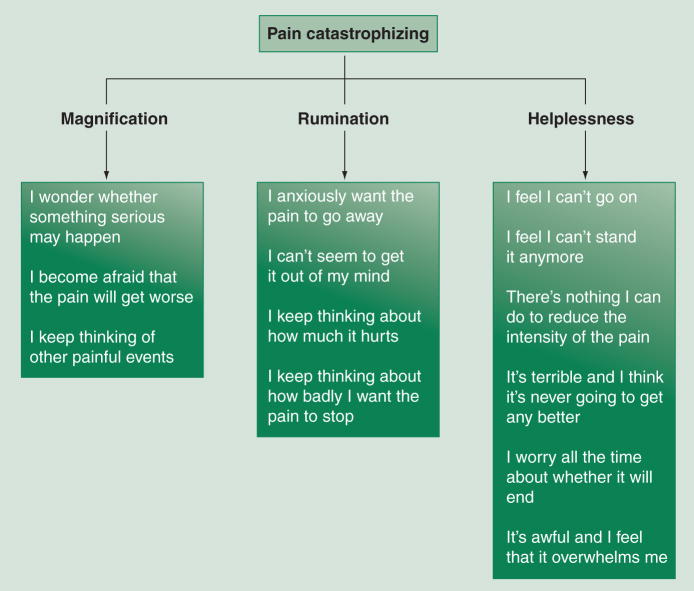
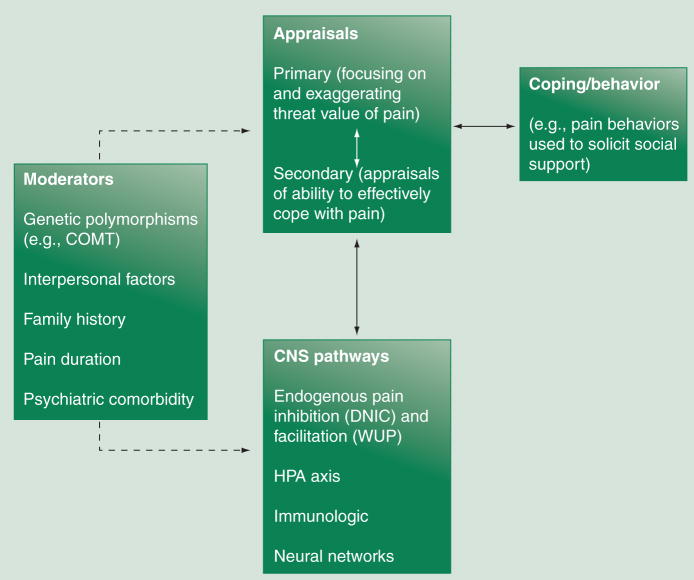
Pain catastrophizing is conceptualized as a negative cognitive-affective response to anticipated or actual pain and has been associated with a number of important pain-related outcomes. In the present review, we first focus our efforts on the conceptualization of pain catastrophizing, highlighting its conceptual history and potential problem areas. We then focus our discussion on a number of theoretical mechanisms of action: appraisal theory, attention bias/information processing, communal coping, CNS pain processing mechanisms, psychophysiological pathways and neural pathways. We then offer evidence to suggest that pain catastrophizing represents an important process factor in pain treatment. We conclude by offering what we believe represents an integrated heuristic model for use by researchers over the next 5 years; a model we believe will advance the field most expediently.
Figures
References
-
- Gatchel RJ, Peng YB, Peters ML, Fuchs PN, Turk DC. The biopsychosocial approach to chronic pain: scientific advances and future directions. Psychol Bull. 2007;133(4):581–624. - PubMed
-
- Melzack R, Wall PD. Pain mechanisms: a new theory. Science. 1965;150:971–979. - PubMed
-
- Ellis A. Reason and Emotion in Psychotherapy. Lyle Stuart; NY, USA: 1962.
-
- Beck AT, Rush AJ, Shaw BF, Emery G. Cognitive Therapy of Depression. Guilford Press; NY, USA: 1979.
-
- Chaves JF, Brown JM. Spontaneous cognitive strategies for the control of clinical pain and stress. J Behav Med. 1987;10:263–276. - PubMed
Publication types
MeSH terms
Grants and funding
LinkOut - more resources
Full Text Sources
Other Literature Sources
Medical
Molecular Biology Databases
