


Direct evidence of nitric oxide release from neuronal nitric oxide synthase activation in the left ventricle as a result of cervical vagus nerve stimulation
- PMID: 19403619
- PMCID: PMC2718260
- DOI: 10.1113/jphysiol.2009.169417
Direct evidence of nitric oxide release from neuronal nitric oxide synthase activation in the left ventricle as a result of cervical vagus nerve stimulation
Abstract
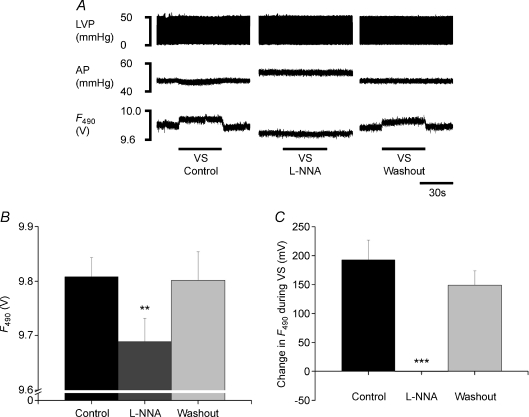
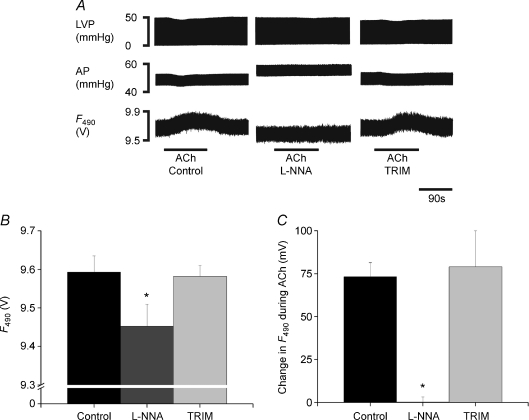
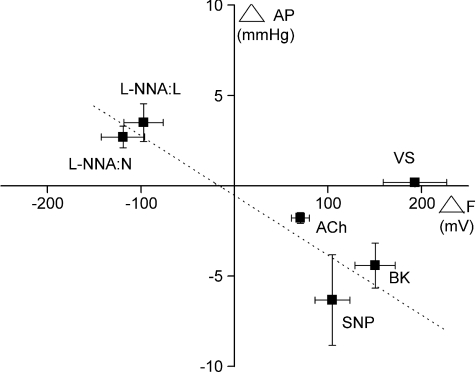
Information regarding vagal innervation in the cardiac ventricle is limited and the direct effect of vagal stimulation on ventricular myocardial function is controversial. We have recently provided indirect evidence that the anti-fibrillatory effect of vagus nerve stimulation on the ventricle is mediated by nitric oxide (NO). The aim of this study was to provide direct evidence for the release of nitric oxide in the cardiac ventricle during stimulation of the efferent parasympathetic fibres of the cervical vagus nerve. The isolated innervated rabbit heart was employed with the use of the NO fluorescent indicator 4,5-diaminofluorescein diacetate (DAF-2 DA) during stimulation of the cervical vagus nerves and acetylcholine perfusion in the absence and presence of the non-specific NO synthase inhibitor NG-nito-L-arginine (L-NNA) and the neuronal NO synthase selective inhibitor 1-(2-trifluormethylphenyl)imidazole (TRIM). Using the novel fluorescence method in the beating heart, we have shown that NO-dependent fluorescence is increased by 0.92 +/- 0.26, 1.20 +/- 0.30 and 1.91 +/- 0.27% (during low, medium and high frequency, respectively) in the ventricle in a stimulation frequency-dependent manner during vagus nerve stimulation, with comparable increases seen during separate stimulation of the left and right cervical vagus nerves. Background fluorescence is reduced during perfusion with L-NNA and the increase in fluorescence during high frequency vagal stimulation is inhibited during perfusion with both L-NNA (1.97 +/- 0.35% increase before L-NNA, 0.00 +/- 0.02% during L-NNA) and TRIM (1.78 +/- 0.18% increase before TRIM, -0.11 +/- 0.08% during TRIM). Perfusion with 0.1 microM acetylcholine increased NO fluorescence by 0.76 +/- 0.09% which was blocked by L-NNA (change of 0.00 +/- 0.03%) but not TRIM (increase of 0.82 +/- 0.21%). Activation of cardiac parasympathetic efferent nerve fibres by stimulation of the cervical vagus is associated with NO production and release in the ventricle of the rabbit, via the neuronal isoform of nitric oxide synthase.
Figures


Comment in
-
Cardiac defibrillator neurones.J Physiol. 2009 Jun 15;587(Pt 12):2715. doi: 10.1113/jphysiol.2009.174466. J Physiol. 2009. PMID: 19525555 Free PMC article. No abstract available.
References
-
- Akiyama T, Yamazaki T. Effects of right and left vagal stimulation on left ventricular acetylcholine levels in the cat. Acta Physiol Scand. 2001;172:11–16. - PubMed
-
- Armour JA, Randall WC. Functional anatomy of the canine cardiac nerves. Acta Anat. 1975;91:510–528. - PubMed
-
- Brack KE, Coote JH, Ng GA. The effect of direct autonomic nerve stimulation on left ventricular force in the isolated innervated Langendorff perfused rabbit heart. Auton Neurosci. 2006;124:69–80. - PubMed
Publication types
MeSH terms
Substances
Grants and funding
LinkOut - more resources
Full Text Sources
Miscellaneous
