


A review of neuroimaging studies of stressor-evoked blood pressure reactivity: emerging evidence for a brain-body pathway to coronary heart disease risk
- PMID: 19410652
- PMCID: PMC2743251
- DOI: 10.1016/j.neuroimage.2009.04.073
A review of neuroimaging studies of stressor-evoked blood pressure reactivity: emerging evidence for a brain-body pathway to coronary heart disease risk
Abstract
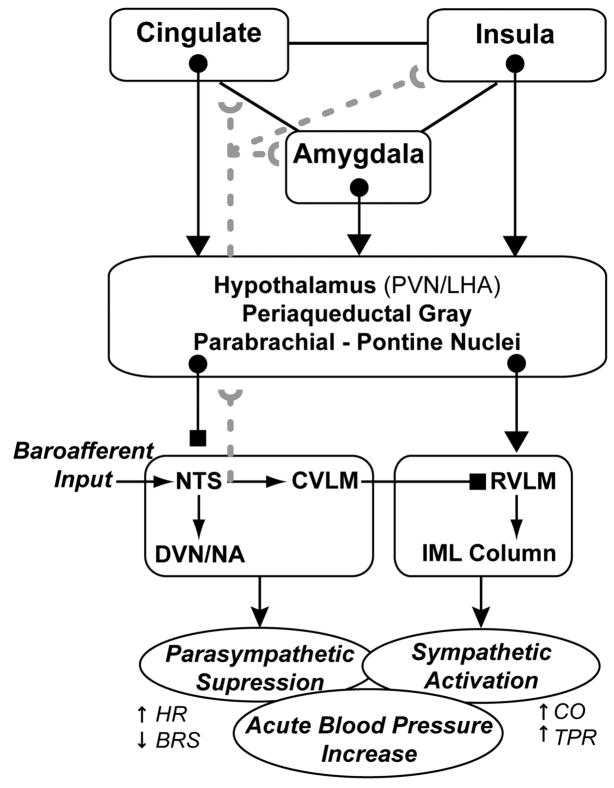
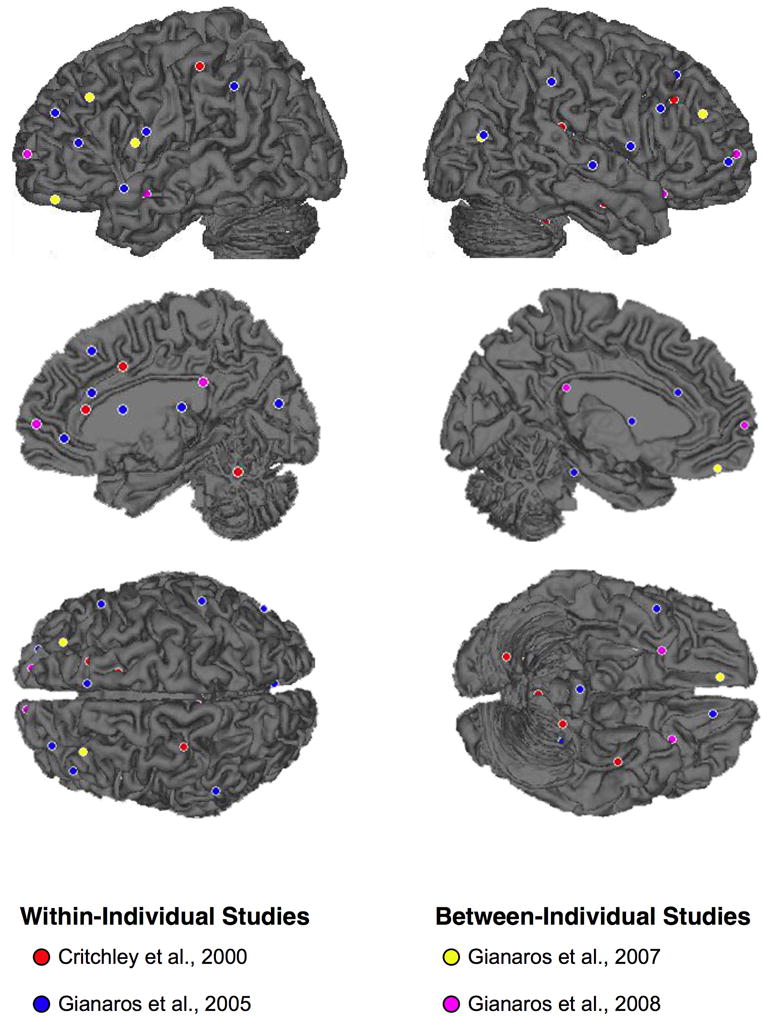
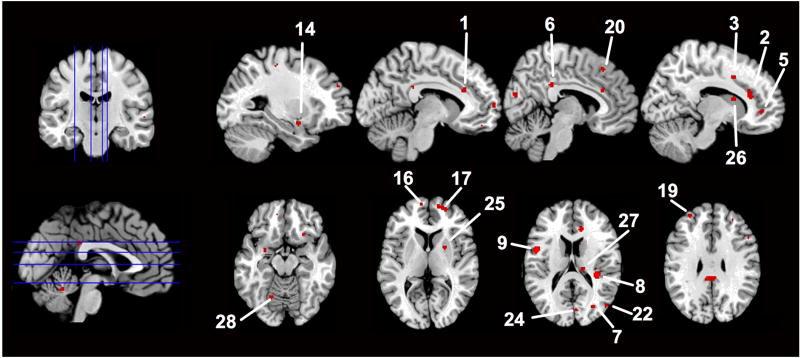
An individual's tendency to show exaggerated or otherwise dysregulated cardiovascular reactions to acute stressors has long been associated with increased risk for clinical and preclinical endpoints of coronary heart disease (CHD). However, the 'brain-body' pathways that link stressor-evoked cardiovascular reactions to CHD risk remain uncertain. This review summarizes emerging neuroimaging research indicating that individual differences in stressor-evoked blood pressure reactivity (a particular form of cardiovascular reactivity) are associated with activation patterns in corticolimbic brain areas that are jointly involved in processing stressors and regulating the cardiovascular system. As supported empirically by activation likelihood estimates derived from a meta-analysis, these corticolimbic areas include divisions of the cingulate cortex, insula, and amygdala--as well as networked cortical and subcortical areas involved in mobilizing hemodynamic and metabolic support for stress-related behavioral responding. Contextually, the research reviewed here illustrates how behavioral medicine and health neuroscience methods can be integrated to help characterize the 'brain-body' pathways that mechanistically link stressful experiences with CHD risk.
Figures
References
-
- Adam G. Visceral perception understanding internal cognition. Springer-Verlag; New York: 1998.
-
- Alderman MH, Ooi WL, Madhavan S, Cohen H. Blood pressure reactivity predicts myocardial infarction among treated hypertensive patients. J Clin Epidemiol. 1990;43:859–866. - PubMed
-
- Allen GV, Cechetto DF. Functional and anatomical organization of cardiovascular pressor and depressor sites in the lateral hypothalamic area: I. Descending projections. J Comp Neurol. 1992;315:313–332. - PubMed
-
- Allen GV, Cechetto DF. Functional and anatomical organization of cardiovascular pressor and depressor sites in the lateral hypothalamic area. II. Ascending projections. J Comp Neurol. 1993;330:421–438. - PubMed
-
- Allen GV, Saper CB, Hurley KM, Cechetto DF. Organization of visceral and limbic connections in the insular cortex of the rat. J Comp Neurol. 1991;311:1–16. - PubMed
Publication types
MeSH terms
Grants and funding
LinkOut - more resources
Full Text Sources
Medical
Research Materials
