


User-centered design and interactive health technologies for patients
- PMID: 19411947
- PMCID: PMC2818536
- DOI: 10.1097/NCN.0b013e31819f7c7c
User-centered design and interactive health technologies for patients
Abstract
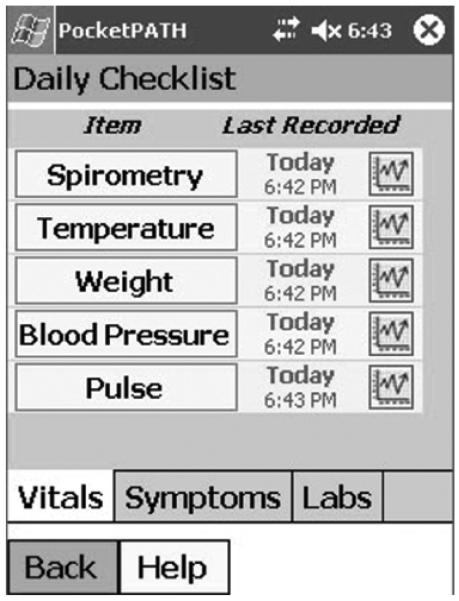
Despite recommendations that patients be involved in the design and testing of health technologies, few reports describe how to involve patients in systematic and meaningful ways to ensure that applications are customized to meet their needs. User-centered design is an approach that involves end users throughout the development process so that technologies support tasks, are easy to operate, and are of value to users. In this article, we provide an overview of user-centered design and use the development of Pocket Personal Assistant for Tracking Health (Pocket PATH) to illustrate how these principles and techniques were applied to involve patients in the development of this interactive health technology. Involving patient-users in the design and testing ensured functionality and usability, therefore increasing the likelihood of promoting the intended health outcomes.
Figures
References
-
- Brennan PF. Telehealth: Bringing Health Care to the Point of Living. Medical Care. 1999;37(2):115–116. - PubMed
-
- Silva JS, Ball MJ. Prognosis for year 2013. Journal of the American Medical Informatics Association. 2002;66:45–49. - PubMed
-
- Robinson TN, et al. An Evidence-based Approach to Interactive Health Communication: A Challenge to Medicine in the Information Age. Journal of American Medical Association. 1998;280:1264–1269. - PubMed
Publication types
MeSH terms
Grants and funding
LinkOut - more resources
Full Text Sources
Medical
