


A model of mindful parenting: implications for parent-child relationships and prevention research
- PMID: 19412664
- PMCID: PMC2730447
- DOI: 10.1007/s10567-009-0046-3
A model of mindful parenting: implications for parent-child relationships and prevention research
Abstract
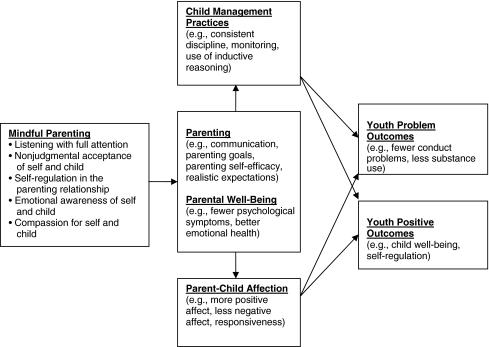
This paper introduces a model of "mindful parenting" as a framework whereby parents intentionally bring moment-to-moment awareness to the parent-child relationship. This is done by developing the qualities of listening with full attention when interacting with their children, cultivating emotional awareness and self-regulation in parenting, and bringing compassion and nonjudgmental acceptance to their parenting interactions. First, we briefly outline the theoretical and empirical literature on mindfulness and mindfulness-based interventions. Next, we present an operational definition of mindful parenting as an extension of mindfulness to the social context of parent-child relationships. We discuss the implications of mindful parenting for the quality of parent-child relationships, particularly across the transition to adolescence, and we review the literature on the application of mindfulness in parenting interventions. We close with a synopsis of our own efforts to integrate mindfulness-based intervention techniques and mindful parenting into a well-established, evidence-based family prevention program and our recommendations for future research on mindful parenting interventions.
Figures
References
-
- None
- Ainsworth, M. D. S., Blehar, M. C., Waters, E., & Wall, S. (1978). Patterns of attachment. Hillsdale, NJ: Erlbaum.
-
- {'text': '', 'ref_index': 1, 'ids': [{'type': 'PubMed', 'value': '17972292', 'is_inner': True, 'url': 'https://pubmed.ncbi.nlm.nih.gov/17972292/'}]}
- Altmaier, E., & Maloney, R. (2007). An initial evaluation of a mindful parenting program. Journal of Clinical Psychology,63(12), 1231–1238. doi:10.1002/jclp.20395. - PubMed
-
- None
- Anderson, N. D., Lau, M. A., Segal, Z., & Bishop, S. R. (2007). Mindfulness-based stress reduction and attentional control. Clinical Psychology & Psychotherapy,14, 449–463. doi:10.1002/cpp.544.
-
- None
- Baer, R. A. (2003). Mindfulness training as a clinical intervention: A conceptual and empirical review. Clinical Psychology: Science and Practice,10, 125–143. doi:10.1093/clipsy/bpg015.
-
- None
- Baer, R. A. (2007). Mindfulness, assessment, and transdiagnostic processes. Psychological Inquiry,18(4), 238–242.
Publication types
MeSH terms
Grants and funding
LinkOut - more resources
Full Text Sources
Medical
