


Molecular signatures of obstructive sleep apnea in adults: a review and perspective
- PMID: 19413140
- PMCID: PMC2663860
- DOI: 10.1093/sleep/32.4.447
Molecular signatures of obstructive sleep apnea in adults: a review and perspective
Abstract
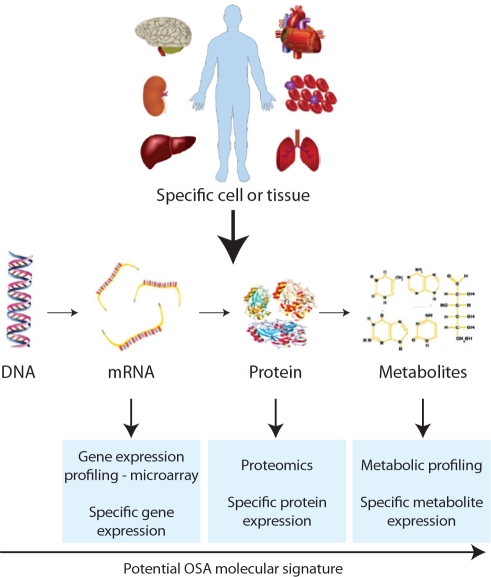
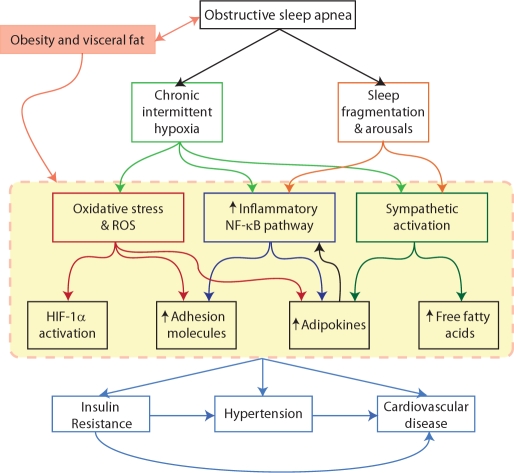
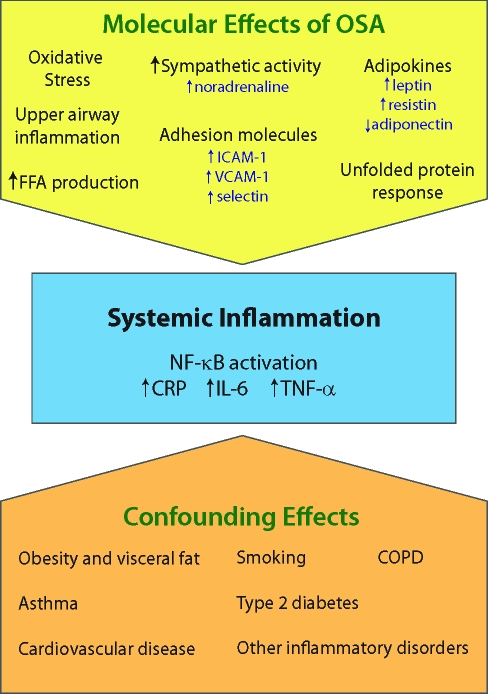
The consequences of obstructive sleep apnea (OSA) are largely mediated by chronic intermittent hypoxia and sleep fragmentation. The primary molecular domains affected are sympathetic activity, oxidative stress and inflammation. Other affected domains include adipokines, adhesion molecules and molecules that respond to endoplasmic reticulum stress. Changes in molecular domains affected by OSA, assessed in blood and/or urine, can provide a molecular signature for OSA that could potentially be used diagnostically and to predict who is likely to develop different OSA-related comorbidities. High-throughput discovery strategies such as microarrays, assessing changes in gene expression in circulating blood cells, have the potential to find new candidates and pathways thereby expanding the molecular signatures for OSA. More research is needed to fully understand the pathophysiological significance of these molecular signatures and their relationship with OSA comorbidities. Many OSA subjects are obese, and obesity is an independent risk factor for many comorbidities associated with OSA. Moreover, obesity affects the same molecular pathways as OSA. Thus, a challenge to establishing a molecular signature for OSA is to separate the effects of OSA from obesity. We propose that the optimal strategy is to evaluate the temporal changes in relevant molecular pathways during sleep and, in particular, the alterations from before to after sleep when assessed in blood and/or urine. Such changes will be at least partly a consequence of chronic intermittent hypoxia and sleep fragmentation that occurs during sleep.
Figures
References
-
- Kittleson MM, Hare JM. Molecular signature analysis: using the myocardial transcriptome as a biomarker in cardiovascular disease. Trends Cardiovasc Med. 2005;15:130–8. - PubMed
-
- Mohr S, Liew CC. The peripheral-blood transcriptome: new insights into disease and risk assessment. Trends Mol Med. 2007;13:422–32. - PubMed
-
- Rockett JC, Burczynski ME, Fornace AJ, Herrmann PC, Krawetz SA, Dix DJ. Surrogate tissue analysis: monitoring toxicant exposure and health status of inaccessible tissues through the analysis of accessible tissues and cells. Toxicol Appl Pharmacol. 2004;194:189–99. - PubMed
