


Matrix metalloproteinase induction by relaxin causes cartilage matrix degradation in target synovial joints
- PMID: 19416213
- PMCID: PMC2757096
- DOI: 10.1111/j.1749-6632.2009.03830.x
Matrix metalloproteinase induction by relaxin causes cartilage matrix degradation in target synovial joints
Abstract
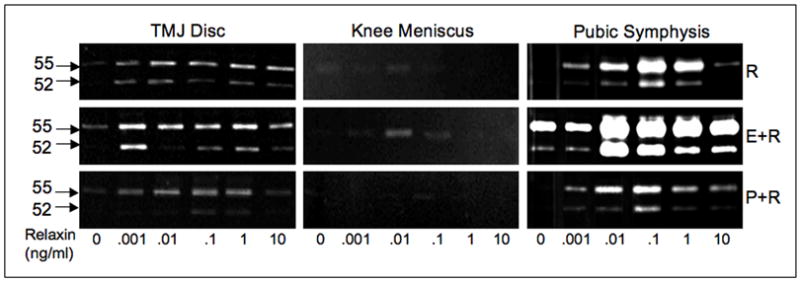
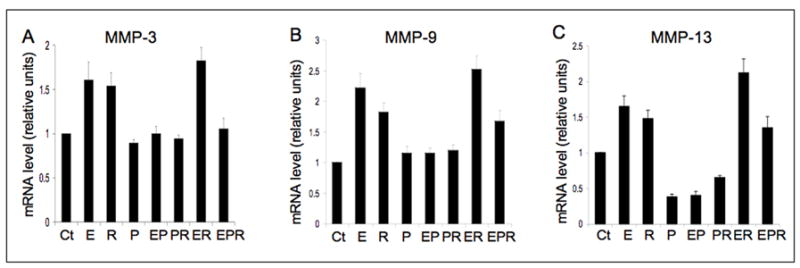
Our long-term goal is to understand the mechanisms by which relaxin and estrogen potentially contribute to joint diseases, particularly those afflicting the fibrocartilaginous temporomandibular joint (TMJ). Previously, we showed that relaxin produces a dose-dependent induction of tissue-degrading enzymes of the matrix metalloproteinase (MMP) family, specifically MMP-1 (collagenase-1), MMP-3 (stromelysin-1), MMP-9 (92-kDa gelatinase), and MMP-13 (collagenase-3) in cell isolates and tissue explants from TMJ fibrocartilage. The induction of these MMPs is accompanied by loss of collagen and glycosaminoglycans (GAGs), which was blocked by a pan-MMP inhibitor. We also found the targeted in vivo loss of collagen and GAGs in TMJ discs of ovariectomized rabbits treated with beta-estradiol, relaxin, or both hormones together. Progesterone attenuated the induction of MMPs and matrix loss by relaxin and estrogen. The modulation of matrix composition in TMJ fibrocartilage by these hormones was similar to that observed in the pubic symphysis and differed from that of the knee meniscus. The two target tissues showing the greatest modulation of MMPs and matrix loss, namely, the TMJ disc and pubic symphysis, had similar expression profiles of the estrogen receptors alpha and beta, relaxin-1 receptor (RXFP1, LGR7), and insulin-like peptide 3 receptor (RXFP2, LGR8) and these profiles differed from those in cells from the knee meniscus. These findings suggest a novel model for targeted tissue turnover of cartilage of specific joints through hormone-mediated induction of select MMPs.
Figures
References
-
- Felson DT, Nevitt MC. The effects of estrogen on osteoarthritis. Curr Opin Rheumatol. 1998;10:269–72. - PubMed
-
- Von Korff M, et al. An epidemiologic comparison of pain complaints. Pain. 1988;32:173–83. - PubMed
-
- Warren MP, Fried JL. Temporomandibular disorders and hormones in women. Cells Tissues Organs. 2001;169:187–92. - PubMed
-
- Lipton JA, Ship JA, Larach-Robinson D. Estimated prevalence and distribution of reported orofacial pain in the United States. J Am Dent Assoc. 1993;124:115–21. - PubMed
-
- Milam SB, et al. Sexual dimorphism in the distribution of estrogen receptors in the temporomandibular joint complex of the baboon. Oral Surg Oral Med Oral Pathol. 1987;64:527–32. - PubMed
Publication types
MeSH terms
Substances
Grants and funding
LinkOut - more resources
Full Text Sources
Miscellaneous
