


Is a single direct MR arthrography series in ABER position as accurate in detecting anteroinferior labroligamentous lesions as conventional MR arthography?
- PMID: 19421749
- PMCID: PMC7419375
- DOI: 10.1007/s00256-009-0692-z
Is a single direct MR arthrography series in ABER position as accurate in detecting anteroinferior labroligamentous lesions as conventional MR arthography?
Abstract
Purpose: The purpose of this study is to retrospectively compare accuracy of single magnetic resonance (MR) arthrography series in Abduction External Rotation (ABER) with conventional MR arthrography for detection and characterisation of anteroinferior labroligamentous lesions, with arthroscopy as reference standard. Inter-observer variability of both protocols was determined.
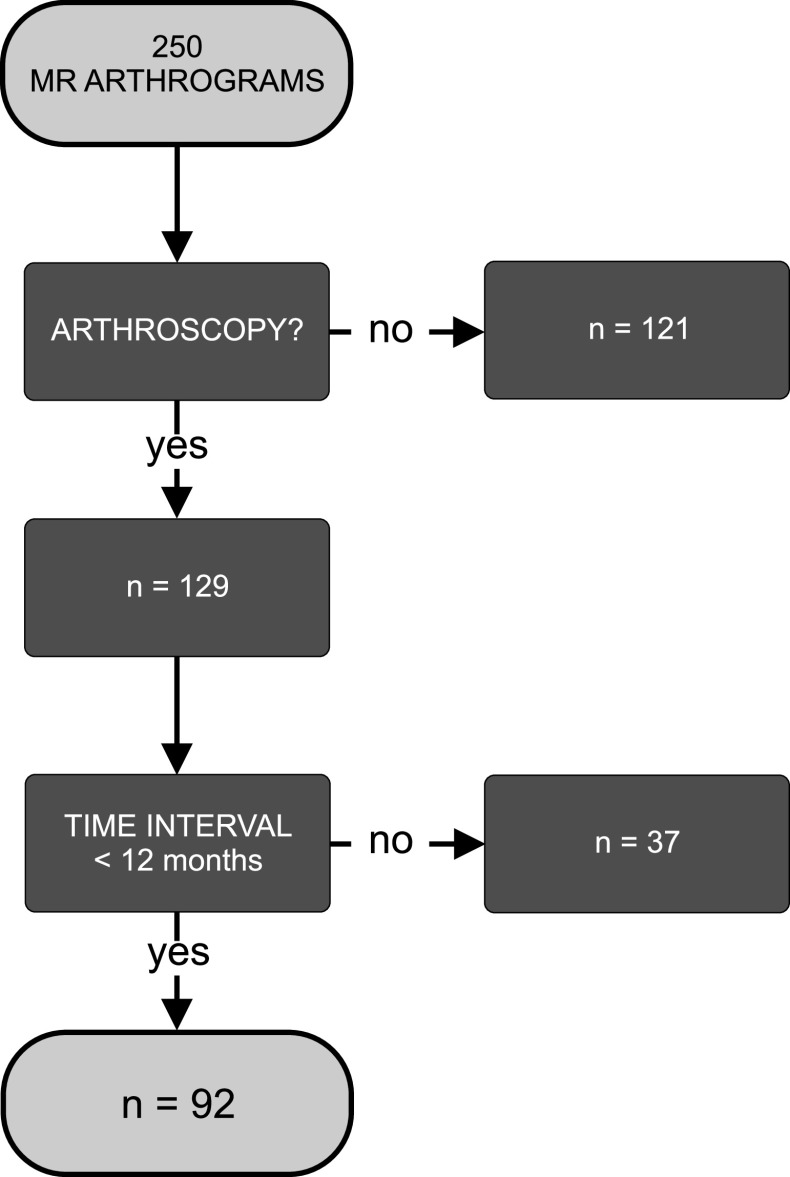
Methods and materials: Institutional review board approval was obtained; informed consent was waived. MR arthrograms, including oblique axial fat suppressed T1-weighted images in ABER position and conventional imaging directions of 250 patients (170 men, 80 women; mean age, 36 years), were retrospectively and independently evaluated by three reviewers. Reviewers were blinded to clinical information and arthroscopic results. Labroligamentous lesions were registered in both ABER and MRa. The lesions were sub-classified (Bankart, Perthes, anterior labrum periosteal sleeve avulsion (ALPSA) or lesions not otherwise specified). Inter-observer agreement was assessed by Kappa statistics for all 250 patients. Ninety-two of 250 patients underwent arthroscopy. Sensitivity, specificity and accuracy of ABER versus conventional MR arthrography were calculated and compared using paired McNemar test.
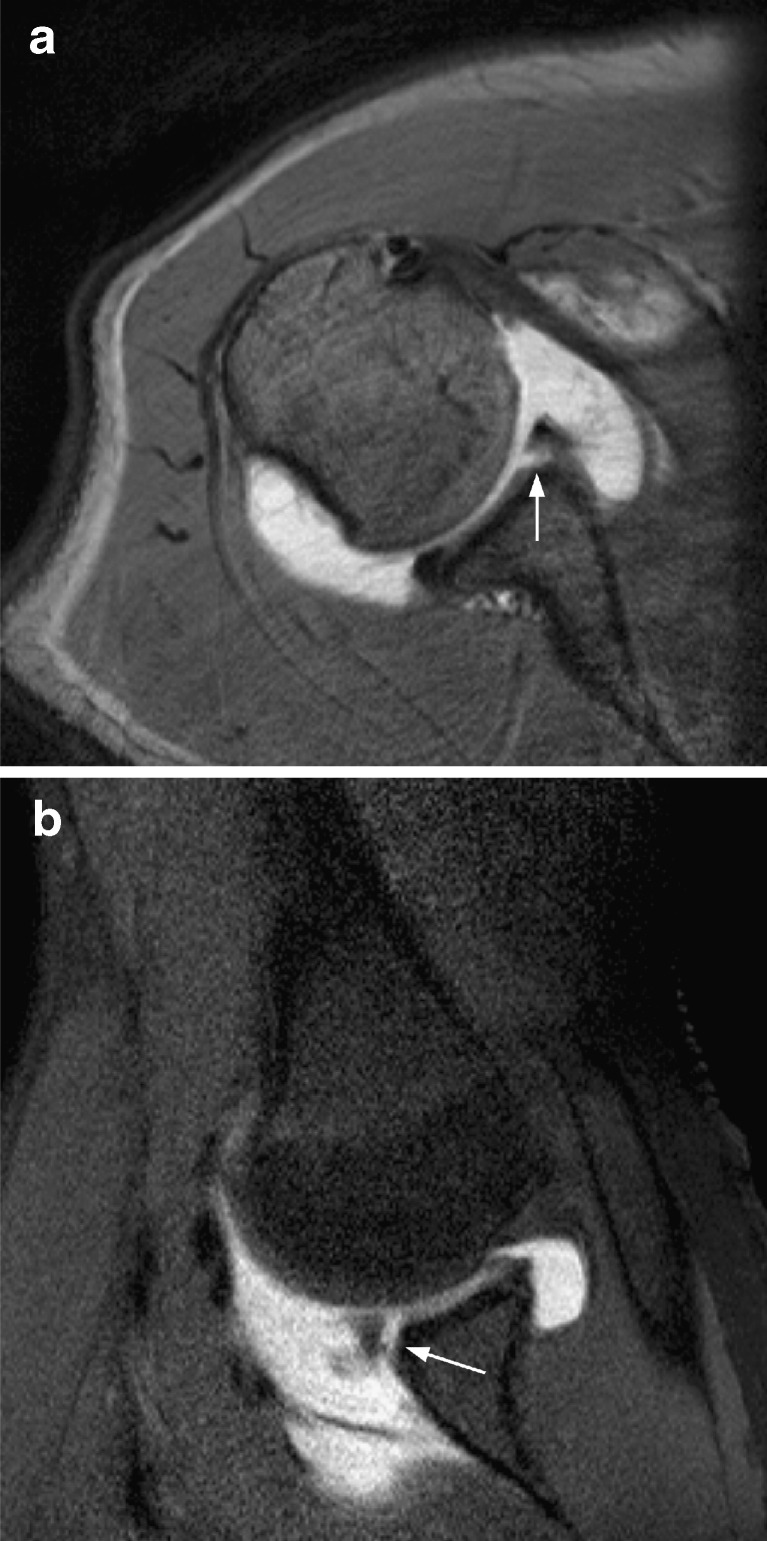
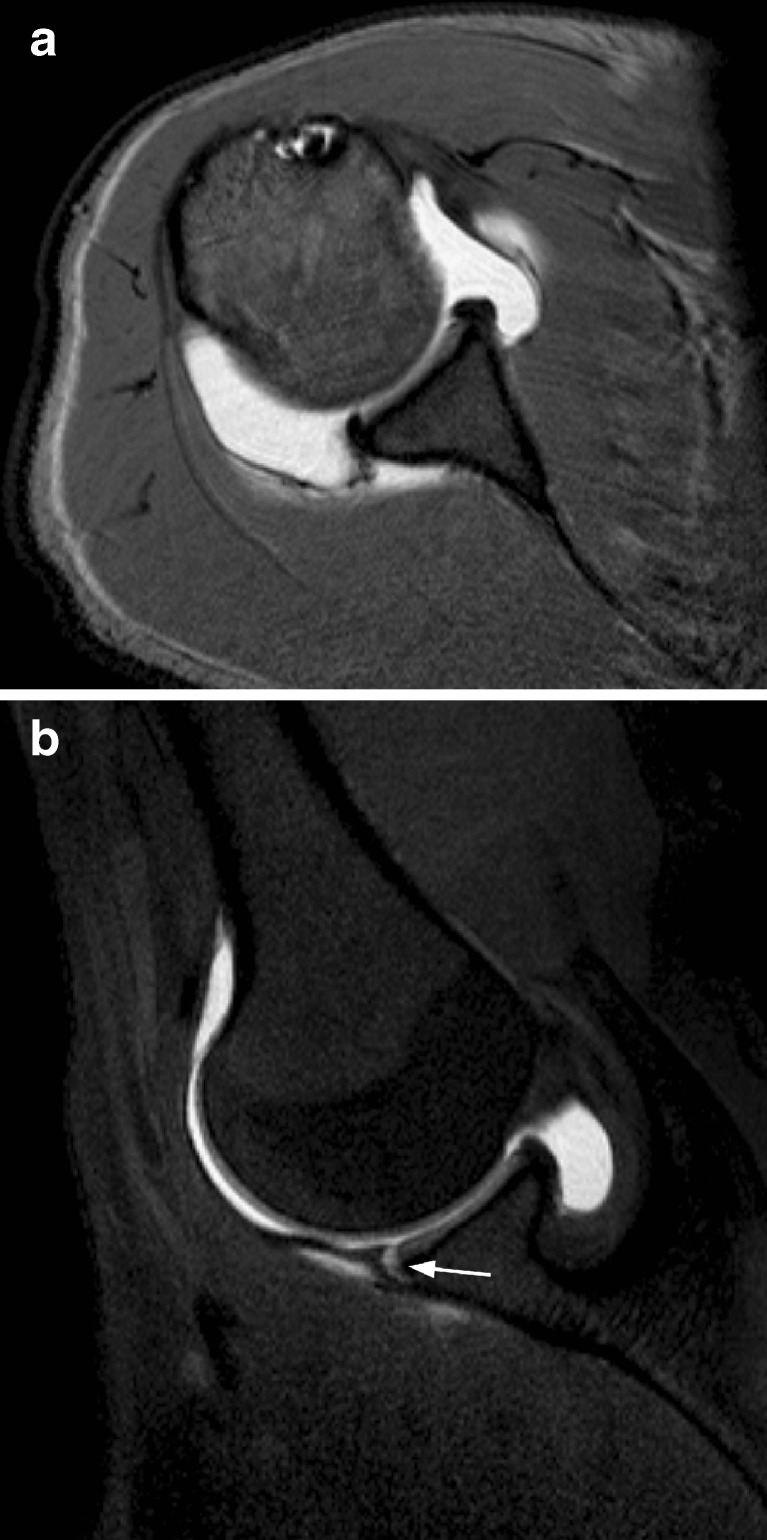
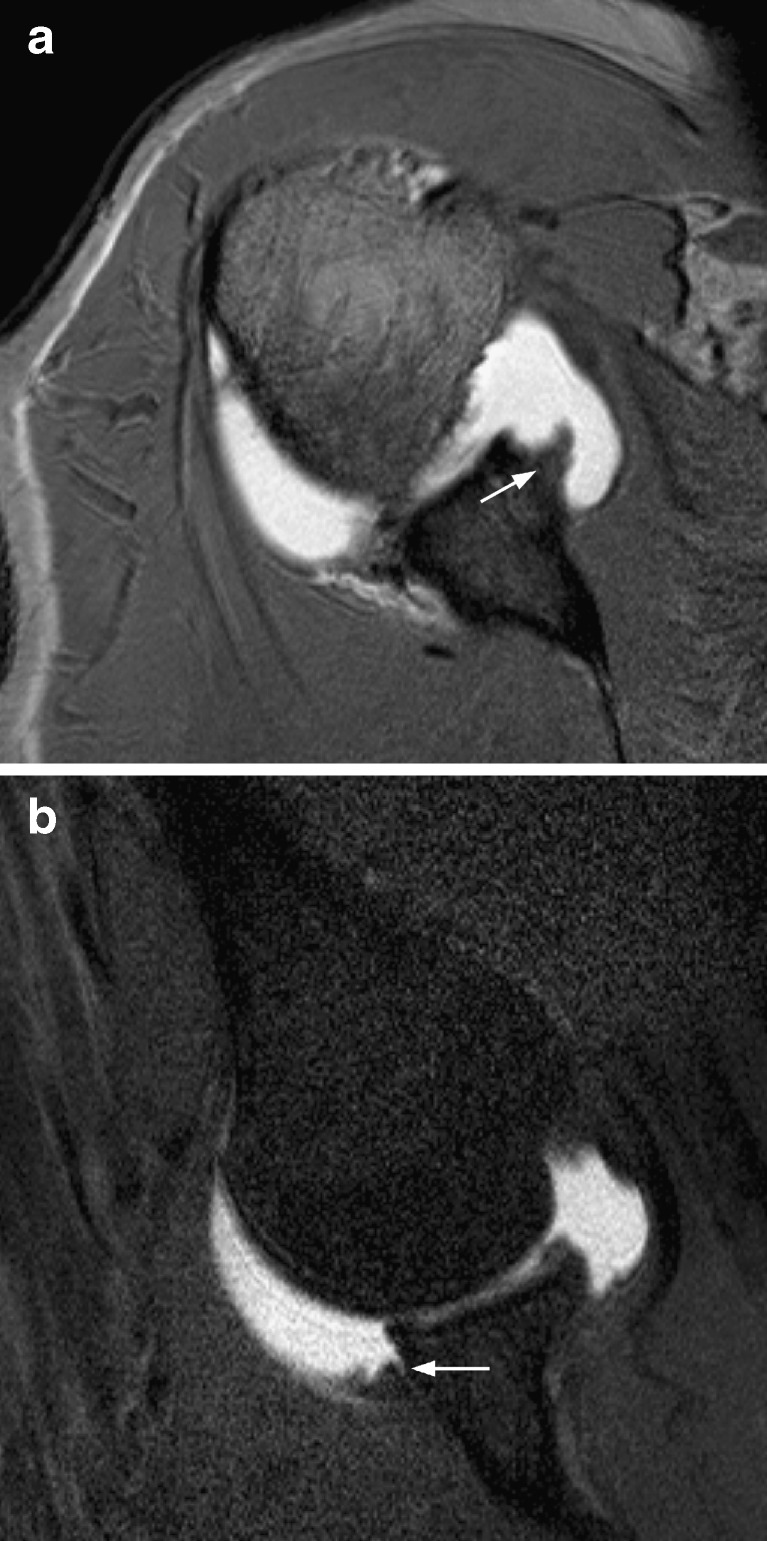
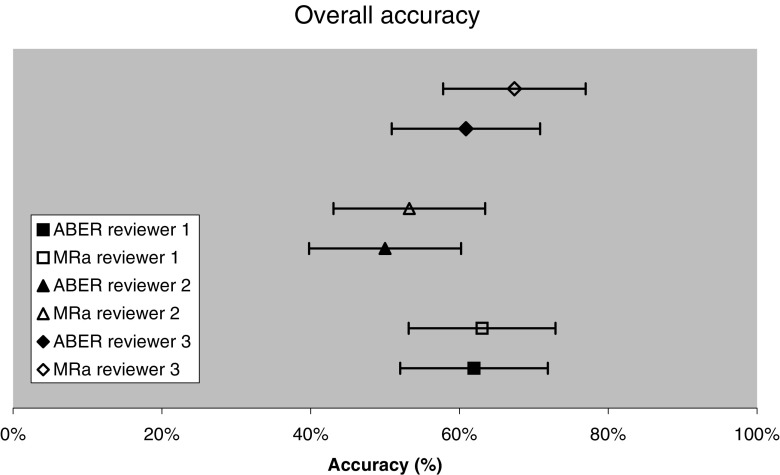
Results: Kappa values of the ABER and conventional MR arthrography ranged from 0.44 to 0.56 and 0.44 to 0.62, respectively. According to arthroscopy, 45 of 92 patients had an intact anteroinferior labrum, and in 44 patients, a labroligamentous lesion (eight Bankart, seven Perthes, 29 ALPSA and three lesions not otherwise specified) was diagnosed. There were no statistically significant differences between ABER and conventional MR arthrography regarding sensitivity (85-89%, 89-96%), specificity (82-91%, 84-89%) and overall accuracy (50-62%, 53-63%).
Conclusion: The results of a single MR arthrography series in ABER position are comparable with those of conventional MR arthrography for detecting anteroinferior labroligamentous lesions.
Figures
References
-
- Soslowsky LJ, Flatow EL, Bigliani LU, Mow VC. Articular geometry of the glenohumeral joint. Clin Orthop Relat Res. 1992;285:181–190. - PubMed
-
- Pollock RG, Flatow EL. Classification and evaluation. In: Biglian LU, editor. The unstable shoulder. Rosemount, Ill: American Academy of Orthopaedic Surgeons; 1996. pp. 25–36.
Publication types
MeSH terms
LinkOut - more resources
Full Text Sources
Medical
