Suitability of self-collected vaginal samples for cervical cancer screening in periurban villages in Andhra Pradesh, India
- PMID: 19423518
- PMCID: PMC2762740
- DOI: 10.1158/1055-9965.EPI-08-1171
Suitability of self-collected vaginal samples for cervical cancer screening in periurban villages in Andhra Pradesh, India
Abstract
Objectives: Our aim was to determine if (1) Hybrid Capture 2 and a PCR-based method were comparable for detection of high-risk human papillomavirus (HPV) clinician-collected and self-collected samples were equally efficient to detect HPV and cervical cancer precursor lesions, and (3) if participation rates improved with home-based versus clinic-based self collection.
Methods: Samples were selected from women participating in a cervical cancer screening study according to HPV, visual inspection with acetic acid, or Pap smear screening results. From 432 of 892 selected women, split sample aliquots were tested for HPV DNA using both the Hybrid Capture 2 assay and the Roche prototype line blot assay. Women from a subset of villages were recruited at two separate time points for clinic-based self-collection and home-based self-collection, and participation rates were compared.
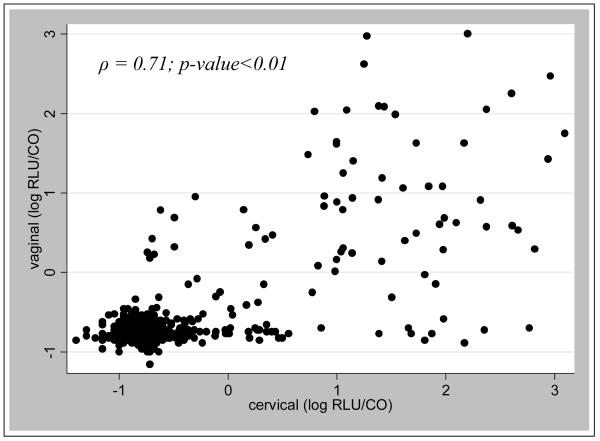
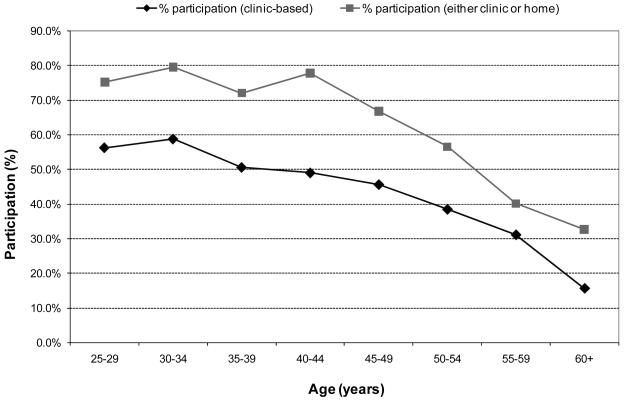
Results: Pairwise agreement between self- and clinician-collected samples was high by both Hybrid Capture 2 (90.8% agreement, kappa = 0.7) and PCR (92.6% agreement, kappa = 0.8), with significantly increased high-risk HPV detection in clinician-collected specimens (McNemar's P < 0.01). Ability to detect precursor lesions was highest by PCR testing of clinician-collected samples and lowest by Hybrid Capture 2 testing of self-collected samples (11 of 11 and 9 of 11 cases of cervical intraepithelial neoplasia grade 2/3 and cancer detected, respectively). Participation in home-based screening was significantly higher than clinic-based screening (71.5% and 53.8%, respectively; P < 0.001) among women ages 30 to 45 years.
Conclusion: The combination of improved screening coverage and a high single test sensitivity afforded by HPV DNA testing of home-based self-collected swabs may have a greater programmatic effect on cervical cancer mortality reduction compared with programs requiring a pelvic exam.
Figures
References
-
- Cuzick J, Arbyn M, Sankaranarayanan R, et al. Overview of Human Papillomavirus-Based and Other Novel Options for Cervical Cancer Screening in Developed and Developing Countries. Vaccine. 2008;26:K29–K41. - PubMed
-
- Petignat P, Faltin DL, Bruchim I, Tramer MR, Franco EL, Coutlee F. Are self-collected samples comparable to physician-collected cervical specimens for human papillomavirus DNA testing? A systematic review and meta-analysis. Gynecol Oncol. 2007;105:530–5. - PubMed
-
- Winer RL, Feng Q, Hughes JP, et al. Concordance of self-collected and clinician-collected swab samples for detecting human papillomavirus DNA in women 18 to 32 years of age. Sex Transm Dis. 2007;34:371–7. - PubMed