


doi: 10.1038/nm0509-496.
The sepsis seesaw: tilting toward immunosuppression
Affiliations
- PMID: 19424209
- PMCID: PMC3786779
- DOI: 10.1038/nm0509-496
Item in Clipboard
The sepsis seesaw: tilting toward immunosuppression
Nat Med.
2009 May.
Abstract
The immune response goes haywire during sepsis, a deadly condition triggered by infection. Richard S. Hotchkiss and his colleagues take the focus off of the prevailing view that the key aspect of this response is an exuberant inflammatory reaction. They assess recent human studies bolstering the notion that immunosuppression is also a major contributor to the disease. Many people with sepsis succumb to cardiac dysfunction, a process examined by Peter Ward. He showcases the factors that cause cardiomyocyte contractility to wane during the disease.
Figures
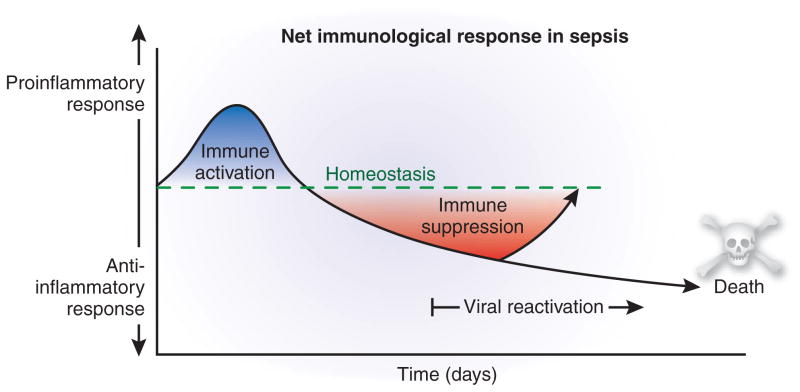
Immunologic response in sepsis over time. Although both pro- and anti-inflammatory responses are activated early in sepsis, the proinflammatory response predominates. As sepsis progresses, the anti-inflammatory response becomes predominant, and it is during this later phase that secondary infections and viral reactivation occur. Early deaths during the early proinflammatory response phase are due to cytokine storm–mediated events, whereas later deaths during the anti-inflammatory phase are due to failure to control pathogens.
References
-
- Deans KJ, Haley M, Natanson C, Eichacker PQ, Minneci PC. J Trauma. 2005;58:867–874. - PubMed
-
- Limaye AP, et al. J Am Med Assoc. 2008;300:413–422. - PubMed
-
- Luyt CE, et al. Am J Respir Crit Care Med. 2007;175:935–942. - PubMed
-
- Hotchkiss RS, Karl IE. N Engl J Med. 2003;348:138–150. - PubMed
-
- Osuchowski MF, Welch K, Siddiqui J, Remick DG. J Immunol. 2006;177:1967–1974. - PubMed
MeSH terms
Grants and funding
LinkOut - more resources
Full Text Sources
Other Literature Sources
Medical
