. 2009 Jun;72(6):1395-407.
doi: 10.1111/j.1365-2958.2009.06731.x. Epub 2009 May 8.

Biogenesis of bacterial membrane vesicles

Affiliations

Biogenesis of bacterial membrane vesicles

Brooke L Deatherage et al. Mol Microbiol. 2009 Jun.

Abstract

Membrane vesicle (MV) release remains undefined, despite its conservation among replicating Gram-negative bacteria both in vitro and in vivo. Proteins identified in Salmonella MVs, derived from the envelope, control MV production via specific defined domains that promote outer membrane protein-peptidoglycan (OM-PG) and OM protein-inner membrane protein (OM-PG-IM) interactions within the envelope structure. Modulation of OM-PG and OM-PG-IM interactions along the cell body and at division septa, respectively, maintains membrane integrity while co-ordinating localized release of MVs with distinct size distribution and protein content. These data support a model of MV biogenesis, wherein bacterial growth and division invoke temporary, localized reductions in the density of OM-PG and OM-PG-IM associations within the envelope structure, thus releasing OM as MVs.


Figures
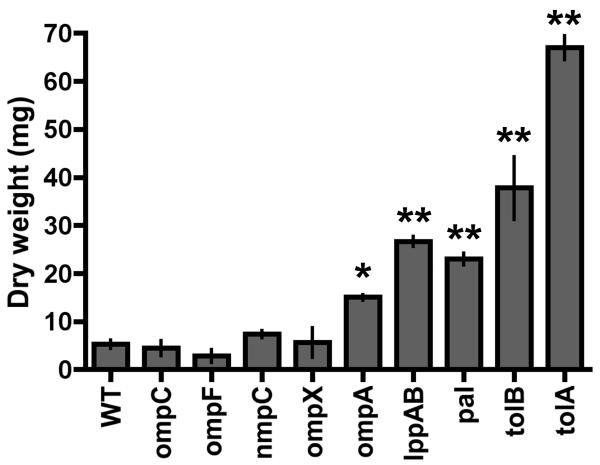
Figure 1
Figure 1. Major MV proteins influence MV production
MV production is quantitatively altered in bacteria lacking major MV proteins. Dry weight of MVs harvested from WT Salmonella and mutant strains was quantified (mean +/- standard error). *p<0.01 **p<0.001
Figure 2
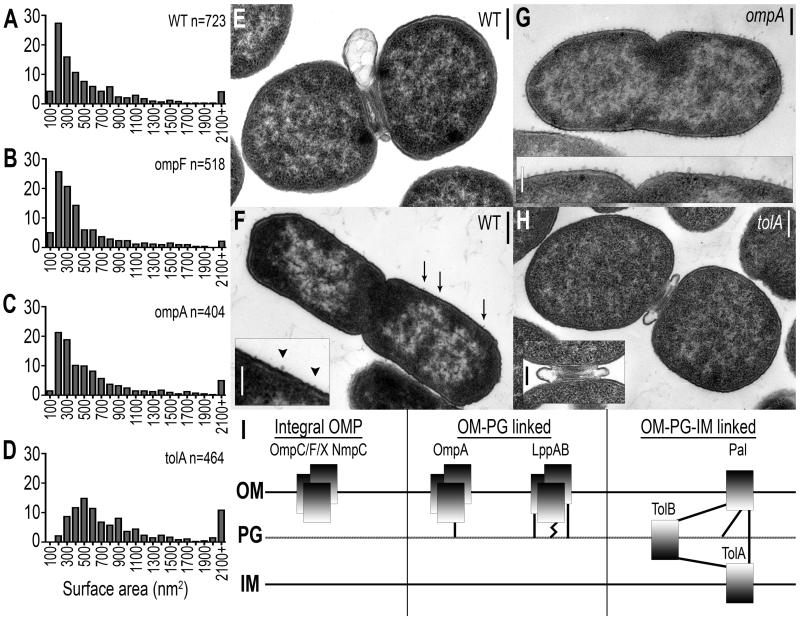
Figure 2. WT MV release localized to division septa and cell body; MV proteins control size and localization of MV release
(A) Size distribution of WT Salmonella MVs; x-axis represents MV size ranges (100 represents 1-100nm2). Compared to WT MVs, size distribution of (B) ompF MVs and (C) ompA MVs is similar (p>0.05; also ompC, nmpC, and ompX MVs, data not shown), while (D) tolA MV size is significantly increased (p<0.001; also pal and tolB MVs, data not shown). (E) WT MVs are released at constricted division septa and (F) along the cell body. (G) MVs are released along the cell body in the absence of OmpA (shown) and LppAB (Figure 3A), and (H) MV release occurs at division septa in tolA (shown), pal (Figure 3D), and tolB (data not shown) mutant strains. (I) Major MV proteins classified by envelope interconnections: Integral OM proteins OmpC, OmpF, OmpX, and NmpC lack extensive connectivity to envelope components, Lpp and OmpA bind PG (OM-PG linked), and Pal, TolB, and TolA form membrane-spanning protein complexes (OM-PG-IM linked). Dark shading represents N-termini, straight lines represent non-covalent interactions, and zig-zag line denotes covalent interaction. Bars = 200nm (except F inset, bar = 100nm), n = number of individual vesicles examined.
Figure 3
Figure 3. Envelope protein domains modulate MV production
(A) MV release along cell body in the lppAB strain is (B) complemented with full length Lpp1-58, but (C) expression of abundant mutated Lpp1-57 unable to bind PG retains lppAB mutant MV production. (D) MV release at division septa in pal strain is (E) restored to WT MV release upon expression of full length Pal1-153, but (F) cannot be complemented by expression of truncated Pal1-123 unable to bind TolA. Bar = 200nm
Figure 4
Figure 4. Envelope interconnections necessary for membrane integrity
Qualitative (A,B) and quantitative (C,D) analyses of membrane integrity. (A,C) WT Salmonella and mutants lacking integral OM proteins (OmpC, OmpF) are resistant to deoxycholate (DOC). OmpA-PG is dispensable for DOC-resistance, whereas loss of Lpp-PG and OM-PG-IM complexes (Pal, TolB, TolA) induces DOC-sensitivity. (B,D) DOC-sensitivity is dependent upon envelope linkages. Expression of full length, but not truncated, proteins complement deletions (complementation with pTolA is partial but significant compared to the tolA mutant; p<0.0001). For (A,B), three 10-fold dilutions shown from left to right. For (C,D), growth on DOC was quantified and adjusted to growth on LB alone; mean % growth +/- standard error is reported from at least three replicate experiments per strain. * p<0.001, ** p<0.0001
Figure 5
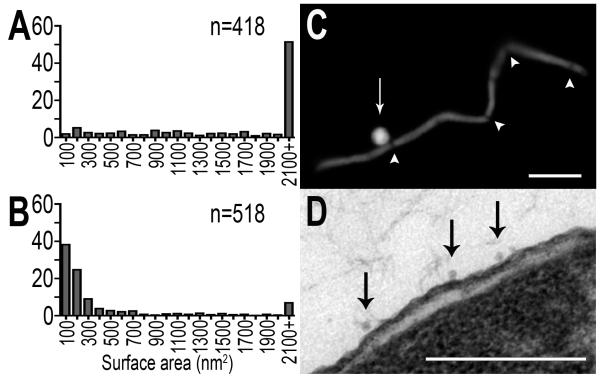
Figure 5. Quantitatively distinct septal- and cell body-derived MV populations
(A) Septal-derived MVs, harvested from septate filamentous cells, are significantly larger than WT MVs (p=1.1×10-92), and (B) non septal-derived MVs, harvested from non-septate filamentous cells, are significantly smaller than WT MVs (p=1.3×10-49). (C) Large MVs are released at constricted septa (Bar = 5um), and (D) small MVs are cell body derived (Bar=200nm). Arrowheads highlight constricted septa and arrows highlight MV release; n = number of individual vesicles measured.
Figure 6
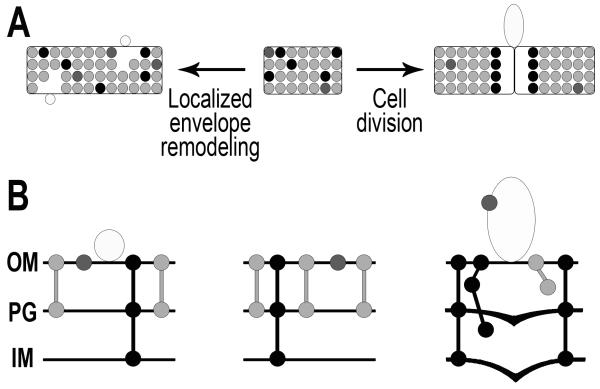
Figure 6. Model of MV biogenesis
(A) Whole-cell view, (B) close-up membrane view. Middle panel: Major MV proteins in the WT envelope: Integral OM proteins (dark gray), OM-PG linked proteins (light gray) and OM-PG-IM complex proteins (black). Left panel: Localized envelope remodeling induces release of small MVs at regions of lower density OM-PG connections along cell body. Right panel: Active invagination of IM and PG during cell division causes temporary disruption of septal OM-PG-IM complexes. OM release (MVs) occurs circumferentially at the septum due to lower density OM-PG-IM protein interconnections.

References

    1. Aizawa SI, Kubori T. Bacterial flagellation and cell division. Genes Cells. 1998;3:625–634. - PubMed
    1. Alaniz RC, Cummings LA, Bergman MA, Rassoulian-Barrett SL, Cookson BT. Salmonella typhimurium coordinately regulates FliC location and reduces dendritic cell activation and antigen presentation to CD4+ T cells. J Immunol. 2006;177:3983–3993. - PubMed
    1. Alaniz RC, Deatherage BL, Lara JC, Cookson BT. Membrane vesicles are immunogenic facsimiles of Salmonella typhimurium that potently activate dendritic cells, prime B and T cell responses, and stimulate protective immunity in vivo. J Immunol. 2007;179:7692–7701. - PubMed
    1. Amann E, Ochs B, Abel KJ. Tightly regulated tac promoter vectors useful for the expression of unfused and fused proteins in Escherichia coli. Gene. 1988;69:301–315. - PubMed
    1. Bauman SJ, Kuehn MJ. Purification of outer membrane vesicles from Pseudomonas aeruginosa and their activation of an IL-8 response. Microbes Infect. 2006;8:2400–2408. - PMC - PubMed

Publication types

MeSH terms

Substances