


Age-associated increases in pulmonary artery systolic pressure in the general population
- PMID: 19433755
- PMCID: PMC2753443
- DOI: 10.1161/CIRCULATIONAHA.108.838698
Age-associated increases in pulmonary artery systolic pressure in the general population
Abstract
Background: In contrast to the wealth of data on isolated systolic hypertension involving the systemic circulation in the elderly, much less is known about age-related change in pulmonary artery systolic pressure (PASP) and its prognostic impact in the general population. We sought to define the relationship between PASP and age, to evaluate which factors influence PASP, and to determine whether PASP is independently predictive of mortality in the community.
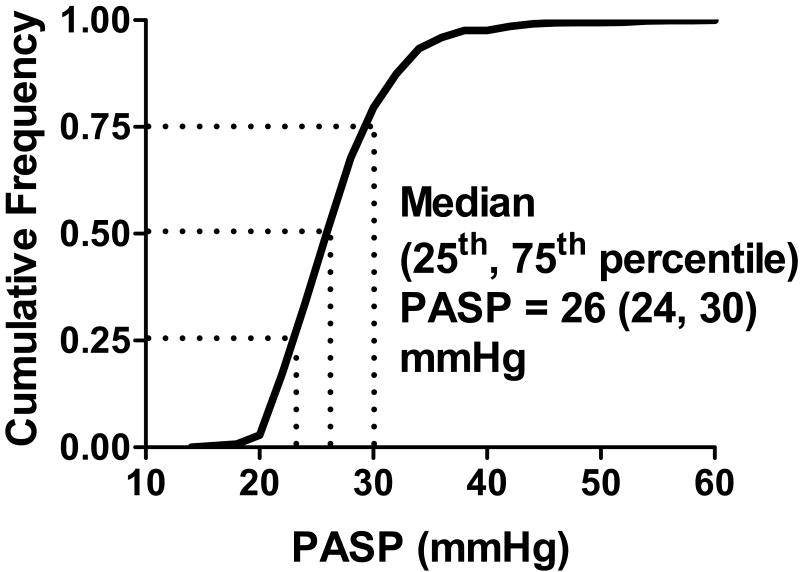
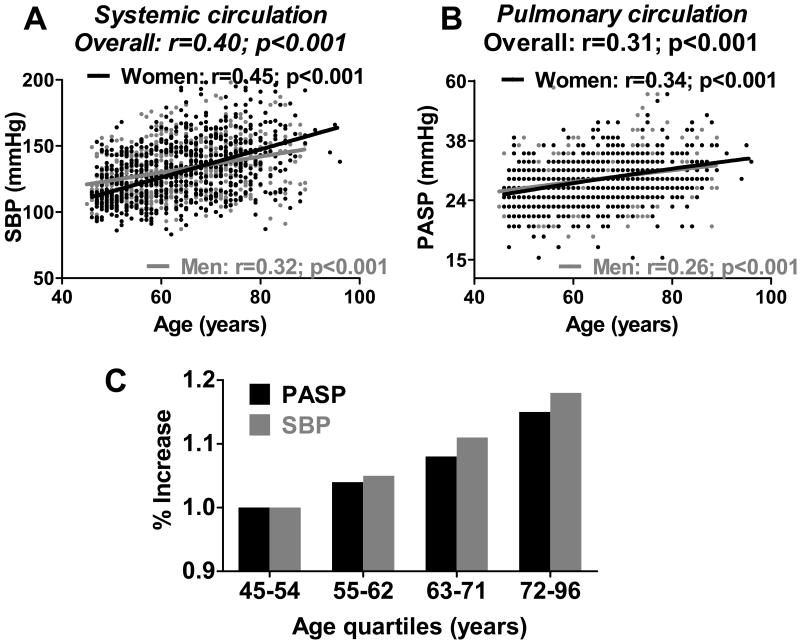
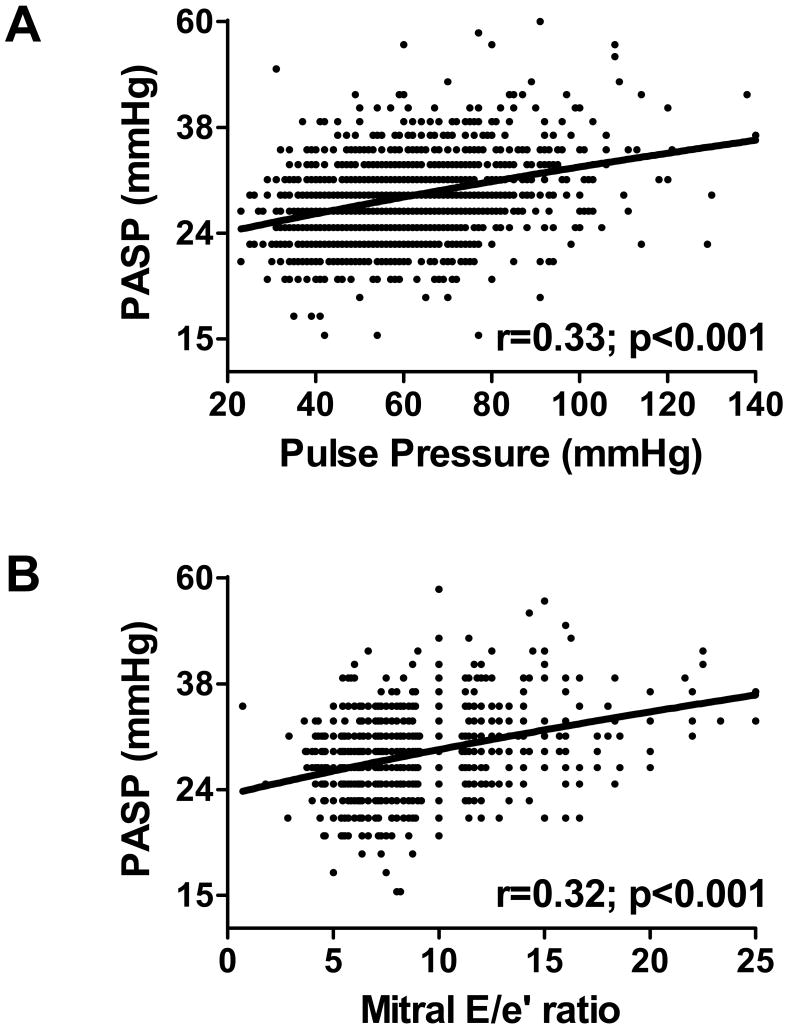
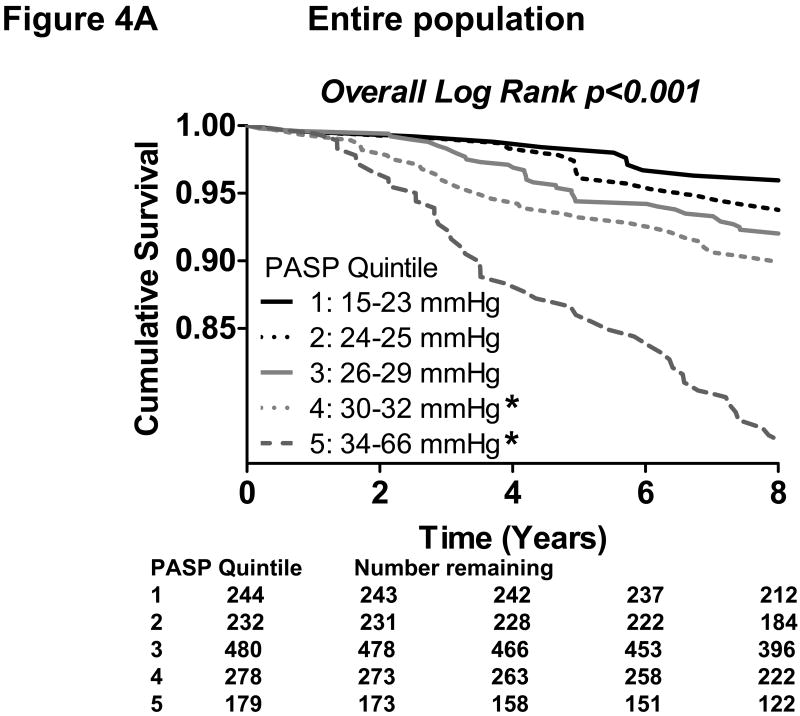
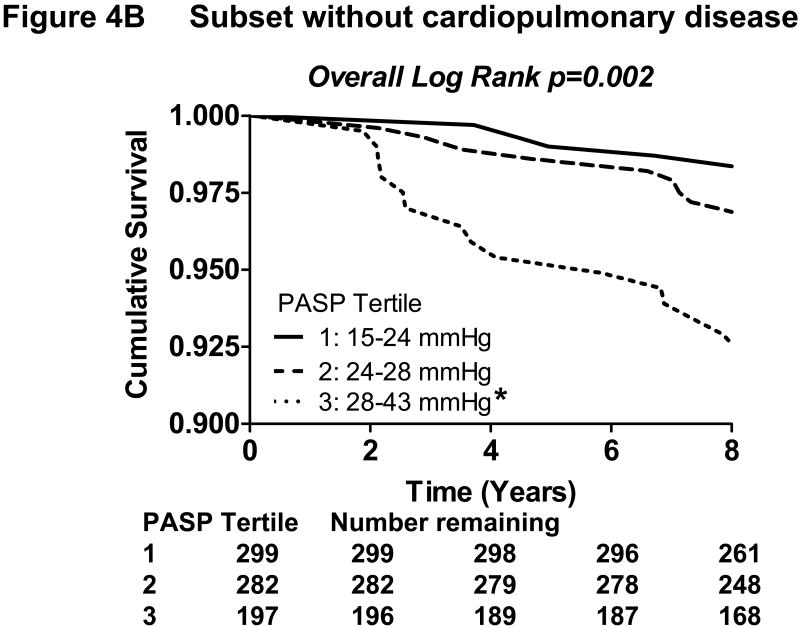
Methods and results: A random sample of the Olmsted County, Minn, general population (n=2042) underwent echocardiography and spirometry and was followed up for a median of 9 years. PASP was measured from the tricuspid regurgitation velocity. Left ventricular diastolic pressure was estimated with Doppler echocardiography (E/e' ratio), and arterial stiffening was assessed from the brachial artery pulse pressure. Among 1413 subjects (69%) with measurable PASP (age, 63+/-11 years; 43% male), median PASP was 26 mm Hg (25th to 75th percentile, 24 to 30 mm Hg) and increased with age (r=0.31, P<0.001). Independent predictors of PASP were age, pulse pressure, and mitral E/e' (all P< or =0.003). Increasing PASP was associated with higher mortality (hazard ratio, 2.73 per 10 mm Hg; P<0.001). In subjects without cardiopulmonary disease (any heart failure, coronary artery disease, hypertension, diabetes mellitus, or chronic obstructive lung disease), the age-adjusted hazard ratio was 2.74 per 10 mm Hg (P=0.016).
Conclusions: We provide the first population-based evidence of age-related increase in pulmonary artery pressure, its association with increasing left heart diastolic pressures and systemic vascular stiffening, and its negative impact on survival. Pulmonary artery pressure may serve as a novel cardiovascular risk factor and potential therapeutic target.
Figures
Comment in
-
Something subtle about death: isolated systolic pulmonary pressure.Circulation. 2009 May 26;119(20):2647-9. doi: 10.1161/CIRCULATIONAHA.109.861526. Circulation. 2009. PMID: 19470898 Review. No abstract available.
References
-
- Chen CH, Nakayama M, Nevo E, Fetics BJ, Maughan WL, Kass DA. Coupled systolic-ventricular and vascular stiffening with age: implications for pressure regulation and cardiac reserve in the elderly. J Am Coll Cardiol. 1998;32:1221–7. - PubMed
-
- Perry HM, Jr, Davis BR, Price TR, Applegate WB, Fields WS, Guralnik JM, Kuller L, Pressel S, Stamler J, Probstfield JL. Effect of treating isolated systolic hypertension on the risk of developing various types and subtypes of stroke: the Systolic Hypertension in the Elderly Program (SHEP) Jama. 2000;284:465–71. - PubMed
-
- Chobanian AV, Bakris GL, Black HR, Cushman WC, Green LA, Izzo JL, Jr, Jones DW, Materson BJ, Oparil S, Wright JT, Jr, Roccella EJ. The Seventh Report of the Joint National Committee on Prevention, Detection, Evaluation, and Treatment of High Blood Pressure: the JNC 7 report. Jama. 2003;289:2560–72. - PubMed
-
- Mitchell GF, Parise H, Benjamin EJ, Larson MG, Keyes MJ, Vita JA, Vasan RS, Levy D. Changes in arterial stiffness and wave reflection with advancing age in healthy men and women: the Framingham Heart Study. Hypertension. 2004;43:1239–45. - PubMed
-
- Redfield MM, Jacobsen SJ, Borlaug BA, Rodeheffer RJ, Kass DA. Age- and gender-related ventricular-vascular stiffening: a community-based study. Circulation. 2005;112:2254–62. - PubMed
Publication types
MeSH terms
Grants and funding
LinkOut - more resources
Full Text Sources
Other Literature Sources
Medical
