


Visual function and cognitive speed of processing mediate age-related decline in memory span and fluid intelligence
- PMID: 19436063
- PMCID: PMC2828155
- DOI: 10.1177/0898264309333326
Visual function and cognitive speed of processing mediate age-related decline in memory span and fluid intelligence
Abstract
Objective: To evaluate the relationship between sensory and cognitive decline, particularly with respect to speed of processing, memory span, and fluid intelligence. In addition, the common cause, sensory degradation and speed of processing hypotheses were compared.
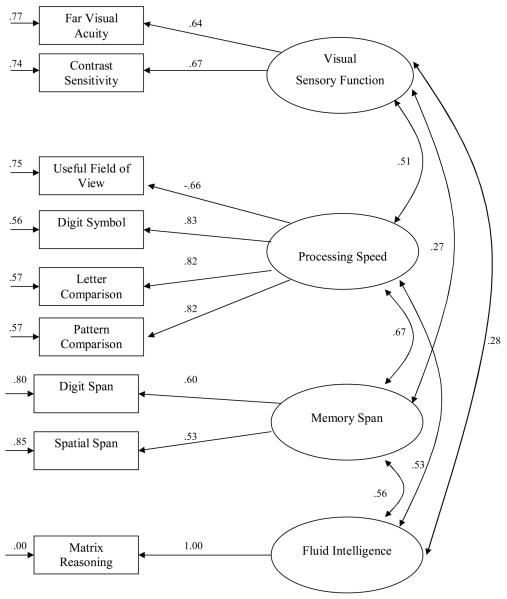
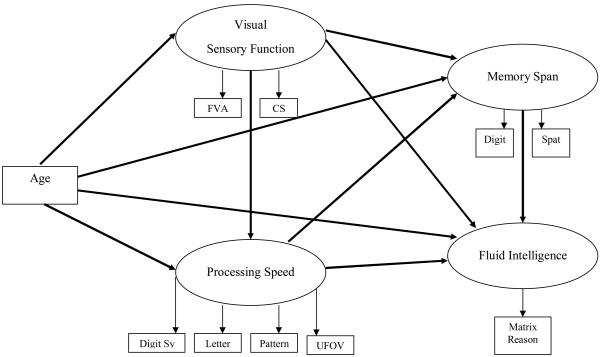
Method: Structural equation modeling was used to investigate the complex relationships among age-related decrements in these areas.
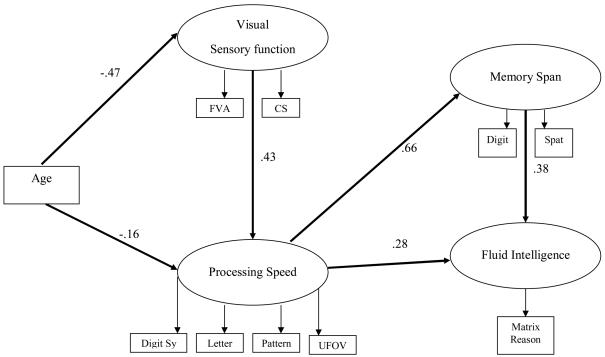
Results: Cross-sectional data analyses included 842 older adult participants (M = 73 years). After accounting for age-related declines in vision and processing speed, the direct associations between age and memory span and between age and fluid intelligence were nonsignificant. Older age was associated with visual decline, which was associated with slower speed of processing, which in turn was associated with greater cognitive deficits.
Discussion: The findings support both the sensory degradation and speed of processing accounts of age-related, cognitive decline. Furthermore, the findings highlight positive aspects of normal cognitive aging in that older age may not be associated with a loss of fluid intelligence if visual sensory functioning and processing speed can be maintained.
Figures
References
-
- Ackerman PL, Beier ME, Boyle MO. Working memory and intelligence: The same or different constructs. Psychological Bulletin. 2005;131(1):30–60. - PubMed
-
- Anderson JC, Gerbing DW. Structural equation modeling in practice: A review and recommended two-step approach. Psychological Bulletin. 1988;103:411–423.
-
- Anstey KJ, Butterworth P, Borzycki M, Andrews S. Between- and within-individual effects of visual contrast sensitivity on perceptual matching, processing speed, and associative memory in older adults. Gerontology. 2006;52(2):124–130. - PubMed
-
- Anstey KJ, Hofer SM, Luszcz MA. Cross-sectional and longitudinal patterns of dedifferentiation in late-life cognitive and sensory function: The effect of age, ability, attrition, and occasion of measurement. Journal of Experimental Psychology: General. 2003a;132(3):470–487. - PubMed
-
- Anstey KJ, Hofer SM, Luszcz MA. A latent growth curve anaylsis of late-life sensory and cognitive function over 8 years: Evidence for specific and common factors underlying change. Psychology & Aging. 2003b;18(4):714–726. - PubMed
Publication types
MeSH terms
Grants and funding
LinkOut - more resources
Full Text Sources
Medical
