


Characterization of MgtC, a virulence factor of Salmonella enterica Serovar Typhi
- PMID: 19436747
- PMCID: PMC2677668
- DOI: 10.1371/journal.pone.0005551
Characterization of MgtC, a virulence factor of Salmonella enterica Serovar Typhi
Abstract
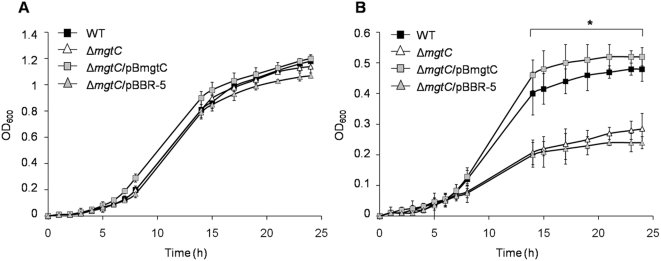
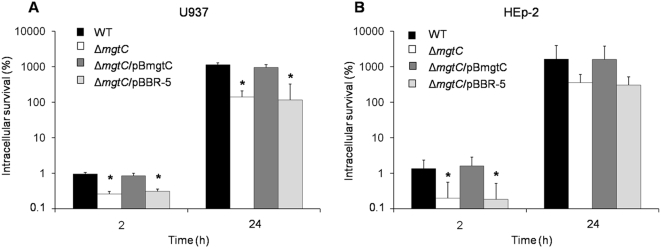
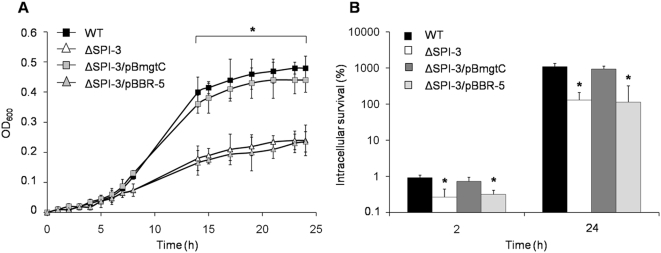
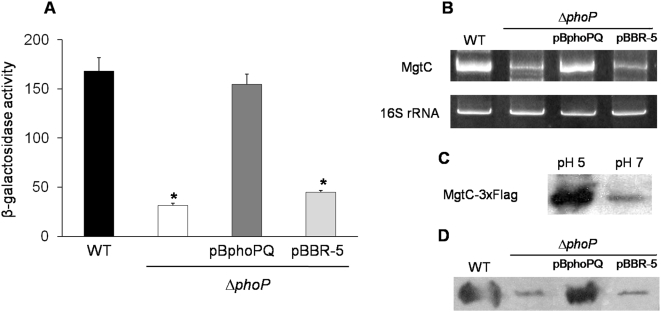
The MgtC is a virulence factor in Salmonella Typhimurium that is required for growth at low-Mg2+ concentrations and intramacrophage survival. This gene is codified in a conserved region of the Salmonella pathogenicity island 3 (SPI-3), and is also present in the chromosome of other Salmonella serovars. In this study we characterized the MgtC factor in S. Typhi, a human specific pathogen, by using mgtC and SPI-3 mutant strains. We found that MgtC is the most important factor codified in the SPI-3 of S. Typhi for growth in low-Mg2+ media and survival within human cells. In addition, by using reporter genes we determined that the low-Mg2+ concentration, acidic media and PhoP regulator induce mgtC expression in S. Typhi. We suggest that MgtC is the most important virulence factor codified in the SPI-3 of S. Typhi.
Conflict of interest statement
Figures
References
-
- Smith RL, Kaczmarek MT, Kucharski LM, Maguire ME. Magnesium transport in Salmonella typhimurium: regulation of mgtA and mgtCB during invasion of epithelial and macrophage cells. Microbiology. 1998;144(Pt 7):1835–1843. - PubMed
-
- Buchmeier N, Blanc-Potard A, Ehrt S, Piddington D, Riley L, et al. A parallel intraphagosomal survival strategy shared by Mycobacterium tuberculosis and Salmonella enterica. Mol Microbiol. 2000;35:1375–1382. - PubMed
Publication types
MeSH terms
Substances
LinkOut - more resources
Full Text Sources
Molecular Biology Databases
