


The diabetic rapid response acute foot team: 7 essential skills for targeted limb salvage
- PMID: 19436764
- PMCID: PMC2680239
The diabetic rapid response acute foot team: 7 essential skills for targeted limb salvage
Abstract
Objective: People with diabetes are prone to develop lower-extremity ulcerations and infections, both of which serve as major risk factors for limb amputation. The development of lower-extremity complications of diabetes is associated with increased morbidity and mortality. Recently, there has been increasing interest in the development of interdisciplinary teams to manage the myriad factors that complicate the treatment of high-risk patients, particularly in the perihospitalization period.
Methods: This article presents 7 essential skills that necessarily allow the limb salvage team to appropriately manage the most common presenting comorbidities in patients with diabetes, including vasculopathy, infection, and deformity.
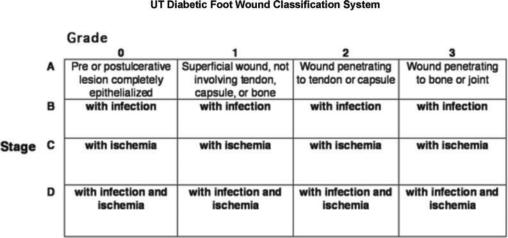
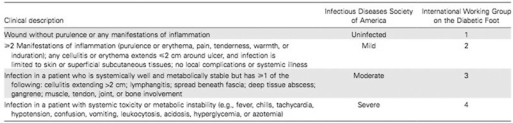
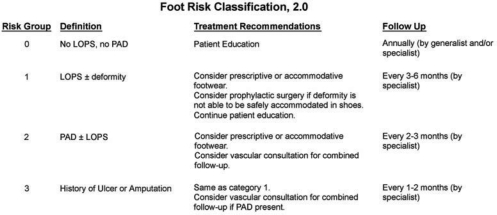
Results: Seven essentials skills have been demonstrated to promote the greatest salvage outcomes, and these are the ability to (1) perform hemodynamic and anatomic vascular assessment with revascularization, as necessary; (2) perform neurologic workup; (3) perform site-appropriate culture technique; (4) perform wound assessment and staging/grading of infection and ischemia; (5) perform site-specific bedside and intraoperative incision and debridement; (6) initiate and modify culture-specific and patient-appropriate antibiotic therapy; and (7) perform appropriate postoperative monitoring to reduce risk of reulceration and infection.
Conclusions: Utilization of these 7 essential skills as the core basis for interdisciplinary limb salvage team models will provide clinicians guidance when establishing such teams. Interdisciplinary teams have been demonstrated to improve quality and efficiency of patient care, thus improving overall outcomes and reducing amputation rates.
Figures
References
-
- Boulton AJ, Armstrong DG, Albert SF, et al. Comprehensive foot examination and risk assessment: a report of the task force of the foot care interest group of the American Diabetes Association, wih endorsement by the American Association of Clinical Endocrinologists. Diabetes Care. 2008;31(8):1679–85. - PMC - PubMed
-
- Apelqvist J, Armstrong DG, Lavery LA, Boulton AJ. Resource utilization and economic costs of care based on a randomized trial of vacuum-assisted closure therapy in the treatment of diabetic foot wounds. Am J Surg. 2008;195(6):782–8. - PubMed
-
- Canavan RJ, Unwin NC, Kelly WF, Connolly VM. Diabetes- and nondiabetes-related lower extremiy amputation incidence before and after the introduction of better organized diabetes foot care: continuous longiudinal monioring using a standard method. Diabetes Care. 2008;31(3):459–63. - PubMed
-
- Apelqvist J, Larsson J. What is the most effective way to reduce incidence of amputation in the diabetic foot? Diabetes Metab Res Rev. 2000;16(suppl 1):S75–83. - PubMed
-
- Frykberg RG, Witmayer B, Zgonis T. Surgical management of diabetic foot infections and osteomyeliis. Clin Podiatr Med Surg. 2007;24(3):469–82. viii–ix. - PubMed
LinkOut - more resources
Full Text Sources