


Monocyte chemoattractant protein-1 (MCP-1): an overview
- PMID: 19441883
- PMCID: PMC2755091
- DOI: 10.1089/jir.2008.0027
Monocyte chemoattractant protein-1 (MCP-1): an overview
Abstract
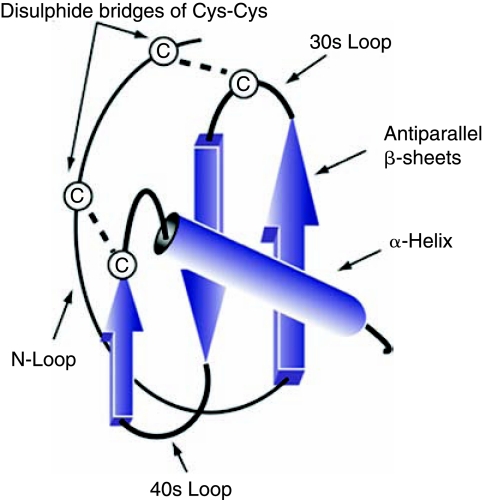
Chemokines constitute a family of chemoattractant cytokines and are subdivided into four families on the basis of the number and spacing of the conserved cysteine residues in the N-terminus of the protein. Chemokines play a major role in selectively recruiting monocytes, neutrophils, and lymphocytes, as well as in inducing chemotaxis through the activation of G-protein-coupled receptors. Monocyte chemoattractant protein-1 (MCP-1/CCL2) is one of the key chemokines that regulate migration and infiltration of monocytes/macrophages. Both CCL2 and its receptor CCR2 have been demonstrated to be induced and involved in various diseases. Migration of monocytes from the blood stream across the vascular endothelium is required for routine immunological surveillance of tissues, as well as in response to inflammation. This review will discuss these biological processes and the structure and function of CCL2.
Figures


References
-
- Abraham S. Sawaya BE. Safak M. Batuman O. Khalili K. Amini S. Regulation of MCP-1 gene transcription by Smads and HIV-1 Tat in human glial cells. Virology. 2003;309:196–202. - PubMed
-
- Abraham S. Sweet T. Sawaya BE. Rappaport J. Khalili K. Amini S. Cooperative interaction of C/EBP beta and Tat modulates MCP-1 gene transcription in astrocytes. J Neuroimmunol. 2005;160:219–227. - PubMed
-
- Adams DH. Harvath L. Bottaro DP. lnterrante R. Catalano G. Tanaka Y. Strain A. Hubscher SG. Shaw S. Hepatocyte growth factor and macrophage inflammatory protein 1 beta: structurally distinct cytokines that induce rapid cytoskeletal changes and subset-preferential migration in T cells. Proc Natl Acad Sci USA. 1994;91:7144–7148. - PMC - PubMed
-
- Ajuebor MN. Flower RJ. Hannon R. Christie M. Bowers K. Verity A. Perretti M. Endogenous monocyte chemoattractant protein-1 recruits monocytes in the zymosan peritonitis model. J Leukoc Biol. 1998;63:108–116. - PubMed
Publication types
MeSH terms
Substances
Grants and funding
LinkOut - more resources
Full Text Sources
Other Literature Sources
Medical
Research Materials
Miscellaneous
