25-hydroxyvitamin D levels inversely associate with risk for developing coronary artery calcification
- PMID: 19443637
- PMCID: PMC2723983
- DOI: 10.1681/ASN.2008111157
25-hydroxyvitamin D levels inversely associate with risk for developing coronary artery calcification
Abstract
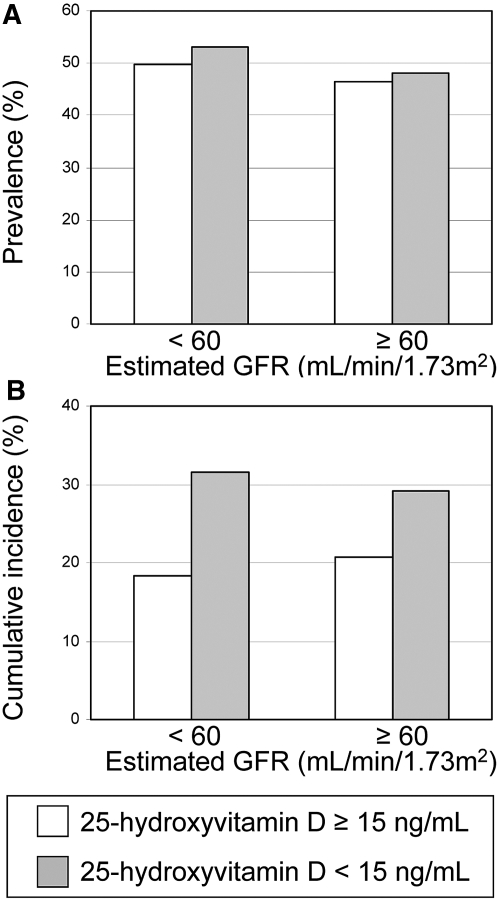
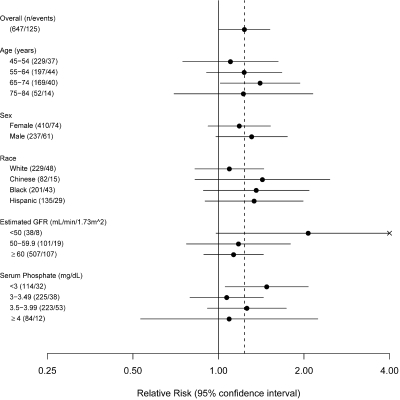
Vitamin D deficiency associates with increased risk for cardiovascular events and mortality, but the mechanism driving this association is unknown. Here, we tested whether circulating 25-hydroxyvitamin D concentration associates with coronary artery calcification (CAC), a measure of coronary atherosclerosis, in the Multi-Ethnic Study of Atherosclerosis. We included 1370 participants: 394 with and 976 without chronic kidney disease (estimated GFR <60 ml/min per 1.73 m(2)). At baseline, CAC was prevalent among 723 (53%) participants. Among participants free of CAC at baseline, 135 (21%) developed incident CAC during 3 yr of follow-up. Lower 25-hydroxyvitamin D concentration did not associate with prevalent CAC but did associate with increased risk for developing incident CAC, adjusting for age, gender, race/ethnicity, site, season, physical activity, smoking, body mass index, and kidney function. Further adjustment for BP, diabetes, C-reactive protein, and lipids did not alter this finding. The association of 25-hydroxyvitamin D with incident CAC seemed to be stronger among participants with lower estimated GFR. Circulating 1,25-dihydroxyvitamin D concentrations among participants with chronic kidney disease did not significantly associate with prevalent or incident CAC in adjusted models. In conclusion, lower 25-hydroxyvitamin D concentrations associate with increased risk for incident CAC. Accelerated development of atherosclerosis may underlie, in part, the increased cardiovascular risk associated with vitamin D deficiency.
Figures
Comment in
-
Low calcidiol levels and coronary artery calcification: true, true, and related?J Am Soc Nephrol. 2009 Aug;20(8):1663-5. doi: 10.1681/ASN.2009060610. Epub 2009 Jul 16. J Am Soc Nephrol. 2009. PMID: 19608699 No abstract available.
References
-
- Michos ED, Melamed ML: Vitamin D and cardiovascular disease risk. Curr Opin Clin Nutr Metab Care 11: 7–12, 2008 - PubMed
-
- Wolf M, Shah A, Gutierrez O, Ankers E, Monroy M, Tamez H, Steele D, Chang Y, Camargo CA, Jr, Tonelli M, Thadhani R: Vitamin D levels and early mortality among incident hemodialysis patients. Kidney Int 72: 1004–1013, 2007 - PubMed
-
- Ravani P, Malberti F, Tripepi G, Pecchini P, Cutrupi S, Pizzini P, Mallamaci F, Zoccali C: Vitamin D levels and patient outcome in chronic kidney disease. Kidney Int 75: 88–95, 2009 - PubMed
Publication types
MeSH terms
Substances
Grants and funding
LinkOut - more resources
Full Text Sources
Medical
Molecular Biology Databases
Research Materials