


Force-plate quantification of progressive behavioral deficits in the R6/2 mouse model of Huntington's disease
- PMID: 19447289
- PMCID: PMC3711515
- DOI: 10.1016/j.bbr.2009.03.022
Force-plate quantification of progressive behavioral deficits in the R6/2 mouse model of Huntington's disease
Abstract
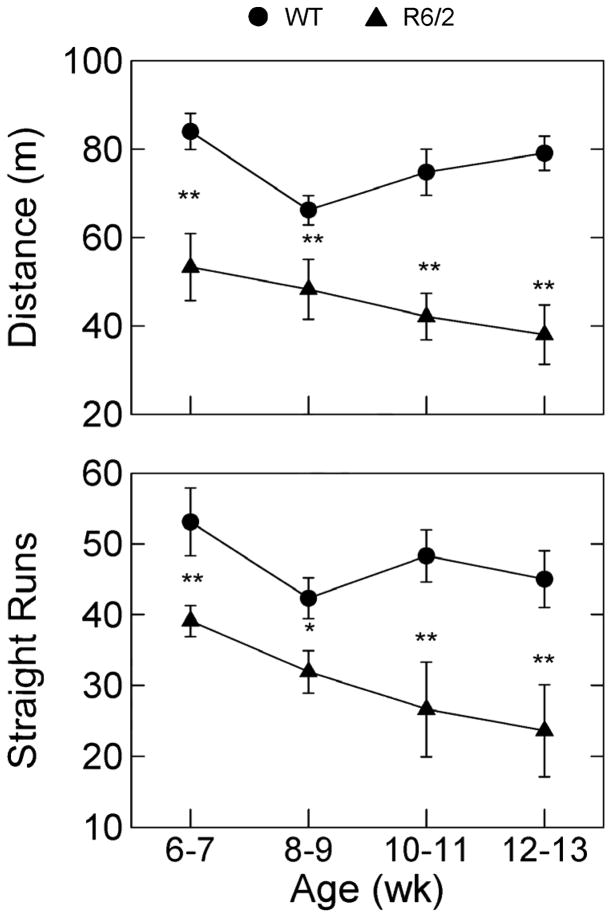
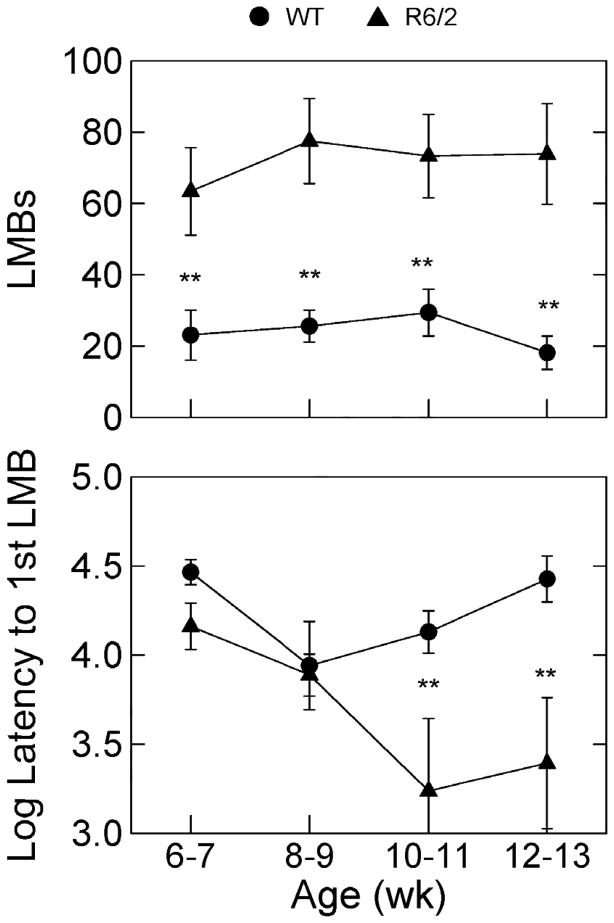
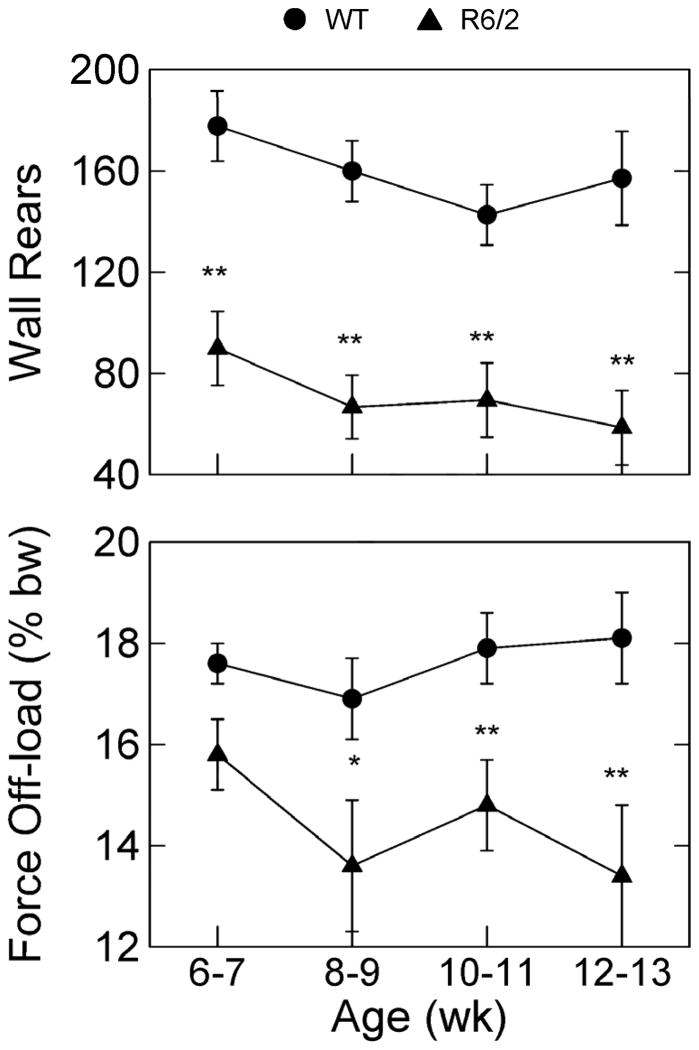
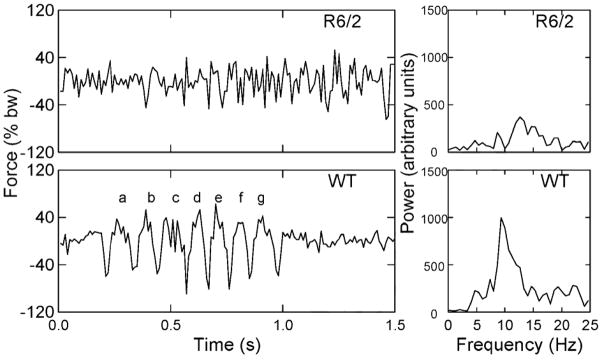
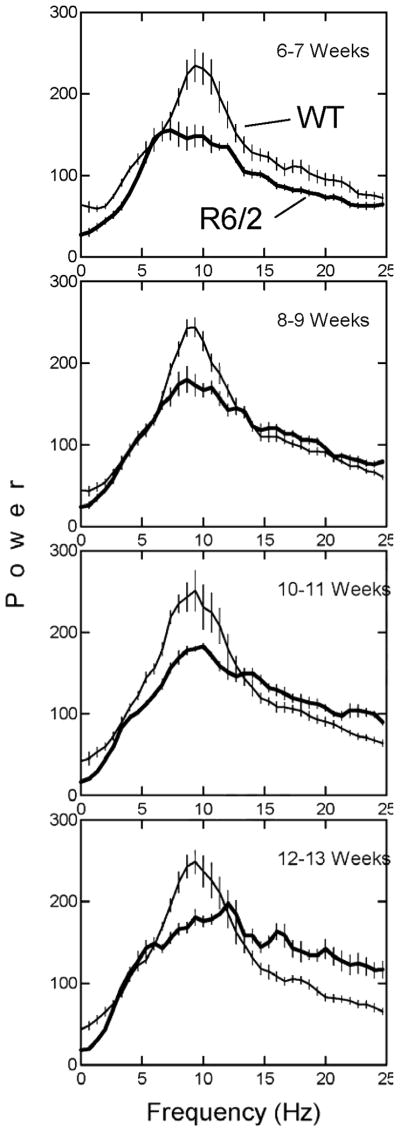
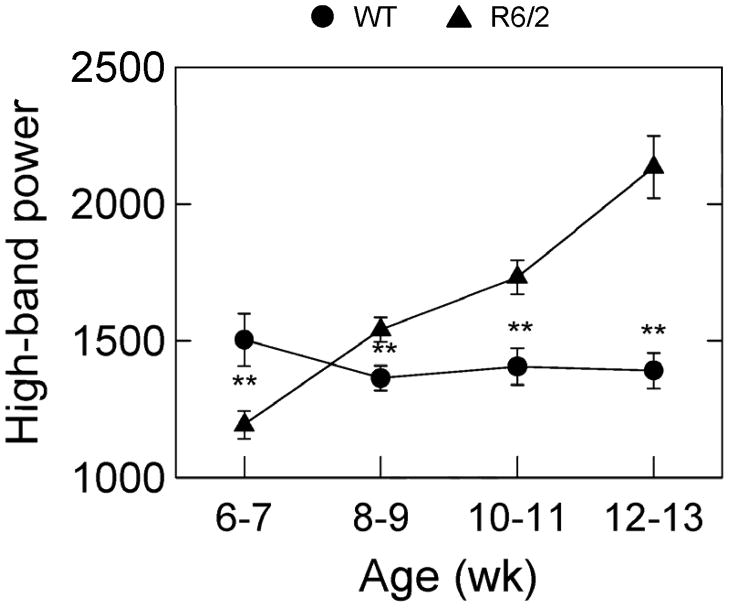
The R6/2 mouse is a popular model of Huntington's disease (HD) because of its rapid progression and measurable behavioral phenotype. Yet current behavioral phenotyping methods are usually univariate (e.g., latency to fall from a rotarod) and labor intensive. We used a force-plate actometer and specialized computer algorithms to partition the data into topographically specific behavioral categories that were sensitive to HD-like abnormalities. Seven R6/2 male mice and 7 wild-type (WT) controls were placed in a 42 cm x 42 cm force-plate actometer for 20-min recording sessions at 6-7, 8-9, 10-11 and 12-13 weeks of age. Distance traveled, number of wall rears, and number of straight runs (traveling 175 mm or more in 1.5s) were reduced in R6/2 relative to WT mice at all ages tested. Low mobility bouts (each defined as remaining continuously in a virtual circle of 15 mm radius for 5s) were increased in R6/2 mice at 6-7 weeks and beyond. Independent of body weight, force off-load during wall rears was reduced in R6/2 mice except at 6-7 weeks. Power spectra of force variation during straight runs indicated an age-related progressive loss of rhythmicity in R6/2 compared to WT, suggesting gait dysrhythmia and dysmetria. Collectively, these data, which extend results obtained with other widely different behavioral phenotyping methods, document a multifaceted syndrome of motor abnormalities in R6/2 mice. We suggest, moreover, that the force-plate actometer offers a high-throughput tool for screening drugs that may affect symptom expression in R6/2 or other HD model mice.
Figures
References
-
- Aziz NA, van der Burg JM, Landwehrmeyer GB, Brundin P, Stijnen T, Roos RA EHDI StudyGroup. Weight loss in Huntington disease increases with higher CAG repeat number. Neurology. 2008;71:1506–13. - PubMed
-
- Baik JH, Picetti R, Saiardi A, Thiriet G, Dierich A, Depaulis A, Le Meur M, Borrelli E. Parkinsonian-like locomotor impairment in mice lacking dopamine D2 receptors. Nature. 1995;377:424–428. - PubMed
-
- Clarke KA, Smart L, Still J. Ground reaction force and spatiotemporal measurements of the gait of the mouse. Behav Res Methods Instrum Comput. 2001;33:422–426. - PubMed
Publication types
MeSH terms
Substances
Grants and funding
LinkOut - more resources
Full Text Sources
Medical
Molecular Biology Databases
