


Phase II trial of capecitabine and weekly docetaxel for metastatic castrate resistant prostate cancer
- PMID: 19447430
- PMCID: PMC3869185
- DOI: 10.1016/j.juro.2009.02.105
Phase II trial of capecitabine and weekly docetaxel for metastatic castrate resistant prostate cancer
Abstract
Purpose: Synergy is observed with the combination of capecitabine and docetaxel due to docetaxel mediated up-regulation of thymidine phosphorylase. A phase II trial was performed with the combination for metastatic, castrate resistant prostate cancer.
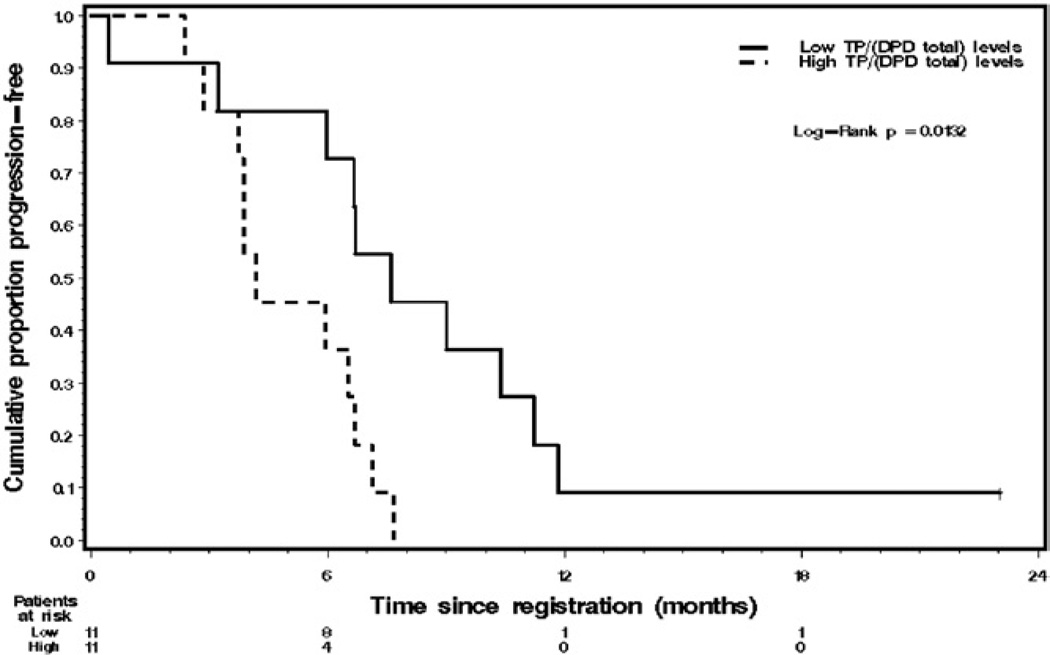
Materials and methods: Eligible patients had metastatic, castrate resistant prostate cancer, no prior chemotherapy for metastatic disease and normal organ function. Docetaxel (36 mg/m(2) per week intravenously) on days 1, 8 and 15, and capecitabine (1,250 mg/m(2) per day in 2 divided doses) on days 5 to 18 were administered in 28-day cycles. The response was assessed every 2 cycles. Biomarker correlative studies were performed on blood dihydropyrimidine dehydrogenase, and the thymidine phosphorylase-to-dihydropyrimidine dehydrogenase and thymidine synthase-to-dihydropyrimidine dehydrogenase ratios in available prostate tumor tissue.
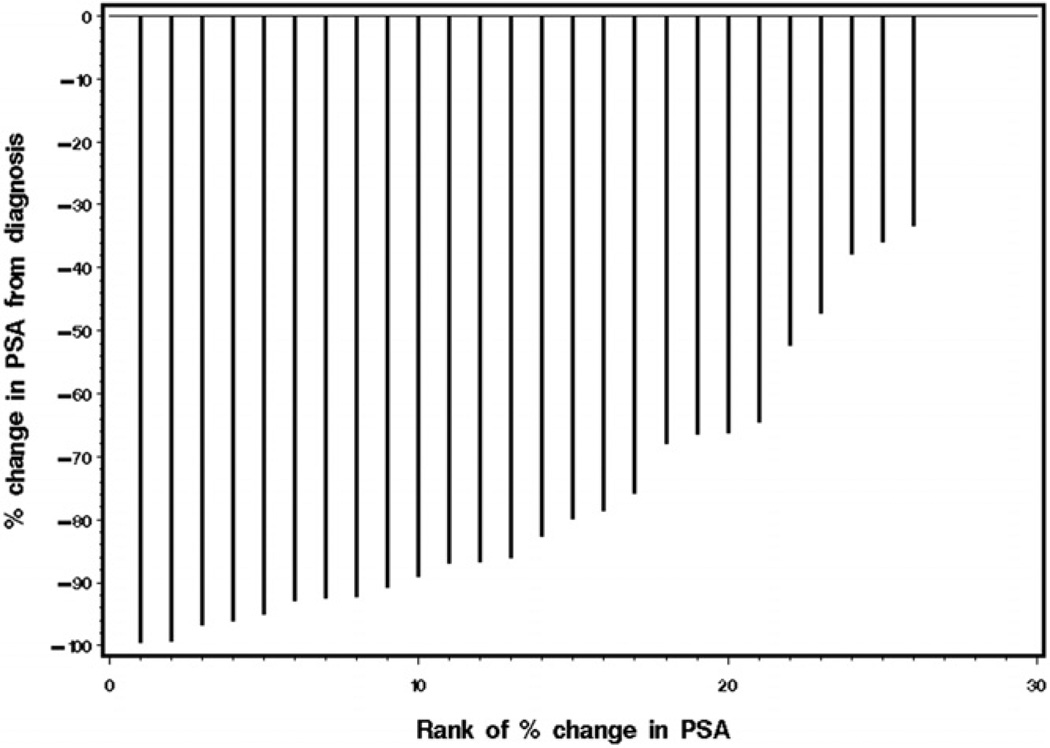
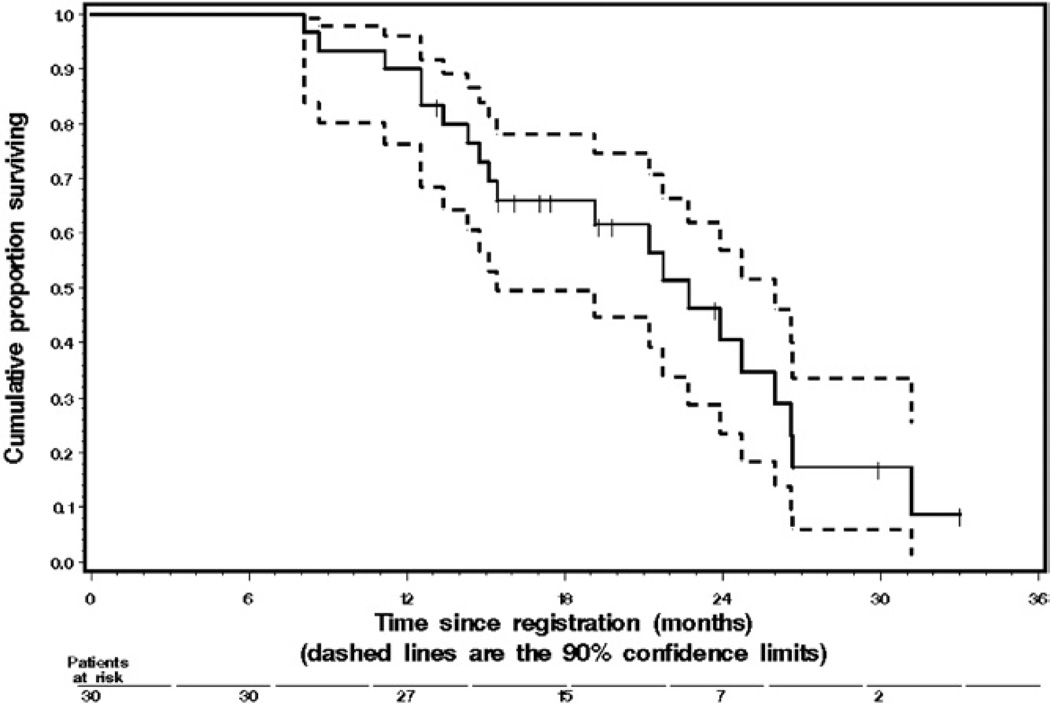
Results: A total of 30 patients with a median age of 69 years were enrolled in the study. We noted bone pain in 21 patients (70%), Gleason score 8 or higher in 18 (60%), measurable disease progression in 9, bone scan progression in 18 and prostate specific antigen progression in 22. Grade 3 or 4 neutropenia was seen in 3 patients and grade 3 hand-foot syndrome was found in 2. No treatment related deaths occurred. A prostate specific antigen response of 50% or greater decrease was observed in 22 patients (73%), of whom 9 (30%) had 90% or greater decrease. A partial response was noted in 5 of 9 patients (56%) with measurable disease. Median time to progression was 6.7 months (90% CI 4.2-7.7) and median overall survival was 22.0 months (90% CI 18.4-25.3).
Conclusions: The combination was well tolerated and it demonstrated favorable response rates with durable remission and survival outcomes.
Figures
References
-
- Tannock I, DeWit R, Berry WR, Horti J, Pluzanska A, Chi KN, et al. Docetaxel plus prednisone or mitoxantrone plus prednisone for advanced prostate cancer. N Engl J Med. 2004;351:1502. - PubMed
-
- Petrylak DP, Tangen CM, Hussain MH, Lara PN, Jr, Jones JA, Taplin ME, et al. Docetaxel and estramustine compared with mitoxantrone and prednisone for advanced refractory prostate cancer. N Engl J Med. 2004;351:1513. - PubMed
-
- Sawada N, Ishikawa T, Fukase Y, Nishida M, Yoshikubo T, Ishitsuka H, et al. Induction of thymidine phosphorylase activity and enhancement of capecitabine efficacy by taxol/taxotere in human cancer xenografts. Clin Cancer Res. 1998;4:1013. - PubMed
-
- Schilsky RL. Pharmacology and clinical status of capecitabine. Oncology (Huntingt) 2000;14:1297. - PubMed
-
- Touffet S, Gayet G, Samperez S, Jouan P. Demonstration of thymidine phosphorylase activity in human healthy adenomatous and cancerous prostate. Bull Cancer. 1992;79:151. - PubMed
Publication types
MeSH terms
Substances
Grants and funding
LinkOut - more resources
Full Text Sources
Medical
