


Effects of the Newborn Individualized Developmental Care and Assessment Program (NIDCAP) at age 8 years: preliminary data
- PMID: 19448128
- PMCID: PMC4097037
- DOI: 10.1177/0009922809335668
Effects of the Newborn Individualized Developmental Care and Assessment Program (NIDCAP) at age 8 years: preliminary data
Erratum in
- Clin Pediatr (Phila).2010 Aug;49(8):816
Abstract
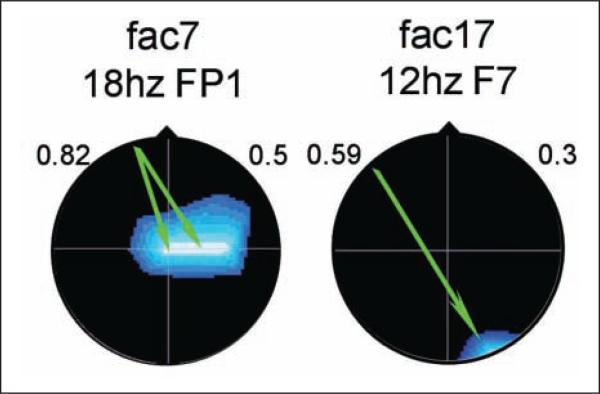
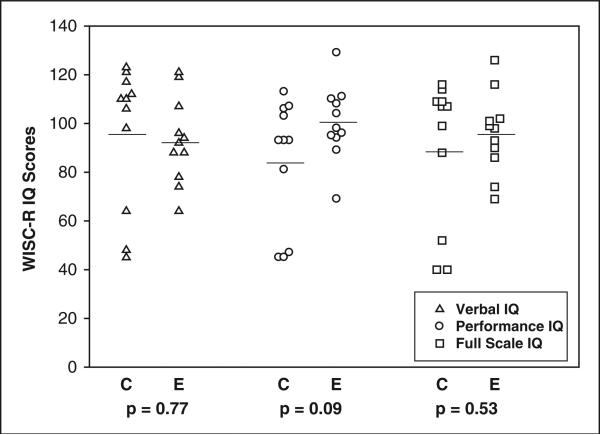
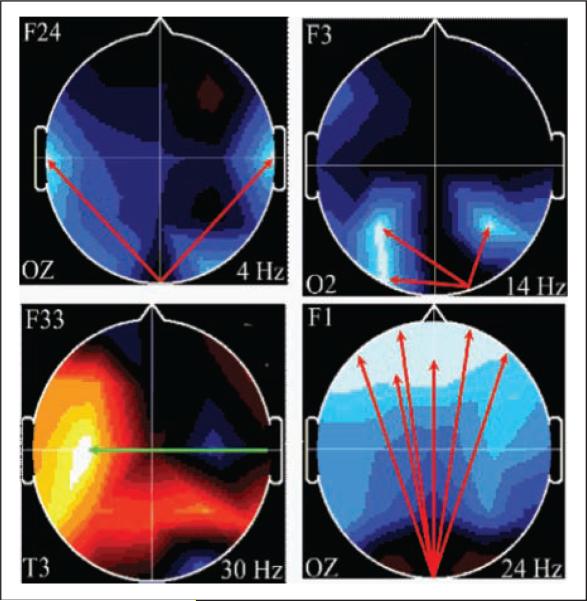
The current study reports the effects of NIDCAP (Newborn Individualized Developmental Care and Assessment Program) at 8 years of age for a randomized controlled trial of 38 very early born (< or =29 weeks postmenstrual age), high-risk preterm infants. It was hypothesized that the experimental group at school age in comparison with the control group would perform significantly better neuropsychologically and neuroelectrophysiologically. Twenty-two (11 control, 11 experimental) children of the original 38 (18 control, 20 experimental) participants were studied at school age with a detailed neuropsychological battery and with EEG spectral coherence measures. Results indicated significantly better right hemisphere and frontal lobe function in the experimental group than the control group, both neuropsychologically and neurophysiologically. Neurobehavioral and physiological results in the newborn period successfully predicted the beneficial brain function effects at age 8 years. Results support the conclusion that the NIDCAP intervention has lasting effects into school age.
Figures
References
-
- U.S. Department of Health and Human Services, Centers for Disease Control . National Vital Statistics Reports: Births: Final Data for 2004. U.S. Department of Health and Human Services; Washington, DC: 2005.
-
- Behrman RE, Stith Butler A. Preterm Birth: Causes, Consequences, and Prevention. National Academies Press; Washington, DC: 2007. - PubMed
-
- Hack M, Taylor HG, Drotar D, et al. Chronic conditions, functional limitations, and special health care needs of school-aged children born with extremely low-birth-weight in the 1990s. JAMA. 2005;294:318–325. - PubMed
-
- Saigal S, Stoskopf B, Streiner D, et al. Transition of extremely low-birth-weight infants from adolescence to young adulthood: comparison with normal birth-weight controls. JAMA. 2006;295:667–675. - PubMed
-
- Anderson P, Doyle L, Victorian Infant Collaborative Study Group Executive functioning in school-aged children who were born very preterm or with extremely low birth weight in the 1990s. Pedia. 2004:50–57. - PubMed
