


An unusual recent expansion of the C-terminal domain of RNA polymerase II in primate malaria parasites features a motif otherwise found only in mammalian polymerases
- PMID: 19449052
- PMCID: PMC3622039
- DOI: 10.1007/s00239-009-9245-2
An unusual recent expansion of the C-terminal domain of RNA polymerase II in primate malaria parasites features a motif otherwise found only in mammalian polymerases
Abstract
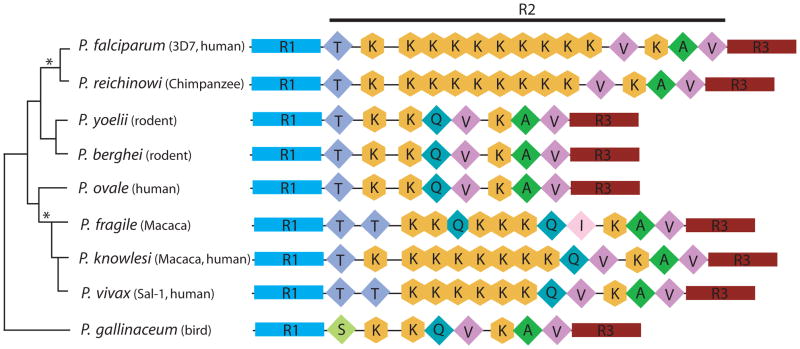
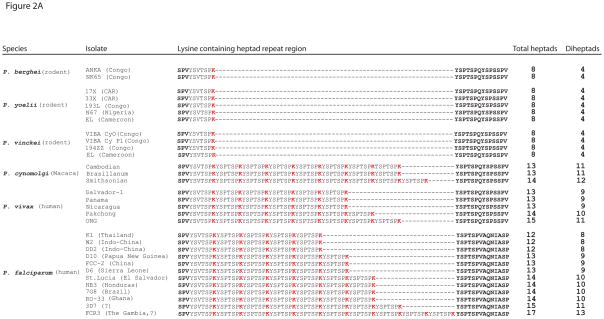
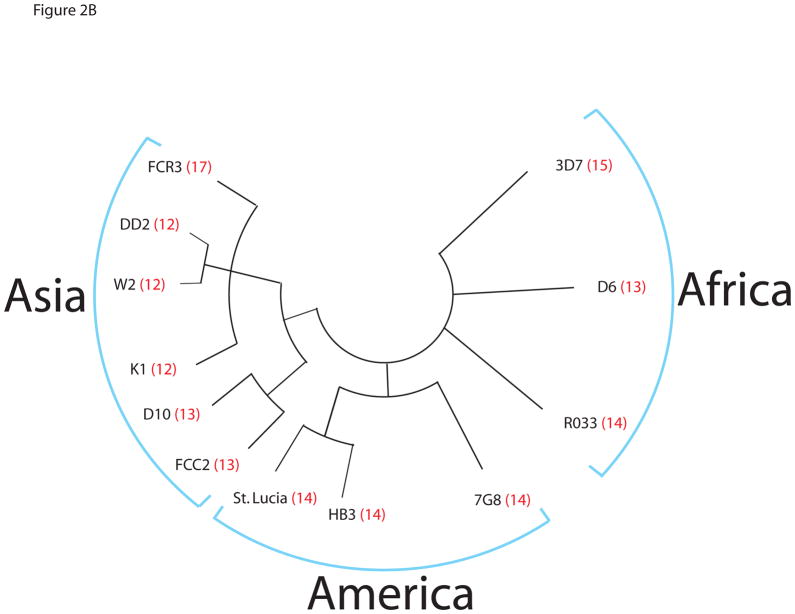
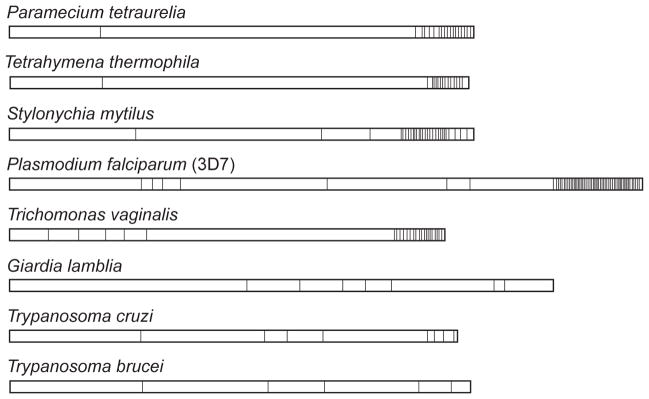
The tail of the enzyme RNA polymerase II is responsible for integrating the diverse events of gene expression in eukaryotes and is indispensable for life in yeast, fruit flies, and mice. The tail features a C-terminal domain (CTD), which is comprised of tandemly repeated Y(1)-S(2)-P(3)-T(4)-S(5)-P(6)-S(7) amino acid heptads that are highly conserved across evolutionary lineages, with all mammalian polymerases featuring 52 identical heptad repeats. However, the composition and function of protozoan CTDs remain less well understood. We find that malaria parasites (genus Plasmodium) display an unprecedented plasticity within the length and composition of their CTDs. The CTD in malaria parasites which infect human and nonhuman primates has expanded compared to closely related species that infect rodents or birds. In addition, this variability extends to different isolates within a single species, such as isolates of the human malaria parasite, Plasmodium falciparum. Our results indicate that expanded CTD heptads in malaria parasites correlates with parasitism of primates and provide the first demonstration of polymorphism of the RNA polymerase II CTD within a single species. The expanded set of CTD heptads feature lysine in the seventh position (Y(1)-S(2)-P(3)-T(4)-S(5)-P(6)-K(7)), a sequence only seen otherwise in the distal portion of mammalian polymerases. These observations raise new questions for the radiation of malaria parasites into diverse hosts and for the molecular evolution of RNA polymerase II.
Figures
References
-
- Allison LA, Moyle M, Shales M, Ingles CJ. Extensive homology among the largest subunits of eukaryotic and prokaryotic RNA polymerases. Cell. 1985;42:599–610. - PubMed
-
- Aravind L, Iyer LM, Wellems TE, Miller LH. Plasmodium biology: Genomic gleanings. Cell. 2003;115:771–785. - PubMed
-
- Barron-Casella E, Corden JL. Conservation of the mammalian RNA polymerase II largest-subunit C-terminal domain. J Mol Evol. 1992;35:405–410. - PubMed
-
- Bienkiewicz EA, Moon WA, Woody RW. Conformation of the RNA polymerase II C-terminal domain: circular dichroism of long and short fragments. J Mol Biol. 2000;297:119–133. - PubMed
Publication types
MeSH terms
Substances
Grants and funding
LinkOut - more resources
Full Text Sources
