


The microbiology of the infected knee arthroplasty
- PMID: 19458950
- PMCID: PMC2903150
- DOI: 10.1007/s00264-009-0797-y
The microbiology of the infected knee arthroplasty
Abstract
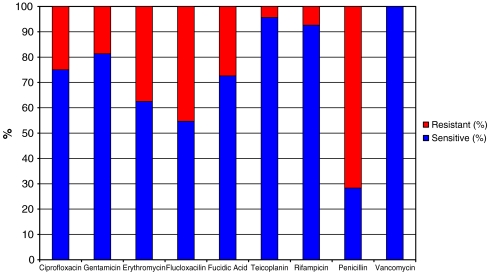
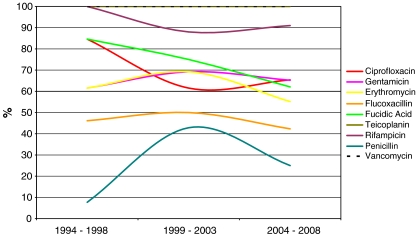
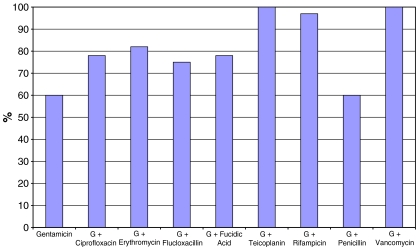
We describe the results of a retrospective analysis of patients with microbiologically proven infection, who underwent revision TKA between 1994 and 2008. Of the 121 patients included in the study, 61 (50%) were male and 60 (50%) were female. The mean age was 71 (range 42-88) years. The most common organisms identified were Coagulase negative Staphylococcus (CNS) (49%) and Staphylococcus aureus (SA) (13%). The prevalence of CNS appears to be increasing, while that of SA and other organisms is decreasing. Vancomycin and teicoplanin were the most effective antibiotics with overall sensitivity rates of 100% and 96%, respectively. The results of our theoretical model suggest that gentamicin combined with vancomycin is the most effective empirical regimen. Staphylococcal species are the most common organisms encountered in deep infection of the knee. Gentamicin combined with vancomycin offers the most comprehensive protection and potentially allows for infected knee arthoplasties to be treated with a one-stage procedure.
Figures


References
-
- Wilson MG, Kelley K, Thornhill TS. Infection as a complication of total knee-replacement arthroplasty. Risk factors and treatment in sixty-seven cases. J Bone Joint Surg [Am] 1990;72:878–883. - PubMed
-
- Salvati EA, Robinson RP, Zeno SM, Koslin BL, Brause BD, Wilson PD., Jr Infection rates after 3175 hip and total knee replacements performed with and without a horizontal unidirectional filtered air-flow system. J Bone Joint Surg [Am] 1982;64:525–535. - PubMed
-
- Phillips JE, Crane TP, Noy M, Elliott TSJ, Grimer RJ. The incidence of deep prosthetic infections in a specialist orthopaedic hospital: a 15-year prospective survey. J Bone Joint Surg [Br] 2006;88-B:943–948. - PubMed
-
- Gill GS, Mills DM. Long-term follow-up evaluation of 1000 consecutive cemented total knee arthroplasties. Clin Orthop Relat Res. 1991;273:66–76. - PubMed
MeSH terms
Substances
LinkOut - more resources
Full Text Sources
Medical
