Determinants of improvement in quality of life of alcohol-dependent patients during an inpatient withdrawal programme
- PMID: 19461935
- PMCID: PMC2684678
- DOI: 10.7150/ijms.6.160
Determinants of improvement in quality of life of alcohol-dependent patients during an inpatient withdrawal programme
Abstract
Background: To investigate the improvement in quality of life (QoL) of alcohol-dependent patients during a 3-week inpatient withdrawal programme, and to identify the sociodemographic, clinical and alcohol-related variables associated with baseline QoL on admission and with improvement of QoL during residential treatment.
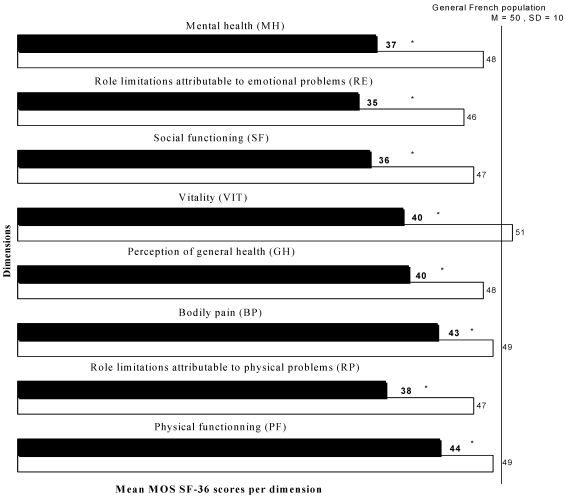
Methods: This prospective, observational study included 414 alcohol-dependent patients, hospitalised for a period of 3 weeks. QoL was measured on admission and at discharge using the French version of the Medical Outcome Study SF-36. The mean scores for each dimension and for the Physical and Mental Component Summary scores were calculated.
Results: The mean scores per dimension and the mean Physical and Mental Component Summary scores were significantly lower on admission than at discharge; the lowest scores being observed for social functioning and role limitations due to emotional problems. At discharge, the mean scores per dimension were similar to those observed in the French general population. Female gender, age > 45 years, living alone, working as a labourer or employee, somatic comorbidity, and the existence of at least five criteria for alcohol dependence according to the DSM-IV classification were associated with a low Physical Component Summary score on admission; psychiatric comorbidity, the presence of at least five DSM-IV dependence criteria, smoking and suicidality were associated with a low Mental Component Summary score on admission. The increase in Physical and Mental Component Summary scores during hospitalisation was more marked when the initial scores were low. Apart from the initial score, the greatest improvement in Physical Component Summary score was seen in patients with a high alcohol intake and in those without a somatic comorbidity; the increase in Mental Component Summary score was greatest in patients without psychotic symptoms and in those who abused or were dependent on illegal drugs.
Conclusion: QoL improvement after a residential treatment was related to low QoL scores at admission. Improvement in physical component of QoL was related to baseline alcohol intake and good somatic status. Improvement in mental component of QoL was related to other drugs abuse/dependence.
Keywords: alcohol-dependent patients; quality of life; residential treatment.
Conflict of interest statement
Conflict of Interest: The authors of this paper declare no conflict of interest.
Figures
References
-
- WHO. Summary report of the working group on concepts and principles of health promotion, copenhagen 9-13 july 1984. World Health Organization Regional Office for Europe. 1984.
-
- Epstein RS, Sherwood LM. From outcomes research to disease management: A guide for the perplexed. Ann Intern Med. 1996;124:832–7. - PubMed
-
- Preau M, Protopopescu C, Spire B. et al. Health related quality of life among both current and former injection drug users who are hiv-infected. Drug Alcohol Depend. 2007;86:175–82. - PubMed
-
- Pearlman RA, Uhlmann RF. Quality of life in chronic diseases: Perceptions of elderly patients. J Gerontol. 1988;43:M25–30. - PubMed
MeSH terms
LinkOut - more resources
Full Text Sources
Medical