


Scapular winging: anatomical review, diagnosis, and treatments
- PMID: 19468892
- PMCID: PMC2684151
- DOI: 10.1007/s12178-007-9000-5
Scapular winging: anatomical review, diagnosis, and treatments
Abstract
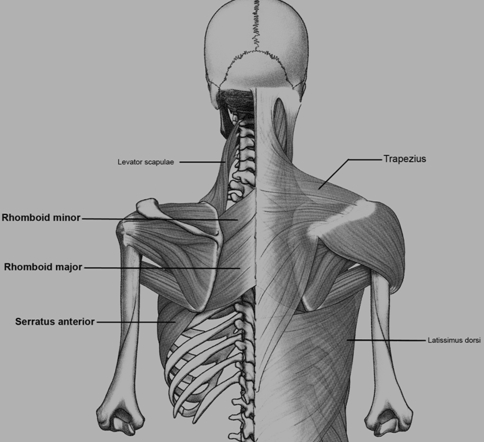
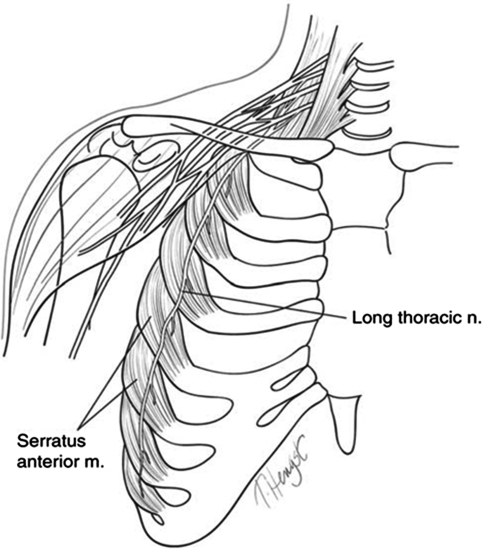
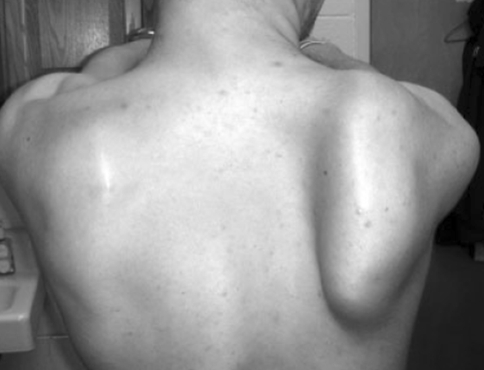
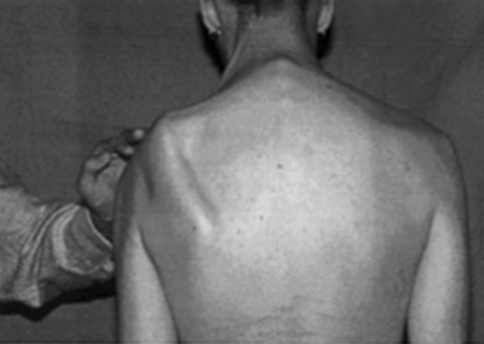
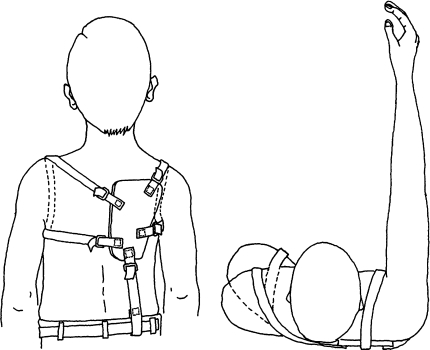
Scapular winging is a rare debilitating condition that leads to limited functional activity of the upper extremity. It is the result of numerous causes, including traumatic, iatrogenic, and idiopathic processes that most often result in nerve injury and paralysis of either the serratus anterior, trapezius, or rhomboid muscles. Diagnosis is easily made upon visible inspection of the scapula, with serratus anterior paralysis resulting in medial winging of the scapula. This is in contrast to the lateral winging generated by trapezius and rhomboid paralysis. Most cases of serratus anterior paralysis spontaneously resolve within 24 months, while conservative treatment of trapezius paralysis is less effective. A conservative course of treatment is usually followed for rhomboid paralysis. To allow time for spontaneous recovery, a 6-24 month course of conservative treatment is often recommended, after which if there is no recovery, patients become candidates for corrective surgery.
Figures
References
-
- Johnson JT, Kendall HO. Isolated paralysis of the serratus anterior muscle. J Bone Joint Surg. 1955;37:567–74. - PubMed
-
- Gregg JR, Labosky D, Harty M, Lotke P, Ecker M, DiStefano V, Das M. Serratus anterior paralysis in the young athlete. J Bone Joint Surg. 1979;61:825–32. - PubMed
-
- Saeed MA, Gatens PF, Singh SS. Winging of the scapula. Am Fam Physician. 1981;24:130–43. - PubMed
LinkOut - more resources
Full Text Sources
Other Literature Sources
Medical
