The effects of varying dietary carbohydrate and fat content on survival in a murine LNCaP prostate cancer xenograft model
- PMID: 19470786
- PMCID: PMC3774034
- DOI: 10.1158/1940-6207.CAPR-08-0188
The effects of varying dietary carbohydrate and fat content on survival in a murine LNCaP prostate cancer xenograft model
Abstract
Purpose: Numerous dietary factors elevate serum levels of insulin and insulin-like growth factor I (IGF-I), both potent prostate cancer mitogens. We tested whether varying dietary carbohydrate and fat, without energy restriction relative to comparison diets, would slow tumor growth and reduce serum insulin, IGF-I, and other molecular mediators of prostate cancer in a xenograft model.
Experimental design: Individually caged male severe combined immunodeficient mice (n = 130) were randomly assigned to one of three diets (described as percent total calories): very high-fat/no-carbohydrate ketogenic diet (NCKD: 83% fat, 0% carbohydrate, 17% protein), low-fat/high-carbohydrate diet (LFD: 12% fat, 71% carbohydrate, 17% protein), or high-fat/moderate-carbohydrate diet (MCD: 40% fat, 43% carbohydrate, 17% protein). Mice were fed to maintain similar average body weights among groups. Following a preliminary feeding period, mice were injected with 1 x 10(6) LNCaP cells (day 0) and sacrificed when tumors were >or=1,000 mm(3).
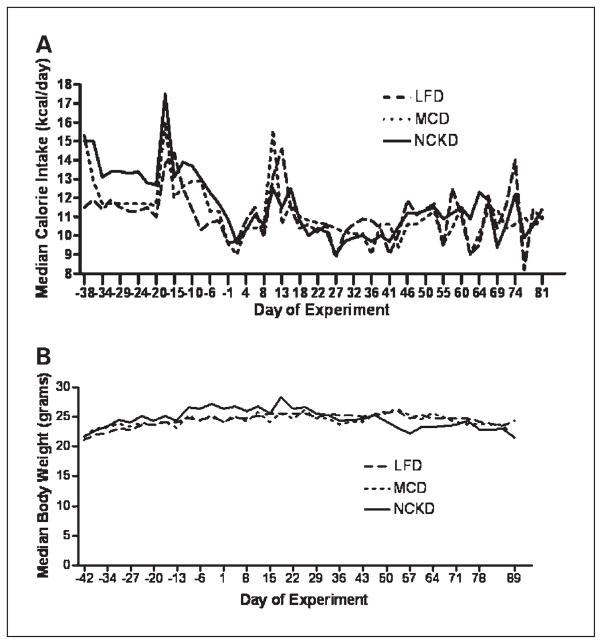
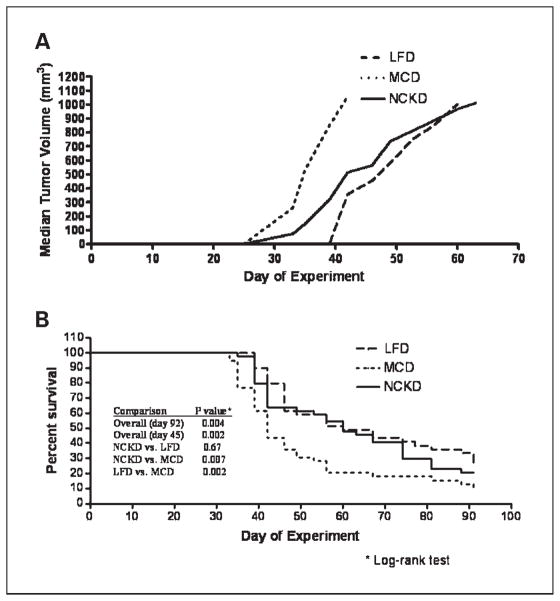
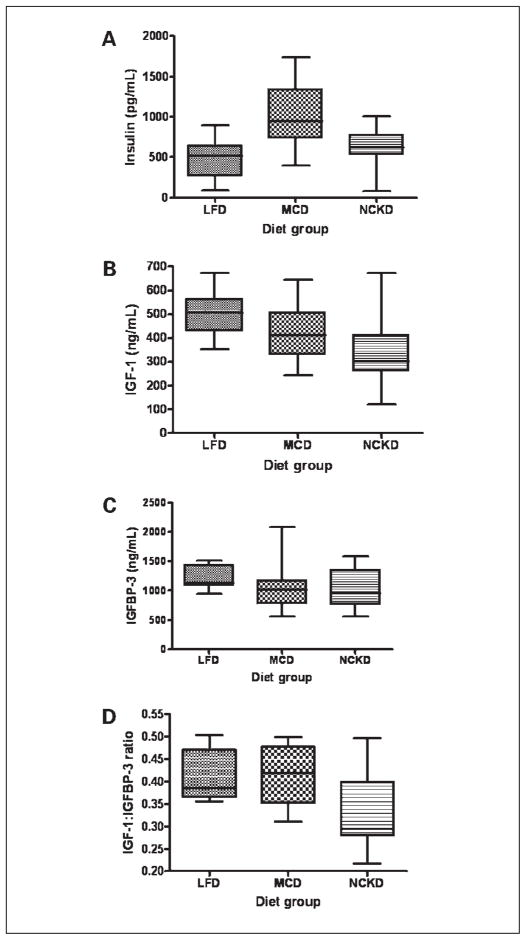
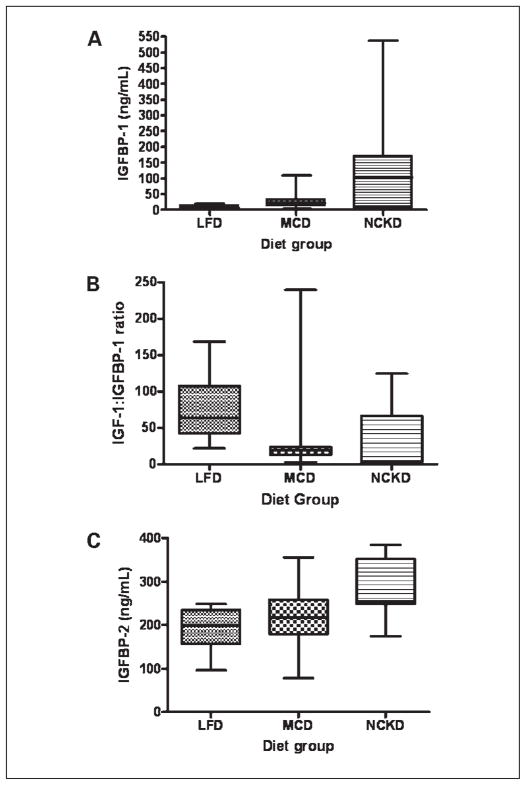
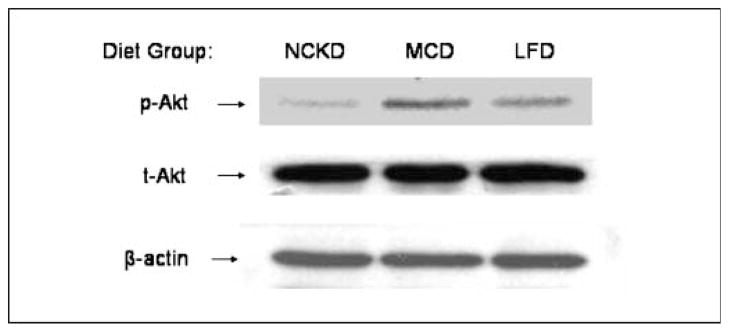
Results: Two days before tumor injection, median NCKD body weight was 2.4 g (10%) and 2.1 g (8%) greater than the LFD and MCD groups, respectively (P < 0.0001). Diet was significantly associated with overall survival (log-rank P = 0.004). Relative to MCD, survival was significantly prolonged for the LFD (hazard ratio, 0.49; 95% confidence interval, 0.29-0.79; P = 0.004) and NCKD groups (hazard ratio, 0.59; 95% confidence interval, 0.37-0.93; P = 0.02). Median serum insulin, IGF-I, IGF-I/IGF binding protein-1 ratio, and IGF-I/IGF binding protein-3 ratio were significantly reduced in NCKD relative to MCD mice. Phospho-AKT/total AKT ratio and pathways associated with antiapoptosis, inflammation, insulin resistance, and obesity were also significantly reduced in NCKD relative to MCD tumors.
Conclusions: These results support further preclinical exploration of carbohydrate restriction in prostate cancer and possibly warrant pilot or feasibility testing in humans.
Conflict of interest statement
No potential conflicts of interest were disclosed.
Figures
References
-
- McKeehan WL, Adams PS, Rosser MP. Direct mitogenic effects of insulin, epidermal growth factor, glucocorticoid, cholera toxin, unknown pituitary factors and possibly prolactin, but not androgen, on normal rat prostate epithelial cells in serum-free, primary cell culture. Cancer Res. 1984;44:1998–2010. - PubMed
-
- Iwamura M, Sluss PM, Casamento JB, Cockett AT. Insulin-like growth factor I: action and receptor characterization in human prostate cancer cell lines. Prostate. 1993;22:243–52. - PubMed
-
- Hsing AW, Chua S, Jr, Gao YT, et al. Prostate cancer risk and serum levels of insulin and leptin: a population-based study. J Natl Cancer Inst. 2001;93:783–9. - PubMed
-
- Chan JM, Stampfer MJ, Giovannucci E, et al. Plasma IGF-1 and prostate cancer risk: a prospective study. Science. 1998;279:563–6. - PubMed
Publication types
MeSH terms
Substances
Grants and funding
LinkOut - more resources
Full Text Sources
Other Literature Sources
Medical
Research Materials