


Immunoreactivity of glutamate in mouse retina inner segment of photoreceptors with in vivo cryotechnique
- PMID: 19471014
- PMCID: PMC2728132
- DOI: 10.1369/jhc.2009.953851
Immunoreactivity of glutamate in mouse retina inner segment of photoreceptors with in vivo cryotechnique
Abstract
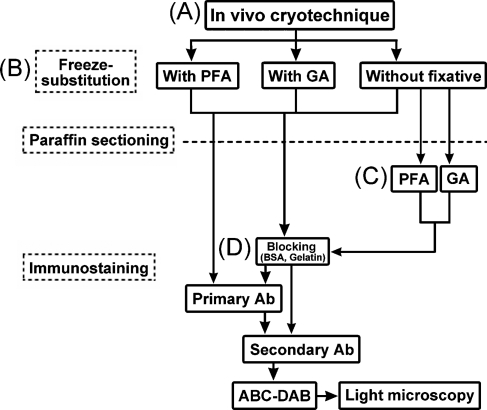
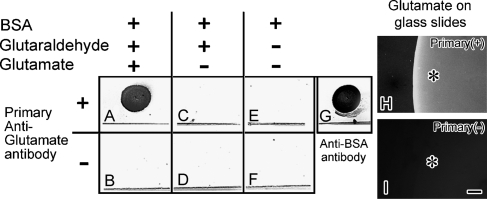
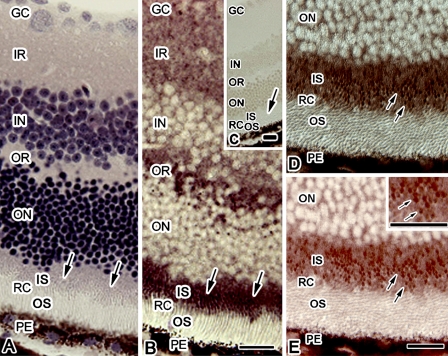
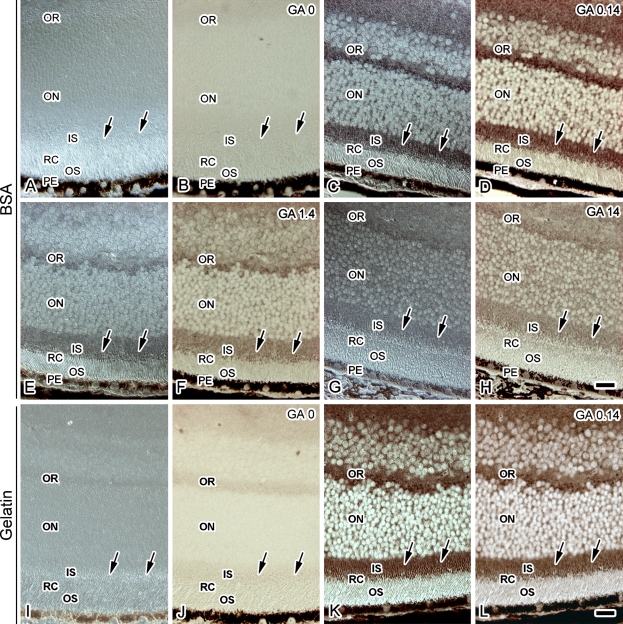
The purpose of this study was to clarify a previously controversial issue concerning glutamate (Glu) immunoreactivity (IR) in the inner segment (IS) of photoreceptors by using in vivo cryotechnique (IVCT) followed by freeze substitution (FS), which enabled us to analyze the cells and tissues reflecting living states. Eyeballs from anesthetized mice were directly frozen using IVCT. The frozen tissues were processed for FS fixation in acetone containing chemical fixatives, and embedded in paraffin. Deparaffinized sections were immunostained with an anti-Glu antibody. The strongest Glu-IR was obtained in the specimens prepared by FS with paraformaldehyde or a low concentration of glutaraldehyde, whereas no Glu-IR was obtained without the chemical fixatives. The Glu was immunolocalized in the IS, outer and inner plexiform and ganglion cell layers. Thus, the immunolocalization of Glu in the IS was clearly demonstrated using IVCT.
Figures
References
-
- Endo S, Ishiguro S, Tamai M (1999) Possible mechanism for the decrease of mitochondrial aspartate aminotransferase activity in ischemic and hypoxic rat retinas. Biochim Biophys Acta 1450:385–396 - PubMed
-
- Fletcher EL, Kalloniatis K (1996) Neurochemical architecture of the normal and degenerating rat retina. J Comp Neurol 376:343–360 - PubMed
-
- Kalloniatis M, Fletcher EL (1993) Immunocytochemical localization of the amino acid neurotransmitters in the chicken retina. J Comp Neurol 336:174–193 - PubMed
MeSH terms
Substances
LinkOut - more resources
Full Text Sources
